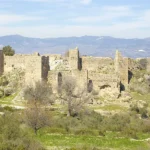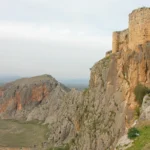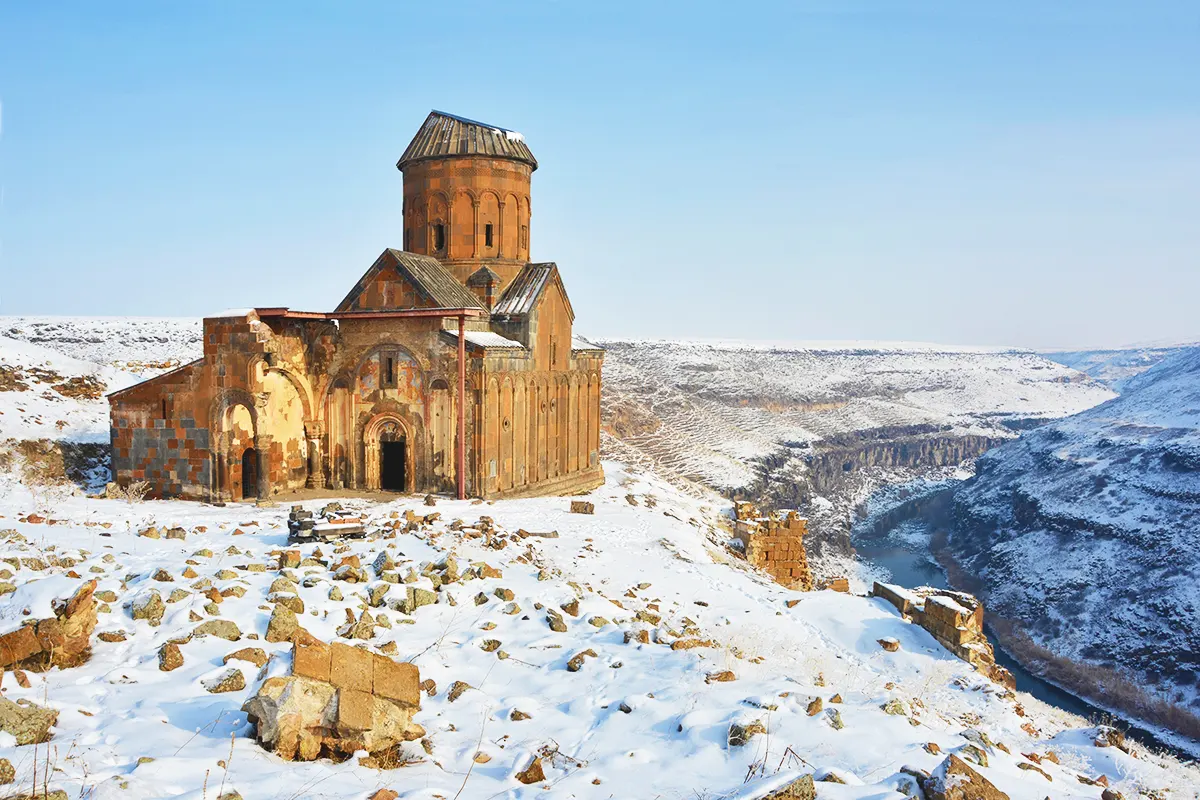
The archaeological site of Ani, located in the Turkish province of Kars, a UNESCO World Heritage Site and known as the ‘Cradle of Civilisations’ or the ‘City of 1001 Churches’, is experiencing a remarkable tourist boom. This ancient city, considered the gateway to Anatolia, which was home to dozens of civilisations and where Christian and Muslim communities lived together centuries ago, is becoming an increasingly attractive tourist destination after welcoming more than 450,000 tourists last year.
Archaeological excavations at Ani, carried out in collaboration with the Ministry of Culture and Tourism and the Kafkas University of Kars, are bringing to light the region’s valuable historical legacy while boosting its growing tourist appeal. The director of the excavations, Associate Professor Muhammet Arslan, was quoted in Turkish media as saying that Kars has become one of the country’s most popular destinations in recent years.
In fact, after a record 450,000 visitors last year, this unique archaeological site is now aiming to reach one million tourists a year. The appearance of the ancient city is changing thanks to the restoration, preservation and adaptation of the environment as part of the ‘Legacy for the Future’ project. In this regard, Arslan stressed that these investments are already yielding results and that work will continue on the ruins of Ani to put it in its rightful place in terms of archaeological heritage.
Eight kingdoms and empires controlled the city throughout history
Located in the northeastern corner of Turkey on the very border with Armenia, the city was historically a gateway between Central Asia, Anatolia and the Caucasus, and is home to numerous examples of Turkish-Islamic architecture from the 11th and 12th centuries, including the first mosque built in Anatolia some 1,000 years ago. Over the centuries, Ani came under the rule of various powers, including the Armenian Bagratid kingdom, the Byzantine Empire, the Seljuks, the Kingdom of Georgia, the Mongols, the Persian Ilkhanate (a breakaway from Genghis Khan’s Mongol Empire), the Kara Koyunlu (a confederation of Turkic tribes), the Ak Koyunlu (a federation of Oğuz tribes) and the Ottoman Empire.
Between 961 and 1045 Ani was the capital of the Armenian kingdom of the Bagratid dynasty, which covered much of present-day Armenia as well as eastern Türkiye. Ani was then known as the “City of 1,001 churches”, although the actual number of churches was much smaller: 50 churches, 33 cave chapels and 20 chapels have so far been documented. The city’s location at the crossroads of trade routes, together with its religious buildings, palaces and powerful fortifications, made it stand out not only as one of the most important cities in the Armenian kingdom, but also in the whole known world.
One of its most outstanding monuments, the ruins of which can still be seen today, is the Cathedral of Ani, considered an early example of Gothic architecture and whose style, according to experts, influenced the design of the first great European cathedrals in the Romanesque and Gothic styles. Its ribbed vaulting – a Gothic architectural technique that uses a skeleton of interlocking stone arches (ribs) to support the masonry of the roof – would not appear in Europe until at least two centuries later.
In its splendour, it was one of the greatest cities in the world
In its heyday, Ani was one of the largest cities in the world, with an estimated population of 100,000, although some historians question this figure due to the limited extent of its known urban layout. Renowned far beyond its borders for its wealth and splendour, it was the continual object of the ambitions of rival kings and emperors.
Its first blow came when it was sacked by the Mongols in 1236, but the final blow came with a devastating earthquake that ravaged the city in 1319 and from which it never recovered. These disasters, together with the progressive diversion of trade routes, led to its decline until it was finally abandoned in the 17th century under Ottoman rule, when it was just a mere village and a shadow of its glorious past.
For two centuries Ani remained forgotten in memory and time until, in the first half of the 19th century, European travellers rediscovered its ruins and spread its importance through scholarly publications and travel accounts. The first archaeological excavations in the area began in 1892, when the region was under the control of the Russian Empire. Its archaeological importance has grown steadily since then, until it was declared a UNESCO World Heritage Site in 2016.
How to get to the ruins of Ani?
The archaeological site of Ani is located about 45 kilometres east of the city of Kars, next to the village of Ocaklı and very close to the Armenian border. The most common way to reach the site is by road, a 45-minute drive from the city.
Organised tours, taxis or even rental cars are available, but for tourists it’s best to take a bus that leaves at 9 am from the city centre in front of the Gazi Ahmet Muhtar Pasha Mansion and Art Gallery. The fare is only 100 liras (just about 2 euros) and includes a return trip. The return bus leaves Ani at 12:45, leaving almost 3 hours to tour the ruins. There is also the option of hiring a small electric vehicle with driver to tour the site for around 750 liras (about 15 euros) – a highly recommended option for those with mobility problems.
Kars also has a small airport with weekly connections from Istanbul, with a return flight costing around €100. However, another increasingly popular option for getting to Ani, which we highly recommend, is to include the visit on the Orient Express (Doğu Ekspresi), the tourist train that runs through Eastern Anatolia from Ankara to Kars (not to be confused with the legendary Orient Express). Popular with influencers and considered one of the most attractive rail routes in the country, this route allows you to reach Ani as part of a different and enriching experience travelling through Turkey’s eastern provinces.
Timetables, prices and recommendations for the visit
The ruins of Ani are normally open all year round as long as access due to snow is possible. It is usually possible to visit them from Monday to Sunday from 8:00 to 16:30. It is advisable to check that the site is open and make sure of the opening hours before visiting, especially in winter, when weather conditions can affect both access and the tour of the site.
There is an entrance fee of 400 liras (about 8 euros), which must be paid in local currency. No payments in euros or dollars are accepted, nor are credit card payments.
As this is a large site, with few shaded areas, and it can be particularly hot in the warmer months, it is advisable to wear comfortable hiking shoes, water and sun protection in summer, and warm clothing in winter.
Nearby places of interest
A visit to the ruins of Ani can be complemented by other important destinations and sites in eastern Anatolia for a more complete travel experience.
The city of Kars is a must-see, both for its Russian-influenced architecture linked to its past under Tsarist rule, and for its historical legacy. From there you can also visit Lake Çıldır, especially unique in winter, when the lake freezes over and makes a stunning sight.
Further away from Kars, but within the usual routes through the region, you can visit the ruins of the ancient city of Van and the island of Akdamar, where you will find several medieval Armenian churches; and of course you can also contemplate the famous Mount Ararat, one of the most recognisable geographical symbols of this corner of the country, at the foot of which stands the beautiful Ishak Pasha Palace, candidate to be named a World Heritage Site by UNESCO.
Ani was once an enclave where Christians and Muslims, churches and mosques, lived together, and its ruins are still the subject of archaeological excavations. Once considered one of the first gates through which the Turks entered the interior of Anatolia after the Battle of Manzikert, Ani is today – paradoxically – the ‘gateway’ through which foreign tourists can enter the innermost secrets of Turkish history.
🧿 TOP TOURS IN TURKEY
VOTE

EDITORIAL TEAM
🧿 About us
.
Edited and reviewed by:

Pablo Gómez is a specialist in Turkey and has been editor-in-chief of Hispanatolia since 2011. He has been analysing current affairs and geopolitics in Turkey and the surrounding region since 2006.
…
📣 Your ADVERTISING on Hispanatolia
.
🤗 HELP US WITH A DONATION:
💗 Paypal