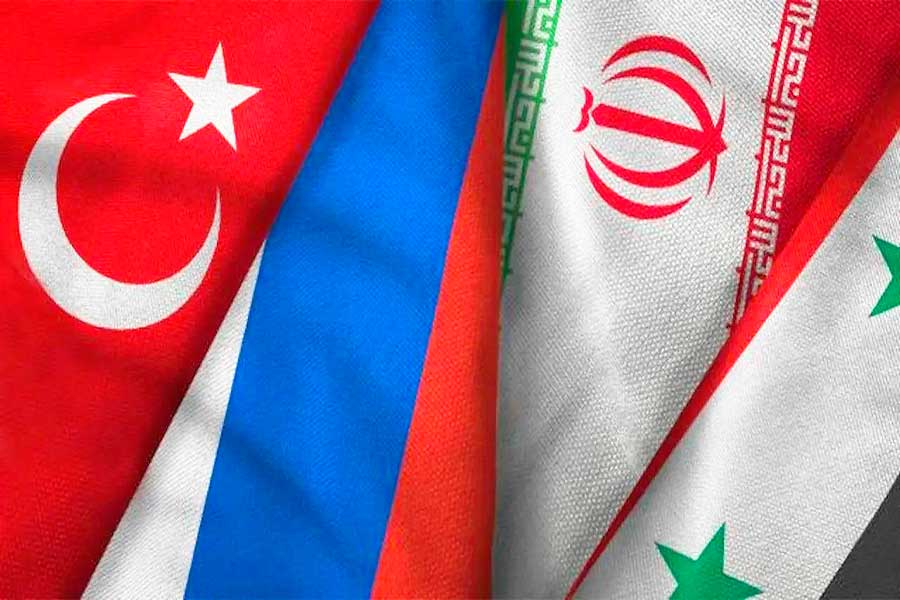
Turkey has extended its hand to Syria following the ‘new era’ inaugurated with the overthrow of the Syrian regime and the flight of Syrian President Bashar al-Assad to Russia, where he has received political asylum after the lightning offensive carried out by Syrian rebels that has allowed them to take over the country’s main cities, including Aleppo and Damascus, in just 10 days, thus putting an end to 13 years of civil war.
In a speech made at the Turkish Ambassadors’ Conference in Ankara yesterday and reported by Turkish media, Turkish foreign minister Hakan Fidan re-emphasised that Ankara has not been involved in the rebel offensive that led to Assad’s ouster nor has it supported Hayat Tahrir al-Sham (HTS), the main rebel group that led the operation, but added that the Turkish government is ready to support the new Syria and work on its reconstruction in coordination with “all actors and factions in the region”.
‘We are confident that international actors, especially the United Nations, will help the Syrian people and support the establishment of an inclusive government (in Syria),’ said Fidan, who stressed the importance of creating an administration in the country that integrates all Syrians, regardless of their origin or religion, and on national reconciliation as the only path to achieve peace and stability in Syria.
In this regard, Fidan recalled that Assad and his government had not taken any steps towards national reconciliation in the 13 years of civil war in Syria despite all the initiatives and opportunities, and even the mediation offered by Turkey. ‘A new era has begun in Syria, and now it is time to focus on the road ahead,’ the minister said.
‘We want Syria to be a place where different ethnic and religious groups live under an inclusive idea of governance and peace. We want to see a new Syria with ties to its neighbours, bringing peace and stability to the region. We will continue our work to ensure a safe and voluntary return of Syrians, and for the reconstruction of the country,’ said Fidan, who stressed, however, the need to prevent terrorist organisations such as Daesh or the PKK/YPG “from taking advantage of the current situation”.
Assad’s last hours
Turkish President Tayyip Erdoğan himself recalled days ago how on numerous occasions his government reached out to Assad, offering to address Syria’s future through dialogue with the opposition, ‘but we did not receive a positive response’. Ironically, it has emerged that Syrian President Bashar al-Assad reached out to Turkey in his final hours in power – while Damascus was besieged by rebels – asking for its help in exchange for accepting whatever conditions Ankara imposed. The Turkish authorities, however, did not even respond to the Syrian dictator’s proposal.
Desperate for his situation, Assad then contacted Biden and Trump through intermediaries, asking for US help to stop the rebels and pledging in return to sever his ties with Iran and Russia. Without waiting for a response from Biden – who has little more than a month left in office – Trump publicly declared that Syria was ‘chaos’ and that the US would not intervene in the conflict, making clear what was already evident: Assad was alone.
On the night of 7-8 December, with Homs seized by the rebels and the Syrian opposition advancing through the streets of Damascus and taking the capital neighbourhood by neighbourhood with little opposition, senior regime officials began to abandon Assad and reached out to Syrian rebels, offering their cooperation in exchange for their security.
It was also then that Iran, already aware that Assad’s hours were numbered, reached an agreement with the Syrian opposition: to withdraw all its forces from the country in exchange for respect for Syria’s Shia minority and their holy sites. A minimal agreement that was the swansong of Iranian influence in Syria. Shortly afterwards, just as the presidential palace was about to be seized, Assad hurriedly boarded a plane for exile in Russia.
Iran and Russia, the big losers in Syria
Iran is one of the big losers in the fall of Assad, as it loses not only its influence over Syria but also the land corridor that connected it through Shia Iraq to the Mediterranean coast, leaving a Hezbollah now isolated in Lebanon and besieged by Israel, which also benefits from getting rid of the threat posed for more than half a century by the Assad clan and eliminating Iranian influence over the neighbouring country.
Russia, which has lost almost all its influence in the Middle East and suffered a severe blow to its reputation after years of war, economic and political effort in Syria, is also another of the most seriously damaged players, and would be lucky to retain its military bases in Tartus and Latakia, despite the tentative assurances offered in this regard by the Syrian opposition.
A new beginning for Turkey
Turkey, on the other hand, is the big beneficiary of the fall of the Assad regime. Millions of refugees will now be able to return home, thus ending a huge economic burden on the Turkish Republic’s public coffers, although it remains to be seen how the return of Syrians will affect the Turkish economy, which will lose a significant cheap labour force although in return there could be positive consequences for the country’s economy, including greater stability and a drop in housing costs that will help to improve inflation.
There is also a great opportunity for Turkey’s involvement in the reconstruction of Syria, where hundreds of billions of dollars are expected to be needed, and where the participation of companies from other countries such as Russia, Iran, Israel or even China seems completely out of the question given the circumstances.
Ankara also now has a free hand to create a secure corridor along its more than 900km border with Syria free of the YPG/PKK (SDF) and eliminate the threat posed by the presence of these terrorist organisations to its national security; this will be helped by Trump’s announcement that he wants to pull his troops out of Syria, while the Syrian opposition and HTS itself may look the other way, aware of Turkey’s security concerns and the very threat posed by the YPG/PKK to Syria’s stability. The big question remains as to what HTS will do: will it disband as promised, or will it remain a force for Turkey to deal with?
Last but not least, Turkey’s steadfast and continuous support over the years for both the opposition to Assad and millions of Syrian refugees has created alliances, ties and bonds that will be hard to forget in the new Syria.
Many of the refugees crossing the Turkish border these days to return home leave with tears in their eyes, repeatedly thanking the Turks and declaring their eternal friendship.
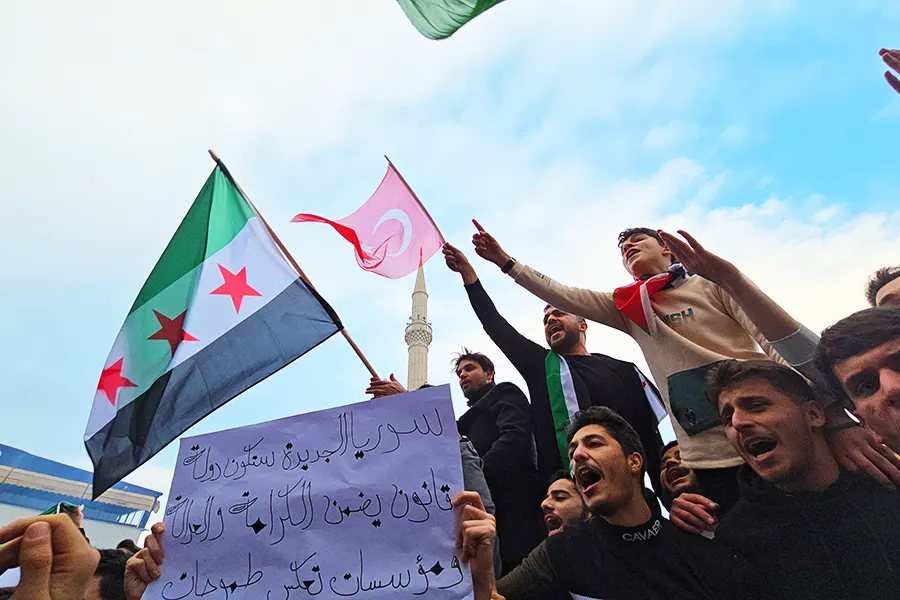
A new generation of millions of Syrians who were born, grew up or simply lived in Turkey are returning to Syria, creating ties between the two countries that will be difficult to break, and marking a turning point in the political, social and economic evolution of both nations, which will also greatly influence the region.
VOTE

As a history lover, Pablo Gómez was captivated by Turkey from the first day he visited it in 2006: he got married there, has a house there… and has since become an expert on Turkey’s current affairs. With a long experience in media, he has been at the helm of hispanatolia.com since 2011.