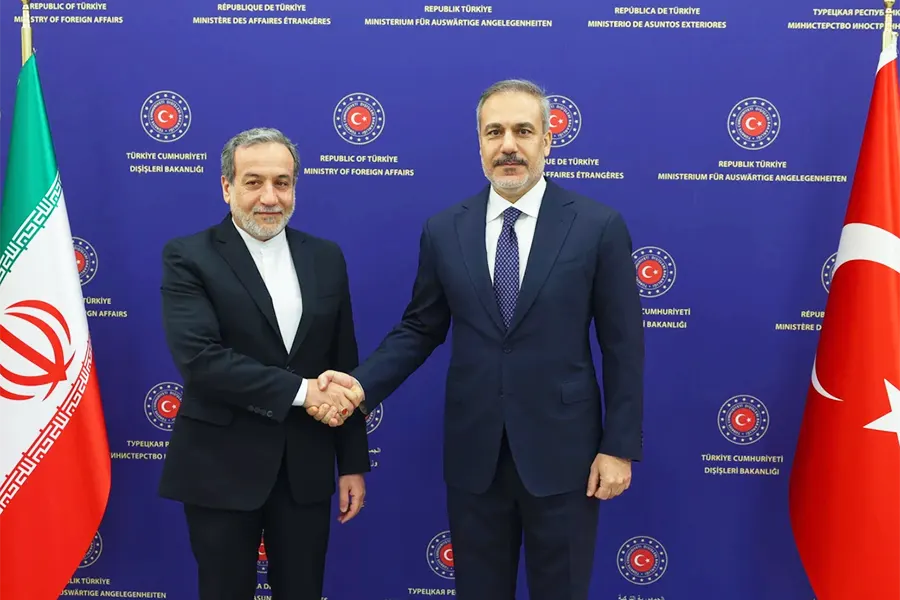
The foreign ministers of Turkey and Iran met in Ankara on Monday to discuss the situation in Syria following the offensive launched by Syrian rebels in Idlib province that has led to the fall of Aleppo, from which the forces of Bashar al-Assad’s regime have completely withdrawn.
Turkish media reported that Turkish Foreign Minister Hakan Fidan discussed with his Iranian counterpart Abbas Araghchi – who landed in Ankara last night after visiting Damascus – the crisis in Syria as well as the Israeli-Palestinian conflict. During a joint press conference, Fidan reiterated that it would be a mistake to explain the events of the past week in Syria by attributing them to outside intervention, pointing out that Ankara has long warned against a further escalation of tensions, and recalling that nothing has been done in the past 13 years to resolve the problems that led to the outbreak of the Syrian civil war.
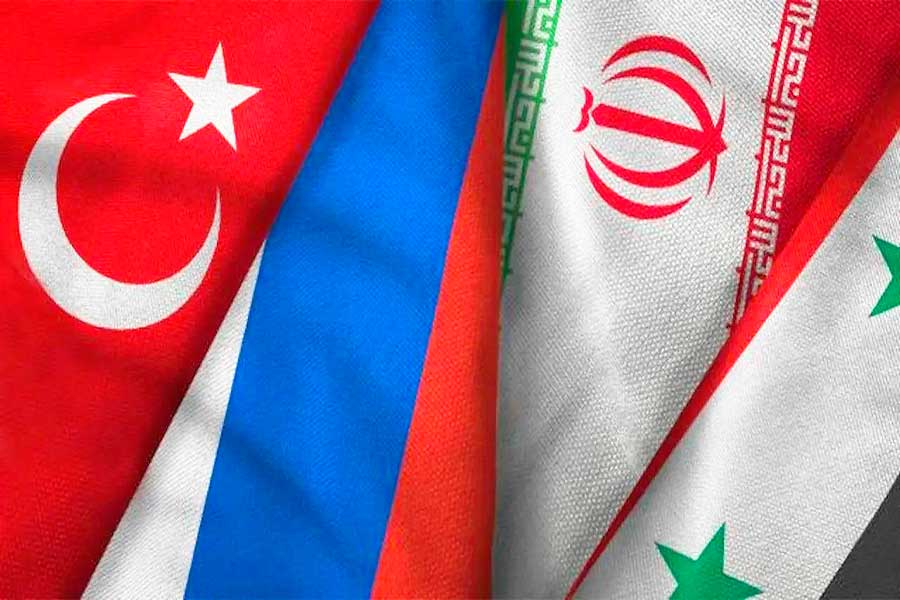
The Turkish foreign minister stressed once again that Ankara has always supported the full territorial integrity of Syria, referring to the so-called Astana process launched in 2017 under mediation by Turkey, Russia and Iran, which achieved a ceasefire between Assad regime forces and the Syrian opposition, but without any progress in resolving the roots of the conflict.
‘The latest developments underline the need to reach a compromise between the regime in Damascus and its own people, the legitimate opposition,’ said Fidan, who re-emphasised that Turkey did not want a further escalation of the conflict in Syria: ’We don’t want to see cities falling into ruin. We don’t want to see people displaced. It is essential to stop the flight of refugees, and for people to be able to return to their homes,’ he said.
Iran accuses US, Israel of being behind Syria offensive
Araghchi, who met with Bashar al-Assad in Damascus on Sunday and expressed Tehran’s strong support for his government, accused the Syrian rebels – whom he referred to as ‘terrorist groups’ – of having ‘connections with the United States and Israel’; the Iranian foreign minister said it would be a mistake to think that ‘the Zionist regime’ (Israel) was not involved in the new offensive by opposition forces in the region.
Despite their disagreements over the origin of the offensive that has led the Assad regime to lose control over Aleppo (the country’s second largest city), the Iranian foreign minister agreed with his Turkish counterpart that it is important to preserve the achievements of the Astana process because ‘insecurity in Syria will hit the Syrian people and their economy’. Both governments also expressed their desire to maintain cooperation in the fight against terrorism, including the PKK and its Iranian branch, the PJAK.
VOTE

EDITORIAL TEAM
🧿 About us
.
Edited and reviewed by:

Pablo Gómez is a specialist in Turkey and has been editor-in-chief of Hispanatolia since 2011. He has been analysing current affairs and geopolitics in Turkey and the surrounding region since 2006.
…
📣 Your ADVERTISING on Hispanatolia
.
🤗 HELP US WITH A DONATION:
💗 Paypal