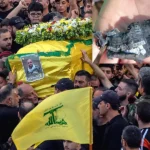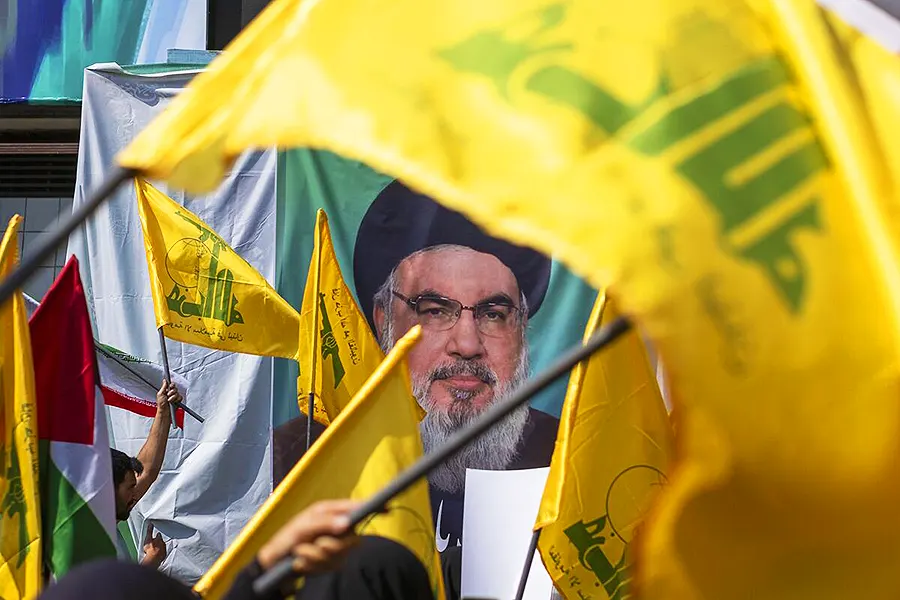
Lebanese Shi’ite group Hezbollah confirmed on Saturday the death of its historic leader Hassan Nasrallah during Israel’s massive bombardment of southern Lebanon‘s capital Beirut last night, in a major blow to the Iranian-backed armed group and a firm step towards spreading the conflict across the Middle East region.
‘Sayyed Hassan Nasrallah, secretary general of Hezbollah, has joined the great and immortal fellow martyrs with whom he has led for 30 years,’ Hezbollah announced in a statement echoed by several agencies, adding that it would continue its fight against Israel “in support of Gaza and Palestine, and in defence of Lebanon and its steadfast and honourable people.”
Hours earlier, the Israeli military had claimed that Nasrallah had been ‘eliminated’ during Friday night’s massive bombardment of a densely populated suburb south of Beirut, where Israeli intelligence said Nasrallah was hiding along with several Hezbollah leaders in an underground bunker built under residential buildings in the city.
In a statement issued by Israel‘s Defence Forces (IDF) spokesman Avichay Adraee, he explained that the operation had targeted Hezbollah headquarters built under a residential building in Beirut, and had been made possible by ‘accurate intelligence reports from the army’s military agency’. According to the Israeli spokesman, in addition to Nasrallah, other senior Hezbollah commanders were also killed in the air strikes, including the leader of the Shiite militia on Lebanon’s southern border.
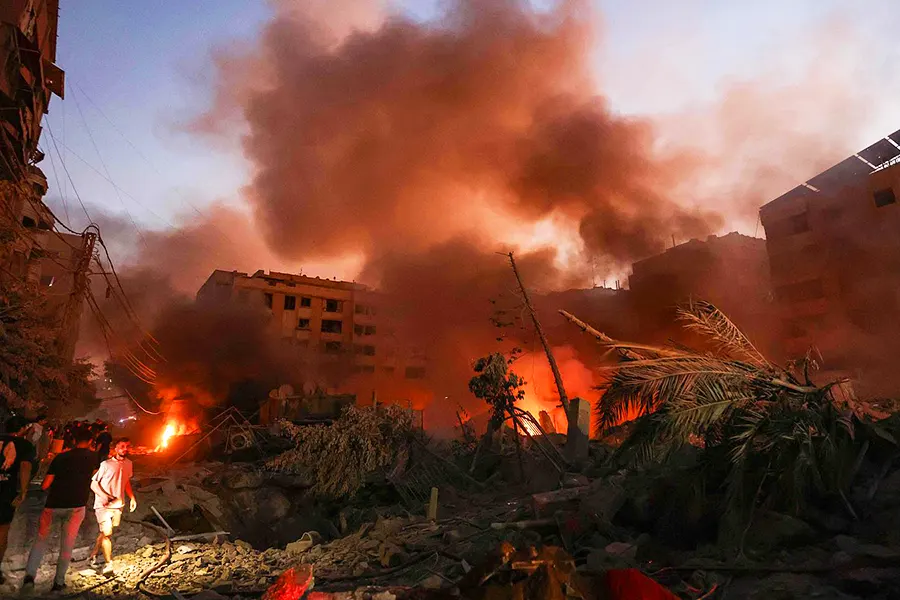
Massive damage in Beirut after bombardments
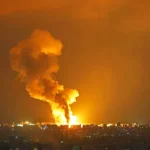
Both the bunker and apartment buildings in the area were reduced to rubble after the attack, in which the Israeli army used bunker-buster bombs and which caused explosions so powerful that they shook buildings 30 km away. The official Lebanese news agency NNA reported extensive damage in the area of Harat Hreik, inhabited by both Maronite Christians and Shi’ite Muslims south of the Lebanese capital, where several buildings collapsed under the bombardment and plumes of smoke were visible from across the city.
Lebanese Health Minister Firass Abiad told a news conference that 11 more people were killed and 108 wounded in the Israeli bombardment of Beirut last night.
Following the news of Nasrallah’s death, Iraq‘s Prime Minister Shia al-Sudani declared three days of mourning, short after the country’s influential Shia religious leader Muqtada al-Sadr had previously also announced several days of mourning for his death. France‘s foreign ministry said in a statement that it was carrying out intensive diplomatic efforts to prevent further destabilisation and escalation in the Middle East ‘following the confirmation of the assassination of Hezbollah leader Hassan Nasrallah.’
Hezbollah lost its influential political and spiritual leader
Born in 1960 in Beirut, Hassan Nasrallah had led Hezbollah since 1992, when the organisation’s previous leader, Sayyed Abbad al-Musawi, was killed in another Israeli air strike. As Hezbollah’s leader, Nasrallah achieved one of his greatest victories in 2000 when he succeeded in driving Israeli forces out of southern Lebanon, ending 18 years of occupation. Under his rule, Hezbollah greatly expanded its military capabilities to become one of the largest non-state military forces in the world and a major political actor in the region.
Hassan Nasrallah was also a key figure in the 2006 war against Israel, after which he strengthened his role as a leading anti-Israeli resistance leader in the region despite being widely criticised for his support for Bashar al-Assad’s forces during the Syrian civil war. Throughout his more than three decades of leadership of the Shia armed group, Nasrallah eventually became much more than the head of Hezbollah, but also its spiritual leader and an influential political leader in Lebanon’s sizeable Shia community.
Many in the Middle East have compared Hassan Nasrallah to Arab leaders such as Yasser Arafat in Palestine or Egypt’s Gamal Abdel Nasser. Due to security concerns, however, his public appearances in recent years had been increasingly rare and always from hidden locations in Lebanon; his last message was delivered on 19 September from Beirut, in response to an Israeli attack. His death leaves behind four sons but, above all, it leaves Hezbollah completely beheaded and without a clear successor with comparable charisma and leadership, as was the case after the recent assassination in Iran of Hamas leader Ismail Haniyeh.
VOTE

EDITORIAL TEAM
🧿 About us
.
Edited and reviewed by:

Pablo Gómez is a specialist in Turkey and has been editor-in-chief of Hispanatolia since 2011. He has been analysing current affairs and geopolitics in Turkey and the surrounding region since 2006.
…
📣 Your ADVERTISING on Hispanatolia
.
🤗 HELP US WITH A DONATION:
💗 Paypal