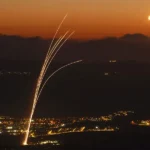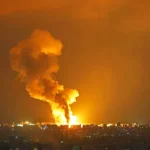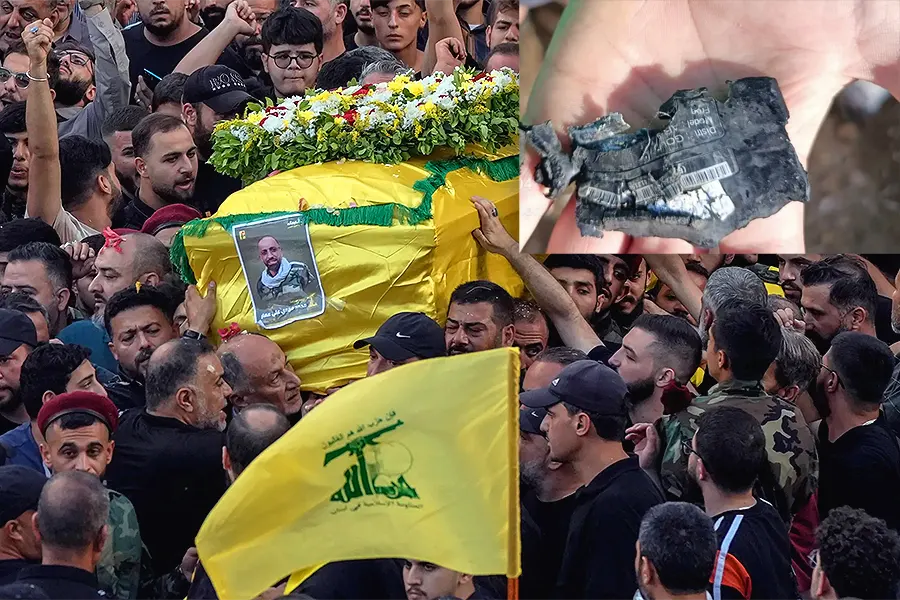
At least 20 people were killed and 450 injured in a second wave of explosions that rocked on Wednesday southern Lebanon and several suburbs south and east of Beirut, this time involving walkie-talkies used by Hezbollah members to communicate.
Several international media, including the New York Times, ABC News and Al-Jazeera, confirmed that at least one of the explosions occurred during a funeral organised by Hezbollah for the victims of the previous day, when the pagers used by Hezbollah to send messages to its members exploded, leaving – according to the latest information – 12 dead (two of them children) and nearly 3,000 wounded, hundreds of them with serious injuries.
Again, the second wave of explosions late yesterday collapsed hospitals due to the large number of casualties and wounded; Dr Joelle Khadra, a doctor in a Beirut hospital, declared that ‘the injuries are mainly to the eyes and hands, there are amputations of fingers and shrapnel in the eyes, some people have lost their sight’. Another doctor, who wished to remain anonymous, said the injuries were ‘unimaginable, something I have never seen in my life’.
Lebanese Foreign Minister Abdallah Bou Habib warned Israel against what he called a ‘blatant attack on Lebanon’s sovereignty and security’ and an escalation that could lead to ‘a wider war’ in the region. The previous day, the simultaneous explosion of thousands of pagers used by Hezbollah to communicate with its militants left 12 dead and nearly 3,000 wounded, including Iran’s ambassador to Lebanon.
Israeli Mossad planted explosives in the pagers used by Hezbollah
Several sources consulted, including intelligence reports and security officials in Lebanon, point to a complex and well-planned operation by the Israeli Mossad as the most likely theory behind the attacks, with small amounts of explosives – between 30 and 50 grams – placed in each of the communication devices imported by Hezbollah months ago.
The Taiwanese manufacturer of the pagers purchased by the Lebanese Shi’ite group, Gold Apollo, has denied that it placed such explosives and says that the devices were manufactured under a licence agreement by a company called BAC based in Budapest, Hungary. At some point in the manufacturing process or subsequent distribution, Mossad allegedly managed to intercept the pagers and tamper with them.
Hezbollah, which has described what happened as the ‘biggest security breach’ in its history, has vowed revenge against ‘the Israeli enemy’ for these attacks, about which Israel has remained silent in line with its traditional policy on such covert operations on foreign soil. However, Israeli Defence Minister Yoav Gallant announced that Israel has entered a ‘new phase’ of the conflict, and that after months of fighting Hamas in Gaza ‘the centre of gravity (of the offensive) is shifting to the north’, in a clear reference to Lebanon but also to Syria, where the Israeli army is now ‘directing its forces and resources’.
VOTE

EDITORIAL TEAM
🧿 About us
.
Edited and reviewed by:

Pablo Gómez is a specialist in Turkey and has been editor-in-chief of Hispanatolia since 2011. He has been analysing current affairs and geopolitics in Turkey and the surrounding region since 2006.
…
📣 Your ADVERTISING on Hispanatolia
.
🤗 HELP US WITH A DONATION:
💗 Paypal