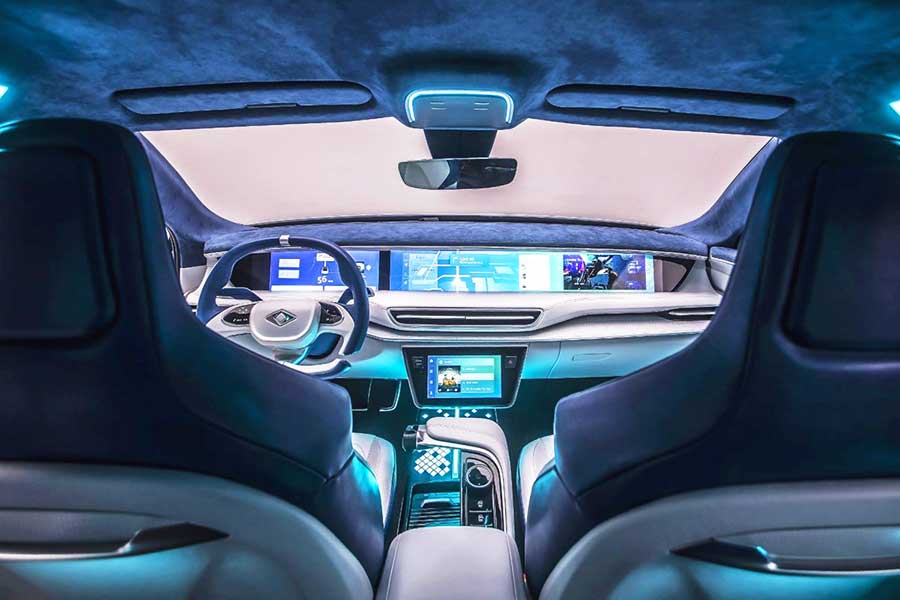
Turkey has set a target of 4.2 million electric vehicles by 2035 with 75% locally produced in order to reduce greenhouse gas emissions from transport, Turkish Minister of Environment, Urban Planning and Climate Change Murat Kurum has announced.
Speaking at the United Nations Climate Change Conference (COP29) in Baku and reported by Turkish media, Kurum spoke about Turkey’s goal of Zero Net Emissions by 2053, explaining that the Eurasian country plans to increase its renewable energy production to 50% of the total by 2053, and also to reach the target of 30% of its energy production coming from nuclear energy. Turkey currently ranks 5th in Europe and 11th in terms of renewable energy capacity, including wind and solar.
Kurum also announced that Turkey will increase its high-speed rail network to 7,000 km by 2053, raising the share of rail in logistics from the current 5% to 22%. In industry, the mid-century target is to reduce emissions in cement production by 93%, in iron and steel by 99% and in aluminium by 75%.
In waste management, Turkey aims to increase its recycling rate to 70% and drastically reduce its methane emissions into the atmosphere. ‘In agriculture, we will expand organic farming to 10% of farmland, optimise livestock feed and expand biogas facilities,’ the minister said.
According to data from the Association of Automotive Distributors in Turkey (ODMD), between January and October sales of electric vehicles in Turkey increased by 43% to 69,744 units, while those of hybrid vehicles grew by 58% to 126,977 units. Overall, electric cars accounted for 9.3% of all vehicle sales in the country in the first ten months of 2024, with Turkish brand TOGG maintaining its dominance of the electric car market in Turkey, with sales of 20,140 units in the aforementioned period equating to 31% of the total, ahead of Tesla (7,367) and BMW (6,576).
VOTE

EDITORIAL TEAM
🧿 About us
.
Edited and reviewed by:

Pablo Gómez is a specialist in Turkey and has been editor-in-chief of Hispanatolia since 2011. He has been analysing current affairs and geopolitics in Turkey and the surrounding region since 2006.
…
📣 Your ADVERTISING on Hispanatolia
.
🤗 HELP US WITH A DONATION:
💗 Paypal