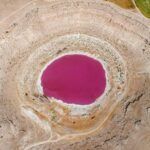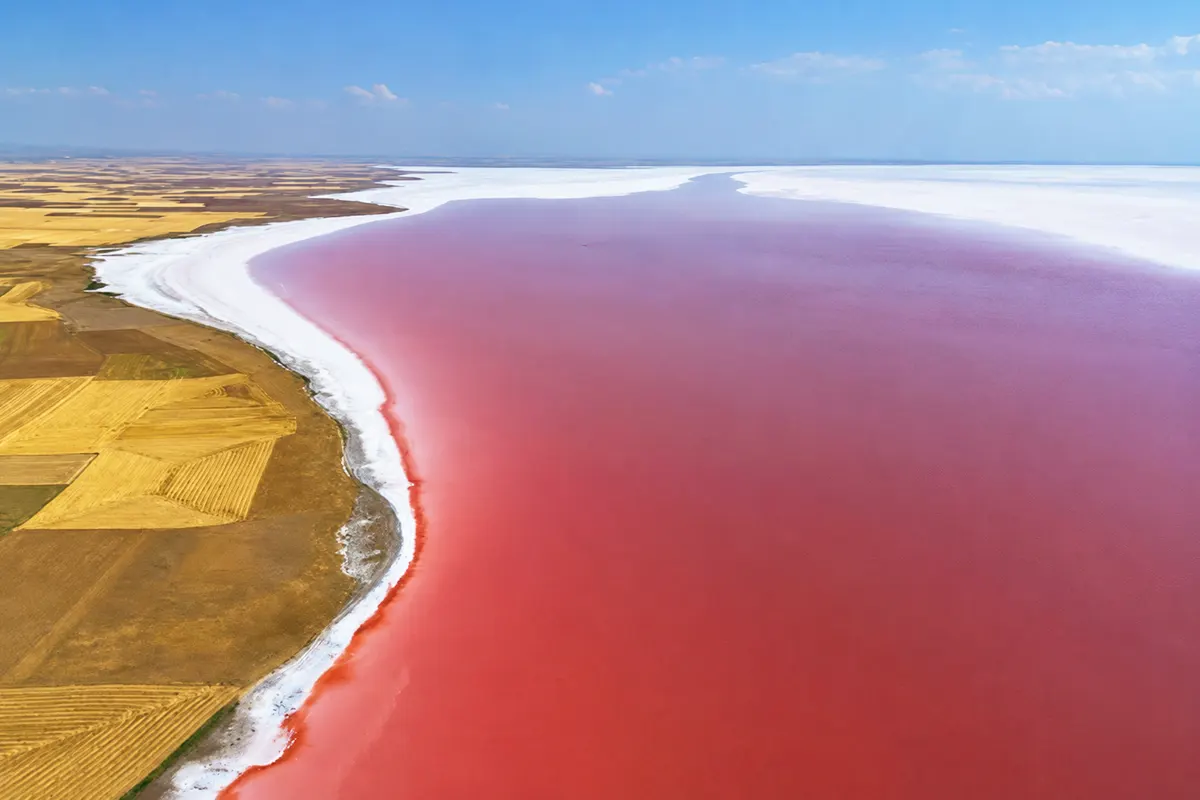
Lake Tuz, the second-largest lake in Turkey and one of the world’s largest salt lakes, as well as an important nature reserve for birds, has turned pink due to a curious phenomenon caused by the proliferation of algae and bacteria in the water, creating some spectacular images of the lake during the summer.
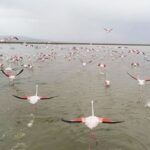
Situated in the Central Anatolia region, some 150 kilometres south-east of Ankara on the route to Cappadocia, this closed basin not only meets a significant proportion of the country’s salt needs, but is also renowned for its natural beauty. During spring and summer, it serves as a habitat for migratory birds and is in fact popularly known as the ‘paradise of the flamingos’, due to the large numbers of these birds that flock there each year to breed.
The lake’s pink colour is linked to the activity of algae and halobacteria present in the water, as geological engineer Nurcan Özdemir explained to the DHA news agency: “In Lake Tuz, due to excessive evaporation and the decline in water levels, microscopic organisms, algae and halobacteria produce a red pigment to protect themselves from excess salt and high temperatures. Nature is sending us a message through this colour.”
“The algae protect themselves from the harmful effects of sunlight by producing a red substance based on beta-carotene during the summer months, when temperatures and salinity rise. Furthermore, during this period, halobacteria multiply excessively, causing the lake to take on a pink or red hue. When the temperature drops or the rainy season begins, the lake returns to its original state,” she said.
“There is no landscape quite like this anywhere else in the world”
The expert noted, as a point of interest, that the red or pink colour of the flamingos’ wings comes from the algae, which constitute their food source in the lake: “These algae are the flamingos’ favourite food. Flamingos are born white: they get the pink colour on their wings because they feed on the algae in Lake Tuz”. “This phenomenon is not caused by any dyes or chemicals; it is completely natural and has been occurring ever since Lake Tuz was formed,” noted Özdemir, who also added that during July, increased evaporation and rising temperatures have raised the salt concentration and caused the water level to recede.
Özdemir emphasised that the lake not only meets part of Turkey’s salt requirements, but also provides a habitat for numerous species: “Lake Tuz is a magnificent place in every respect. It is a geological heritage site that we must protect. We are currently in the month when the pink colour reaches its peak: this attracts the attention of local and foreign tourists. There is no phenomenon or landscape quite like it anywhere else in the world. People can also come here for health reasons. They can walk barefoot. Lake Tuz helps relieve stress”, he concluded.
VOTE

EDITORIAL TEAM
🧿 About us
.
Edited and reviewed by:

Pablo Gómez is a specialist in Turkey and has been editor-in-chief of Hispanatolia since 2011. He has been analysing current affairs and geopolitics in Turkey and the surrounding region since 2006.
…
📣 Your ADVERTISING on Hispanatolia
.
🤗 HELP US WITH A DONATION:
💗 Paypal