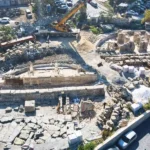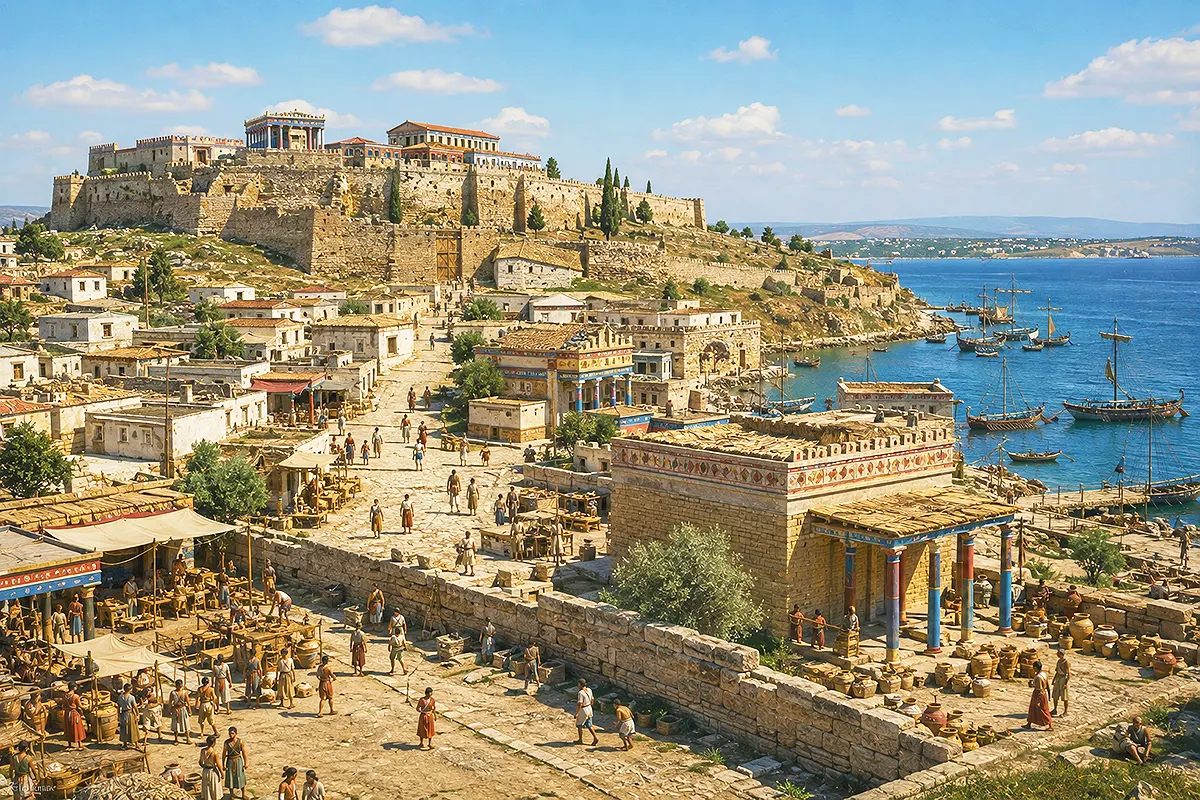
Long before Homer made Troy the setting for one of the most famous stories of antiquity, there was already a city on a hill beside the Dardanelles. For millennia, successive communities built their homes on top of the ruins of earlier ones, creating an extraordinary succession of settlements that has survived to the present day. The history of Troy is, therefore, far more extensive than that of the famous Trojan War, featuring Achilles, Hector and Priam, which inspired The Odyssey.
The Hisarlık archaeological site, situated in north-western Anatolia in what is now the Turkish province of Çanakkale, preserves a sequence of occupation that began around the 3rd millennium BC and continued, with interruptions and transformations, until the Byzantine period. UNESCO notes that the site has some 4,000 years of history and highlights its importance as a crossroads between Anatolia, the Aegean and the Balkans.
The first Trojans
The first known community at Troy emerged during the Early Bronze Age, around 3,000 BC. What archaeologists refer to as Troy I was not yet the great city of the epics, but a fortified settlement whose location would ultimately prove decisive for its development.
This is because the Hisarlık hill overlooked an area close to the entrance to the Dardanelles. In ancient times, the coastline lay much closer to the settlement than it does today, with a large gulf at the end of which lay Troy, situated just a few metres from the sea. Although the accumulation of sediment carried by the rivers gradually pushed the shoreline further out, for much of Troy’s history its location allowed it to control one of the main routes linking the Aegean Sea and the Black Sea.
This location made Troy a particularly attractive place for trade. Ships crossing the strait were dependent on wind and current conditions that might force them to remain in the area for some time; the settlement could thus benefit from its position at the crossroads of the maritime and overland routes linking Europe and Asia.
Troy II and the birth of a powerful city
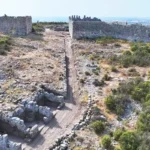
The first major transformation took place during Troy II, between 2,550 and 2,300 BC, when the small initial fortress gave way to a much more developed settlement. Its walls and monumental buildings show that its inhabitants had sufficient resources to build a fortified citadel that was economically prosperous.
The settlement was destroyed and subsequently rebuilt. The same would happen time and again over the following centuries. The result is one of the most extraordinary features of the Troy site as we know it: the successive Troys were built on top of the previous ones, gradually raising the artificial hill of Hisarlık.
Between Troy III and Troy V (2,300–1,700 BC), there were further phases of occupation during the Bronze Age. Although these periods are less well known to the general public, they are fundamental to understanding that the city did not come into being with the world of Homer. Troy was a living city for centuries before it became a legend.
The heyday of Troy VI: Wilusa and the Hittites
Around the second millennium BC, one of the most significant periods in its history began. Troy VI (1,800–1,300 BC) underwent considerable expansion and developed a citadel protected by large stone walls, whilst outside these walls lay a much larger lower town.
Excavations have made it possible to reconstruct a complex society, comprising dwellings, storage areas, defensive systems and transport routes. The growth of the lower town demonstrates that Troy was no longer simply a fortress situated on a hill, but an urban centre of some significance.
Its prosperity was closely linked to its strategic position. Archaeological finds reveal extensive trade links with various regions of the Mediterranean and the Aegean. Imported pottery and other materials have been found that provide evidence of connections with communities far from Anatolia.
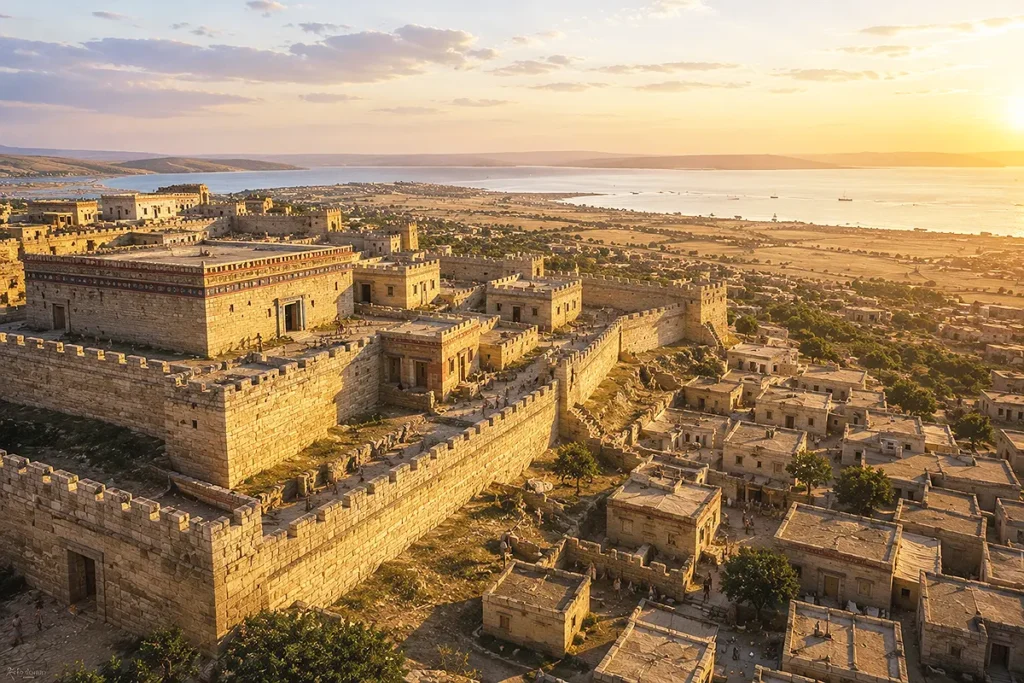
The importance of Troy is also indirectly reflected in Hittite sources. Several scholars consider it likely that the Wilusa mentioned in documents of the Hittite Empire corresponded to the region of Troy and that Ahhiyawa referred, at least in certain contexts, to a power associated with the Mycenaean world. This identification is widely accepted, although there is no absolute unanimity amongst scholars.
One of the most important documents is the treaty between the Hittite king Muwatalli II and Alaksandu, ruler of Wilusa. The agreement demonstrates that Wilusa formed part of the complex political landscape of Western Anatolia and that the Trojan rulers maintained diplomatic relations with the powerful Hittite Empire and its capital, Hattusa.
The birth of the Troy of the Iliad
The prosperity of Troy VI came to an end with widespread destruction, which archaeologists have attributed primarily to an earthquake. Archaeological investigations have identified structural damage consistent with strong seismic activity, something particularly plausible in a region historically prone to earthquakes.
But the city did not disappear. It was rebuilt, and a new phase began, known as Troy VIIa (1300–1180 BC). The continuity between the two phases demonstrates that the inhabitants did not permanently abandon the site following the catastrophe.
The new city looked different. Dwellings were more concentrated within the defences, and in some houses large storage vessels were excavated from the floors. These changes have been interpreted as evidence of a population concerned with storing food and withstanding long periods of insecurity or sieges.
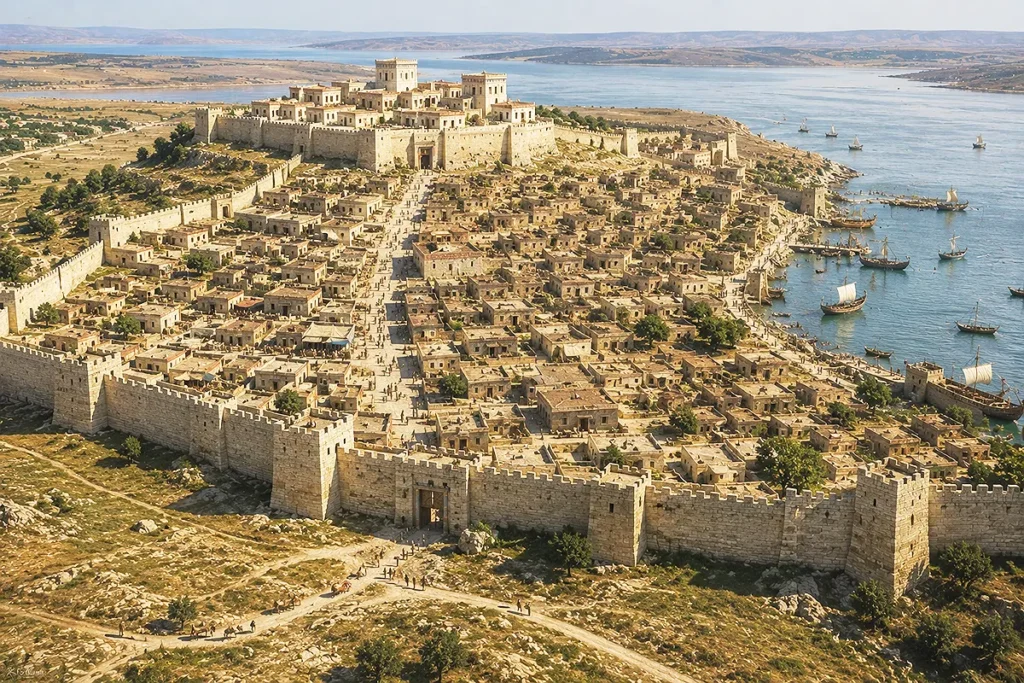
It is precisely this phase, known as Troy VIIa, that is usually associated with the Troy of the Iliad; however, the matter remains the subject of debate amongst historians. It is true that the destruction of Troy VIIa, towards the end of the 13th or the beginning of the 12th century BC, was accompanied by fires and other evidence that may be consistent with a violent episode; arrowheads, sling bullets, human remains and burnt buildings have been found.
These discoveries show that the city underwent a traumatic episode during this period; however, they do not allow us to conclude that it was attacked by the armies of Agamemnon, nor that events unfolded exactly as detailed in the Homeric account.
Did the Trojan War described by Homer really take place?
At this point, we must say that the most rigorous answer is: we do not know.
Homer probably composed the Iliad in the 8th century BC, four or five centuries after the period in which the conflict is traditionally set. The epic poem evokes memories of a world far older than the one its author lived in, but it also incorporates elements characteristic of the period in which it was written by Homer.
If we turn to the Hittite texts, these show that during the Bronze Age there were conflicts between various powers in western Anatolia and groups linked to the Mycenaean world. Some of these documents even mention Wilusa; however, no source from that period describes a war identical to the one described by Homer.
For this reason, some researchers have suggested the possibility that the epic tradition concerning Troy recorded by Homer might include distorted memories of various conflicts that took place over generations, rather than an accurate description of a single war. Other historians even consider that there is insufficient evidence to reconstruct a specific historical war behind the narrative.
What can be stated categorically, however, is that Troy did exist, that it was an important city during the Bronze Age and that it maintained relations with the major powers in its vicinity. Building on these facts, the legend of the Trojan War may have developed centuries later, drawing on a historical reality but adding other distorted or even invented elements. Some even suggest that the destruction of Troy VIIa may in fact have been linked to the invasions by the so-called Sea Peoples.
From Homer’s world to the Greek city
After Troy VIIa was destroyed, the settlement was temporarily abandoned but was reoccupied during the Iron Age.
The phase known as Troy VIII (700 BC to 85 BC) corresponds to the re-establishment of the settlement in the Greek period, several centuries after the Bronze Age. The city then took on a new identity and became Ilion, a place deeply associated with the heroes of the epic tradition.
The legend of the war helped to enhance its prestige. Travellers, rulers and important figures flocked to the site associated with Achilles, Hector and the other protagonists of the Trojan tradition. The cult of Athena Ilias took on particular importance and the settlement developed numerous religious and public buildings.
Troy under the Roman Empire
In the 1st century BC, the city entered a new phase, known as Troy IX (85 BC to 500 AD), which corresponds to the Roman rule over the city. Rome turned Troy into a political and mythical symbol, owing to the tradition tracing the Romans back to Aeneas, the Trojan hero who, according to Virgil, had escaped the city’s destruction and eventually reached the region of Latium in Italy.
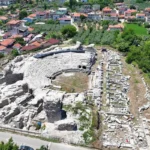
The settlement, known as Ilion, received attention and privileges from Roman leaders. Julius Caesar visited the site and subsequently the emperors favoured its development, turning Troy into a major tourist centre under the Roman Empire — one of the most important in the Mediterranean — which attracted visitors from across the empire. During the Roman period, the construction or extension of public buildings, religious sites and other infrastructure took place; these were no longer intended for economic purposes but rather to fulfil the Roman rulers’ desire to keep the city alive, having transformed it into a centre for tourism and pilgrimage.
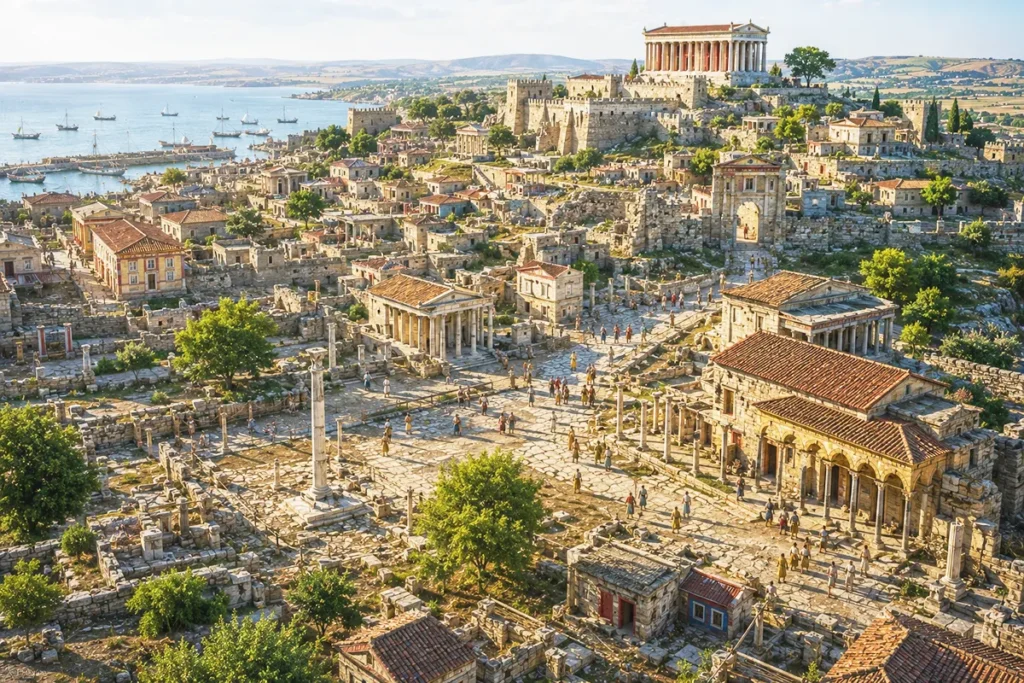
It was then that Troy experienced a curious paradox: the once-glorious city, famous for centuries for the account of its destruction, now stripped of its former strategic and commercial value, survived under the Roman Empire largely thanks to the memory of that very destruction.
This was the end of Troy
The final blow that precipitated the end of Troy came during Late Antiquity, in the final years of the Western Roman Empire. A series of earthquakes severely affected Troy between the 4th and 5th centuries AD, causing significant damage to its buildings and accelerating the city’s decline. According to the latest archaeological discoveries, around 500 BC a final major earthquake occurred, causing such extensive destruction that its inhabitants decided to abandon Troy, which ceased to exist as an urban centre.
Human occupation nevertheless continued for several centuries: archaeological excavations have shown that the site remained inhabited, albeit on a much smaller scale. Following the great devastation caused by the earthquakes and the spread of the Christian religion, the ancient city – which in its final stages had depended on the favour of the emperors and the donations of pagan pilgrims who came to visit it –never regained its former importance.
Information regarding the final stages of Troy’s existence is, in fact, rather scarce. Research identifies a late Byzantine phase, known as Troy X (from 500 AD to 1300–1400 AD), with remains dating mainly from the 12th and 13th centuries. It was by then a very small settlement, with dwellings, agricultural structures and burials typical of a simple village.
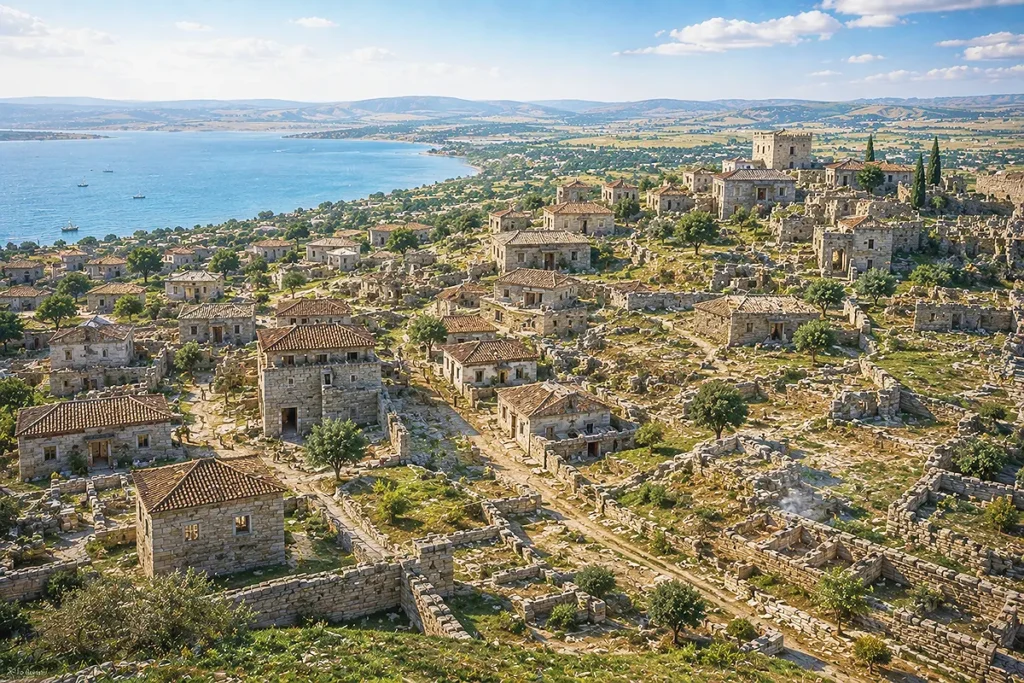
Finally, during the Late Middle Ages, the population abandoned the site and Troy was left uninhabited for ever. The buildings that were still standing gradually fell into ruins, and the ancient hill on which the citadel stood became part of the rural landscape. It is not possible to establish an exact date for the final abandonment of Troy based on archaeological reconstructions, but the late medieval occupation came to an end around the 13th–14th centuries.
From a forgotten city to its archaeological rediscovery
For centuries, travellers and scholars searched for the site described by Homer. The problem was that the city had been buried beneath layers of sediment and ruins, and the memory of its existence had faded over the centuries.
Around 1865, the British researcher Frank Calvert identified the hill of Hisarlık – then situated in the Ottoman Empire – as a particularly promising candidate site, even though the most widely held theory at the time was that it lay at Pınarbaşı; later, in 1868, the Prussian businessman and archaeologist Heinrich Schliemann met Calvert, who convinced him of his theory; as a result, Schliemann – backed by his vast fortune – began excavation work around 1870 and turned the site into one of the great archaeological discoveries of the 19th century.
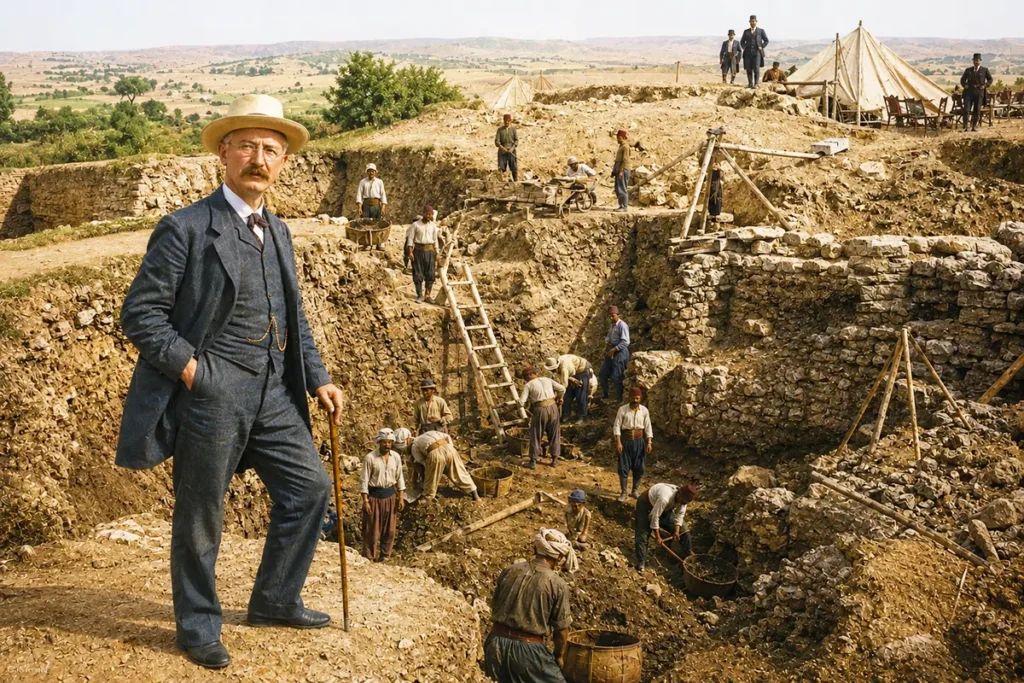
Schliemann’s enthusiasm for finding Homer’s city also led him to make significant errors. Convinced that Homeric Troy lay within the oldest layers, he not only disrupted part of the site’s stratigraphy but –paradoxically– destroyed the layers where Troy VIIa was located (the Troy identified with Homer that he was seeking), but he also identified as the “Treasury of Priam” some jewellery found in a phase much older than that traditionally attributed to the conflict described in the “Iliad”. Even so, Schliemann remains a pioneer of archaeology; yes, he caused a great deal of damage and made many mistakes during the excavation, but in his defence it must be noted that his methods were common and widely accepted at the time.
Subsequent excavations by Wilhelm Dörpfeld, Carl Blegen and other archaeologists made it possible to establish a much more precise chronological sequence. Modern research has shown that Hisarlık contains multiple superimposed cities, each belonging to a different period.
Research continues in the area today under the direction and with the support of the government of Turkey; new discoveries are continually being made as archaeologists delve deeper into the various historical layers, and the finds made so far have already altered several of the interpretations formulated during the early days of Troy archaeology.
The importance of this site is attested to by the fact that, in 1998, the archaeological site of Troy was declared a UNESCO World Heritage Site.
Troy: the legend that defies time
The true history of Troy is, in some ways, more fascinating than the legend. It was not simply a city destroyed by the Achaeans after a long siege, but a settlement that originated in the Bronze Age, flourished thanks to its position on major trade routes, suffered earthquakes and destruction, was repeatedly rebuilt during the Greek and Roman periods, and survived for millennia under various cultures.
The historical Troy does not exactly correspond to Homer’s Troy. Nor do we know whether Achilles, Hector, Priam or the famous Trojan Horse — made of wood and used to conquer the city — actually existed. But archaeology, thanks to the excavations begun by Schliemann in the 19th century, has shown that behind the myth there was a real city, situated at a strategic point of enormous importance and inhabited for more than three millennia.
Although the last Trojans abandoned it at the end of the Middle Ages and Troy was consigned to oblivion for centuries, its name and legend did not disappear. The ruins of Hisarlık would eventually become one of the greatest pieces of archaeological evidence for the continuity of civilisations in the eastern Mediterranean and the real setting against which one of humanity’s great epics built its legend. The history of Troy, its archaeological discoveries, and the epic and moral narrative woven by Homer around the city and its legend, are today more alive and relevant than ever.
📚 If you want to learn more about the history of Turkey, we recommend:
🧿 Discover here more recommended products about Turkey
As an Amazon Associate, we earn from qualifying purchases. This comes at no extra cost to you and helps support this website.
VOTE

EDITORIAL TEAM
🧿 About us
.
Edited and reviewed by:

Pablo Gómez is a specialist in Turkey and has been editor-in-chief of Hispanatolia since 2011. He has been analysing current affairs and geopolitics in Turkey and the surrounding region since 2006.
…
📣 Your ADVERTISING on Hispanatolia
.
🤗 HELP US WITH A DONATION:
💗 Paypal