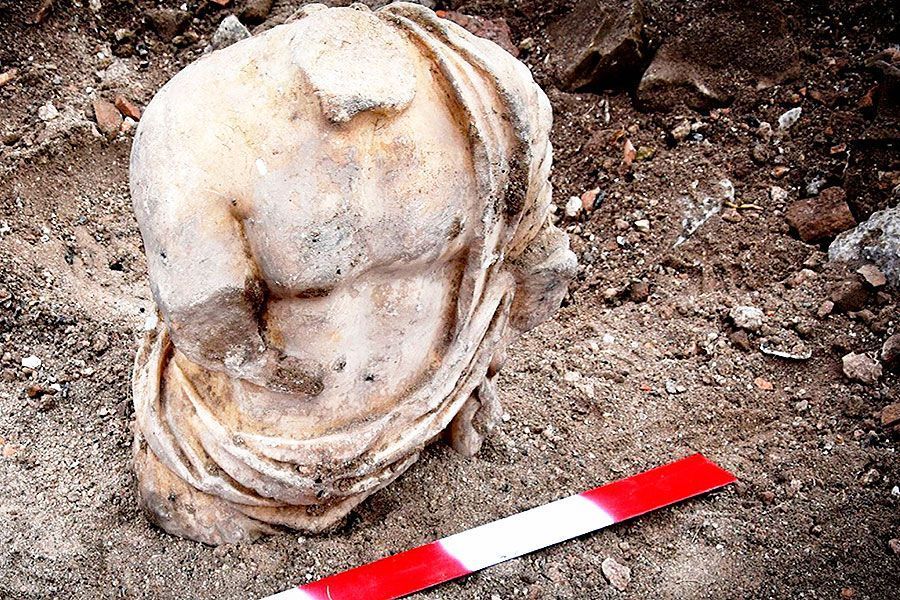
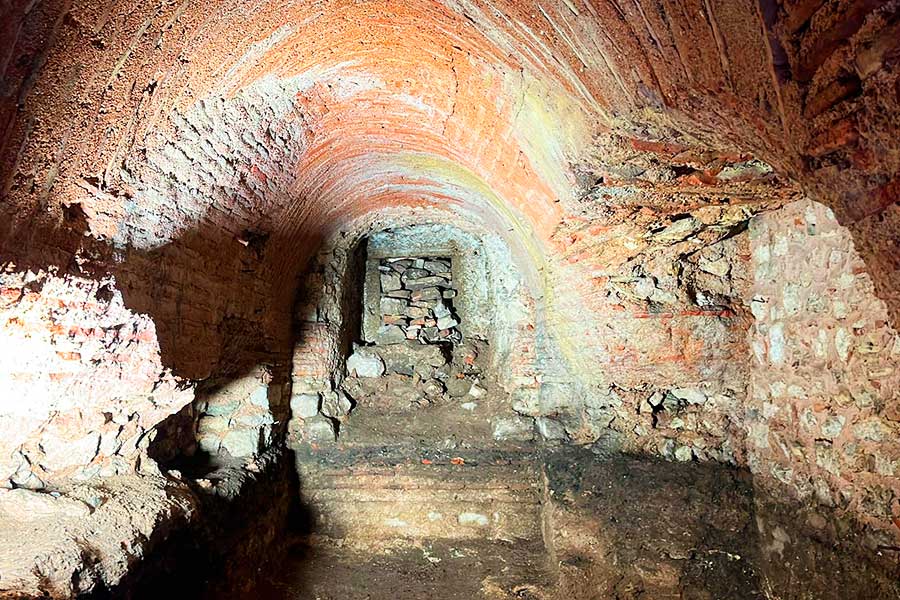
Roman and Byzantine archaeological remains – including several houses and streets – uncovered between 2009 and 2011 during construction works on the Sirkeci station of the Marmaray underwater tunnel in Istanbul, will be opened to the public, officials from the city’s metropolitan municipality have announced, following the completion of work currently being carried out by archaeologists at the site, located between the Sarayburnu Municipal Park and the Sarayburnu Port.
The uncovered remains, which date back to the Late Roman Empire and the early Byzantine period of the ancient Constantinople, are divided into two zones and include parts of ancient streets, internal and external walls, columns, water channels, a well, and a fountain. “Sarayburnu is one of the oldest parks in Istanbul, and is home to the first public statue of Atatürk, built in 1928. While archaeological works continue in the other area, we will open this area to visitors as an archaeological park,” explained Okan Yılmaz, deputy director of the Istanbul Metropolitan Municipality’s construction and green areas department.
“One area includes ruins from the proto-Byzantine period, during the 4th and 5th centuries, and the other belongs to the late Roman Empire, during the 2nd and 3rd centuries. This used to be a parking area, now we have come to an agreement that only archaeological remains can be displayed. People will be able to come and see the ruins in this part of Istanbul, once the archaeologists finish their work. These are some of the rarest historical remains in Turkey,” Yılmaz said.
VOTE

EDITORIAL TEAM
🧿 About us
.
Edited and reviewed by:

Pablo Gómez is a specialist in Turkey and has been editor-in-chief of Hispanatolia since 2011. He has been analysing current affairs and geopolitics in Turkey and the surrounding region since 2006.
…
📣 Your ADVERTISING on Hispanatolia
.
🤗 HELP US WITH A DONATION:
💗 Paypal