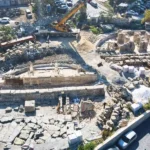
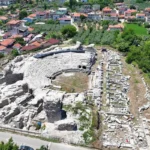
Hattusa was one of the most impressive cities of the ancient world, yet the story of its rise and fall remains one of the great archaeological mysteries of the Antiquity. Located in central Anatolia, in present-day Turkey, it was the powerful capital of the Hittite Empire, one of the major powers of the Bronze Age, capable of rivalling Egypt, Assyria and other great kingdoms of the Middle East.
But who were the Hittites, and why were they so powerful? How could a city that, at its peak, had a population of – according to some sources – 100,000 inhabitants, come to be destroyed and fall into oblivion? Why did a civilisation such as the Hittite emerge in the heart of Anatolia?
A monumental metropolis in the heart of Anatolia
The origins of the city of Hattusa date back several centuries before the Hittite heyday. The settlement was already inhabited during the 3rd millennium BC, although it attained decisive importance when King Hattusili I made it the capital of his kingdom in the mid-17th century BC. From then on, the city became the administrative, military and religious heart of an empire that would eventually extend its influence across much of Anatolia and northern Syria.
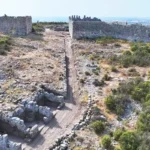
At its height, particularly between the 14th and 13th centuries BC, Hattusa covered an area that was exceptional for its time. The city was protected by a complex system of walls stretching for several kilometres and featuring defensive towers, monumental gates and fortifications adapted to the mountainous terrain.
Among its best-known structures are the Lion Gate, the King’s Gate and the Sphinx Gate, true symbols of Hittite power. Within the walled city stood the royal palace, administrative buildings, storehouses and numerous temples dedicated to different deities, reflecting the empire’s multicultural character.
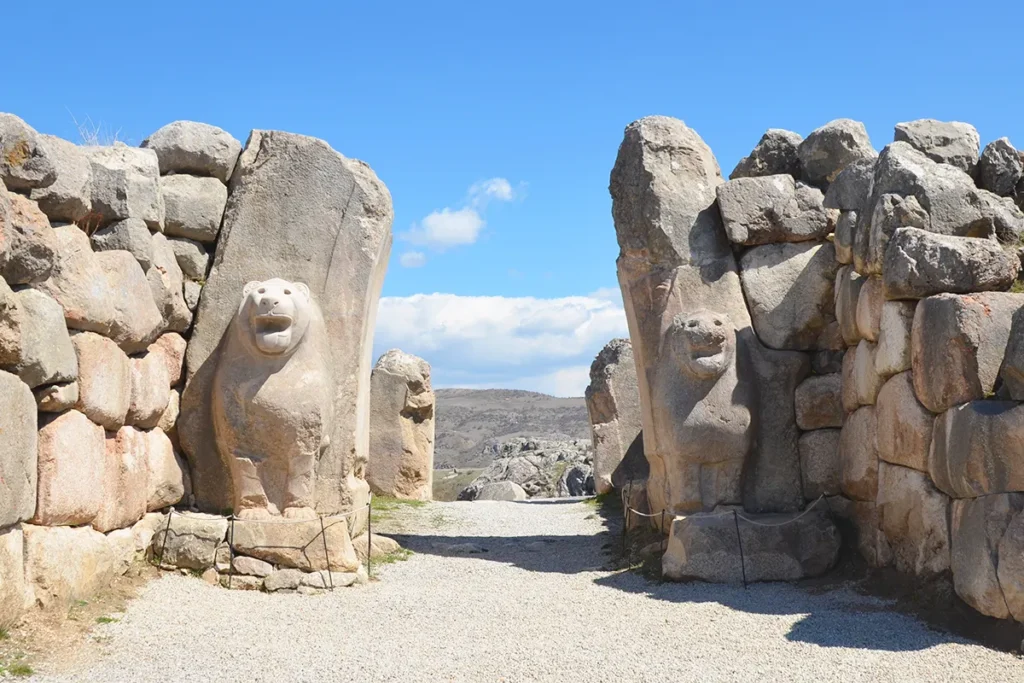
The city was not merely a political centre. Thousands of clay tablets discovered by archaeologists in Hattusa have revealed the existence of a sophisticated state bureaucracy. These documents contain diplomatic treaties, religious texts, official correspondence, detailed inventories and legal provisions that provide a detailed insight into the organisation of one of the most advanced civilisations of its time.

The Hittites were also renowned for their mastery of iron metallurgy: a skill that set the Hittites apart from other peoples and empires during the Bronze Age. Their language, written in cuneiform script, is also considered the oldest documented Indo-European language.
The capital of an empire that challenged Egypt
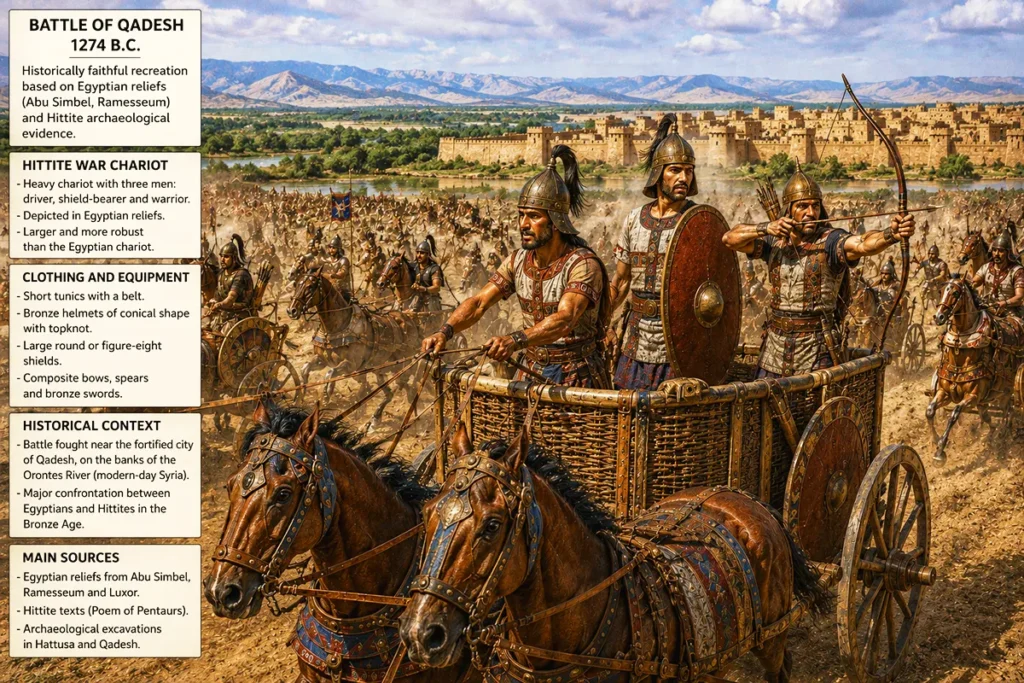
Some of the most influential monarchs of the ancient world ruled from Hattusa. Under kings such as Suppiluliuma I, the Hittite Empire reached the peak of its territorial expansion and consolidated an extensive network of alliances, vassalages and diplomatic agreements. The Hittite armies were noted for their use of powerful war chariots – larger and heavier than the Egyptian ones – and a military organisation that was highly advanced for the time.
One of the most famous episodes of this period was the Battle of Kadesh, fought against the forces of Pharaoh Ramses II. Although both sides claimed victory, the conflict ultimately led to an agreement establishing the borders between the two empires, which is regarded by many historians as the first peace treaty in history.
The strategic importance of Hattusa also lay in its geographical position. Situated in an elevated and naturally protected region, it controlled essential trade routes linking Anatolia with Syria, Mesopotamia and the eastern Mediterranean, facilitating both economic exchange and the projection of Hittite military power.
During its heyday in the 14th and 13th centuries BC, Hattusa was home to between 40,000 and 50,000 inhabitants; some estimates put its population at over 100,000 inhabitants, although there is no consensus on this figure. In any case, 50,000 inhabitants remains an extraordinary figure for an era in which large cities such as Ugarit — one of the most prosperous cities of the Late Bronze Age — had fewer than 10,000 inhabitants, which placed Hattusa as one of the largest cities in the ancient Near East… and quite possibly in the world.
The collapse of a Bronze Age superpower
In the late 13th century BC and early 12th century BC, the eastern Mediterranean world experienced a widespread crisis. Great powers such as the Mycenaean kingdoms, Ugarit and the Hittite Empire itself underwent processes of political and economic disintegration, the causes of which remain the subject of research, during a turbulent period known as the Bronze Age collapse.
In the case of the Hittites, current studies point to a combination of factors that led to their downfall. Various studies suggest that prolonged periods of drought due to a cooling of the climate may have caused serious agricultural problems and shortages of food and other resources. Added to this were internal tensions, difficulties in maintaining the imperial administration, succession conflicts and growing pressure from external enemies.
Historical sources also mention population movements and raids by groups from various regions of the Mediterranean during this period of instability: these would have been either mass migrations or invasions — it is not yet clear — by peoples whom the Egyptians called “the Sea Peoples”, though their origin and the reasons for these movements remain uncertain. However, most specialists consider it unlikely that these waves of invaders alone explain the disappearance of the Hittite empire, so its end remains shrouded in mystery.
The mystery of the final days of Hattusa
For decades, historians and archaeologists believed that the city had been suddenly destroyed by invaders. However, archaeological excavations have, over the years, revealed a more complex picture. Some sections of the ruins of Hattusa show evidence of fire and destruction; but there are also indications suggesting that part of the population abandoned the city before its final collapse.
Researchers have noted that many administrative buildings did not contain the large quantities of documents one would expect following a hasty evacuation of the city, which could indicate that many valuable objects – including the royal treasury – had been removed beforehand. This has led some experts to suggest that the Hittite authorities organised a gradual withdrawal when the situation had already become untenable.
In any case, and despite numerous studies and advances in archaeology, there is still no absolute consensus among experts regarding the exact sequence of events that led to the abandonment of Hattusa and the collapse of the Hittite Empire. A combination of climate crisis, economic decline, internal political conflicts and attacks by external invaders remains the most widely accepted explanation, although numerous details continue to be an unsolved enigma.
Following the demise of the Hittite Empire, Hattusa was abandoned and gradually fell into oblivion. For centuries, and until the excavations that begun in the late 19th and early 20th centuries brought to light its walls, temples and archives, practically everything known about the Hittites and their ancient capital was due to their frequent mention in the Bible (although they are spoken of as an insignificant people inhabiting the region between Canaan and the Euphrates River), in Egyptian inscriptions regarding the Battle of Kadesh (the Egyptians refer to the Hittite kingdom as “Hatti”) and in Assyrian and Mesopotamian sources that refer to the former splendour of their kingdom.
How to visit Hattusa: opening times, tickets, what to see, tips…
Hattusa is located near the town of Boğazkale, in the Turkish province of Çorum, some 200 kilometres east of Ankara. The most convenient way to visit is by hire car from Ankara or Cappadocia, as public transport to the site is limited. From the Turkish capital, the journey takes approximately between two and a half and three hours by road.
There are also organised day trips from Ankara and some private tours from Cappadocia that include Hattusa, the Hittite rock sanctuary of Yazılıkaya and the nearby Hittite archaeological site of Alacahöyük, situated about 30 kilometres north of Hattusa.
Opening hours and admission price
According to the official information available, the visiting hours for the Hattusa archaeological site are from 8:00 am to 7:00 pm from April to September, and from 8:00 am to 5:00 pm from October to March, with the site open from Monday to Sunday.
The ticket includes a tour of the Hattusa site and a visit to the museum in Boğazkale, and the price is 3 euros, although we recommend visiting the official website and contacting them in advance to confirm opening times and prices.
What to see during the visit
The visit takes you through the main areas of the ancient Hittite capital, including the Lion’s Gate, the King’s Gate, the Sphinx Gate, the Great Temple, the defensive walls and the remains of the Upper City. A short distance away is Yazılıkaya, considered one of the most important religious sanctuaries in the Hittite world, famous for its rock-carved reliefs, which we highly recommend visiting.
To gain a better understanding of the site’s history, it is highly recommended to round off the experience with a visit to the Boğazköy Archaeological Museum, situated in the centre of the village of Boğazkale, where numerous finds from the excavations at Hattusa are on display.
Tips for visiting Hattusa
- Allow at least two to three hours to explore the ruins of Hattusa at a leisurely pace.
- Bring plenty of water, especially in summer, as there are few shaded areas within the site.
- Wear comfortable shoes with good soles: much of the route follows dirt tracks, stone paths and uneven surfaces.
- Spring and autumn are usually the best times to visit, as they offer the most pleasant conditions, with moderate temperatures and greener landscapes.
- If you have time, visit the sanctuary of Yazılıkaya around midday, when the natural light allows you to appreciate many of its reliefs better.
Today, the archaeological site of Hattusa is recognised as a UNESCO World Heritage Site, constituting one of Turkey’s most impressive archaeological sites and one of the main windows into understanding the history of the Hittite Empire. Its ruins, the remains of a mighty city that was the capital of a Bronze Age superpower, bear witness to the rise of a civilisation that came to dominate much of Anatolia and whose demise remains, even today, one of the great mysteries of archaeology.
🧿 TOP TOURS IN TURKEY
📚 If you want to learn more about the history of Turkey, we recommend:
🧿 Discover here more recommended products about Turkey
As an Amazon Associate, we earn from qualifying purchases. This comes at no extra cost to you and helps support this website.
VOTE

EDITORIAL TEAM
🧿 About us
.
Edited and reviewed by:

Pablo Gómez is a specialist in Turkey and has been editor-in-chief of Hispanatolia since 2011. He has been analysing current affairs and geopolitics in Turkey and the surrounding region since 2006.
…
📣 Your ADVERTISING on Hispanatolia
.
🤗 HELP US WITH A DONATION:
💗 Paypal