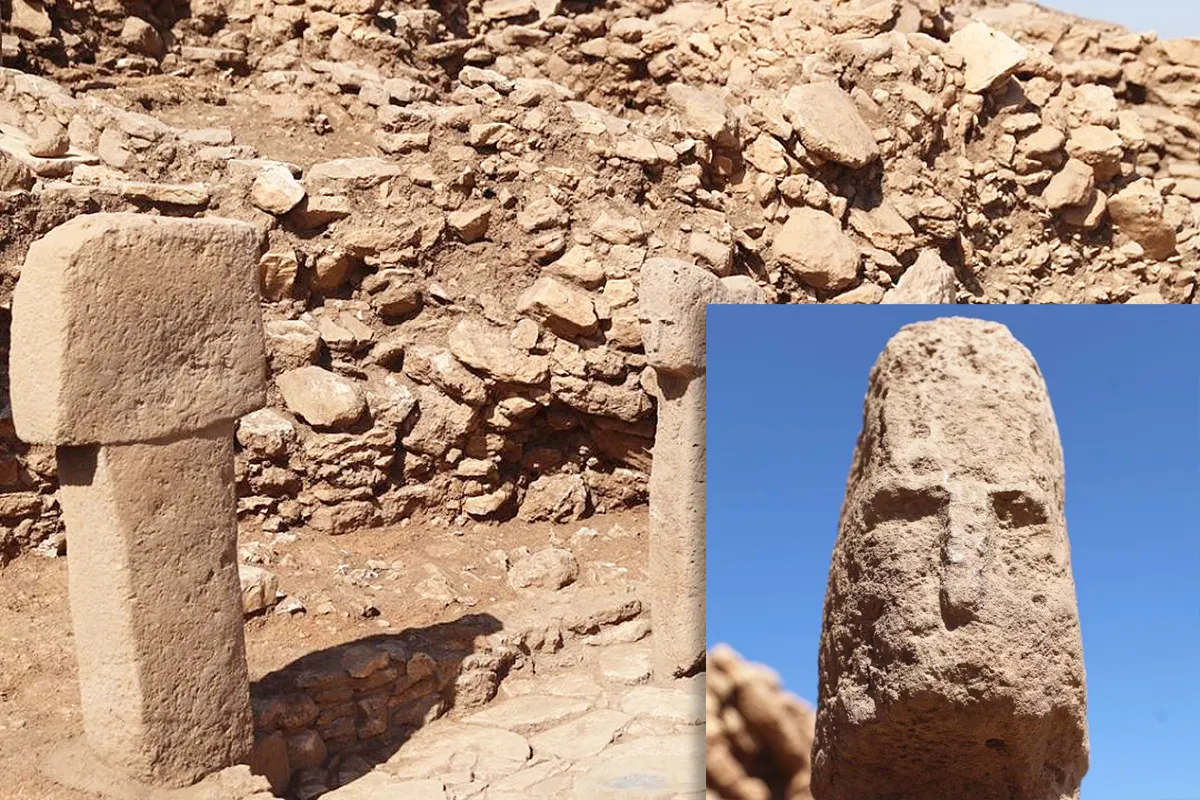
The discovery by archaeologists of a human face carved into the surface of one of the T-shaped columns at the Karahantepe site, in the Turkish province of Şanlıurfa, has reinforced the theory that these stones – also present at the World Heritage site of Göbekli Tepe – represent human figures.
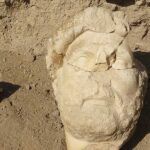
During this year’s excavation campaign at Karahantepe, one of the main Neolithic settlements included in the Taş Tepeler (Stone Hills) project, archaeologists identified three T-shaped pillars within a residential structure. A human face with eye sockets, nose and defined features was carved on the side surface of one of the stones, supporting the hypothesis that the horizontal part of these monoliths represents the “head” and the vertical part the “body” of a human being.
Professor Necmi Karul, the director of the excavations, explained in statements reported by several Turkish media that the structure was erected vertically on the ground, with walls covered with clay and a floor paved with flat stones. Karul noted that the interior columns were smaller than those found in public spaces, pointing out that “they had a structural function of supporting the roof, but also a symbolic meaning within the dwellings. It shows us that their surfaces were decorated”.
“From the reliefs on the sides – the sculpted arms and hands, the best examples of which are found at Göbekli Tepe – we had suggested that they symbolised human figures, which in addition to supporting the roof had a symbolic meaning, with the upper horizontal part representing the head and the vertical part the body. This finding clearly confirms that idea. A close look at the front surface of this ‘T’-shaped column reveals a carved human face. The facial expression, eye sockets, nose and contours match exactly what we see in known sculptures. The presence of a face, together with the arms and anthropomorphic reliefs of other figures, once again serves as clear evidence that these columns symbolise human beings,” the archaeologist explained.
The reliefs of arms and hands initially discovered on the columns at Göbekli Tepe had already reinforced the theory of the human symbolism of these structures. However, this new discovery at Karahantepe – the first to show a human face carved on a T-shaped column – marks a turning point in Neolithic research. The find, according to archaeologists, reveals not only the technical mastery of the ancient inhabitants of the region, but also their capacity for abstract thought and artistic expression.
VOTE

EDITORIAL TEAM
🧿 About us
.
Edited and reviewed by:

Pablo Gómez is a specialist in Turkey and has been editor-in-chief of Hispanatolia since 2011. He has been analysing current affairs and geopolitics in Turkey and the surrounding region since 2006.
…
📣 Your ADVERTISING on Hispanatolia
.
🤗 HELP US WITH A DONATION:
💗 Paypal