The northwestern Anatolian province of Bursa, historically known as ‘the city of water’ because of the abundant flow of its springs, is currently in a serious situation due to the persistent drought in Turkey, which has led the authorities to implement water cuts of 12 hours a day due to the lack of rainfall: if the rains do not come, the city of Bursa – the fourth most populous in the country – has only a week’s supply of drinking water left.
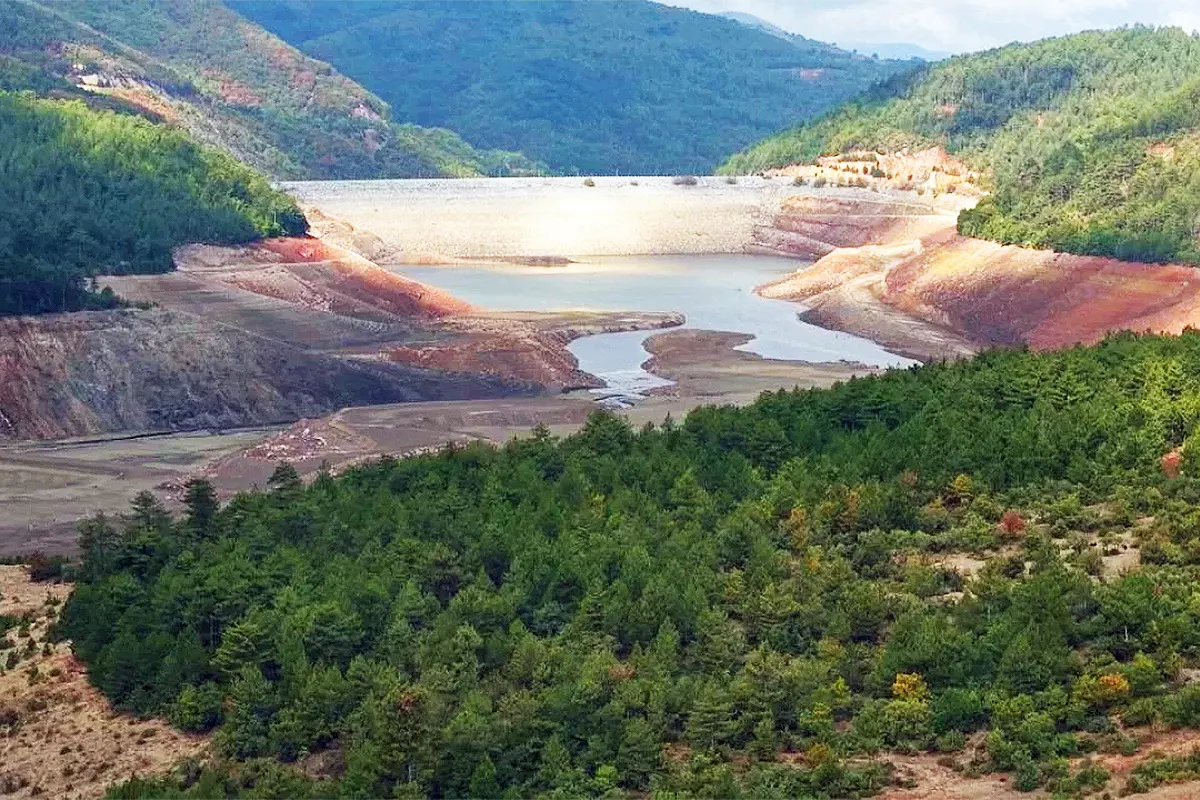
Turkish media such as the public broadcaster TRT report that the situation in the region has reached a critical point: the Nilüfer reservoir, built in 2007 and capable of holding 60 million cubic metres of water, has completely dried up and is now just a dry, cracked bed; the city’s other major reservoir – the Doğancı dam, which supplies most of Bursa’s drinking water – is at just 6.8% capacity.
Bursa’s mayor, Mustafa Bozbey, warned that the city of 3.2 million people consumes around 525,000 cubic metres of water every day, so if no rain comes and no saving measures are implemented, the Doğancı reservoir could run out completely as soon as 6 October.
“If there are no water inflows, the reserves will run out in a few days,” said Bozbey, who added that water tables have plummeted from 10 metres in the past to depths of 250 metres today, due to the prolonged drought. “This shows the extent to which the Bursa Plain has been affected by the drought,” the mayor insisted.
The water crisis in the region has been exacerbated by two consecutive years of low snowfall in Uludağ – a mountain that is one of Turkey’s most important winter resorts – and insufficient rainfall. Currently, approximately 50% of Bursa’s water supply comes from the Doğancı and Nilüfer dams, while 15% comes from mountain springs and the remaining 35% from some 155 groundwater wells controlled by the local water management agency (BUSKİ).
Water cuts for 12 hours a day
To avoid an immediate collapse in the city, Bursa has activated a water transfer system from the Çınarcık dam, located some 30 kilometres south of the city and which is currently at 50% of its capacity, with 75 million cubic metres of drinking water available. The local authorities are also negotiating with the State Directorate of Hydraulic Works (DSİ) to ensure that the entire supply from the reservoir – which until now has been divided between domestic and industrial use – is used primarily for drinking water supply.
Despite these and other measures, the Bursa Water Supply Management Agency (BUSKİ) has announced scheduled cuts of up to 12 hours per day in central and peripheral districts, which in a first phase will apply from 1 to 10 October in the districts of Osmangazi, Yıldırım, Nilüfer, Mudanya, Gürsu, Kestel and Karacabey, with only hospitals and the University of Uludağ being exempted. With this water rationing, authorities hope to be able to save 100,000 cubic metres a day until rainfall can recharge the dams.
“If there is no rain at all and the planned water cuts are not implemented, under these conditions the water in the reservoirs will run out on 6 October. Every day the water level in the Doğancı dam decreases by about 25 centimetres… We don’t know what will happen in October and November. We have to find a solution to the drought,” warned the mayor of Bursa.
VOTE

EDITORIAL TEAM
🧿 About us
.
Edited and reviewed by:

Pablo Gómez is a specialist in Turkey and has been editor-in-chief of Hispanatolia since 2011. He has been analysing current affairs and geopolitics in Turkey and the surrounding region since 2006.
…
📣 Your ADVERTISING on Hispanatolia
.
🤗 HELP US WITH A DONATION:
💗 Paypal