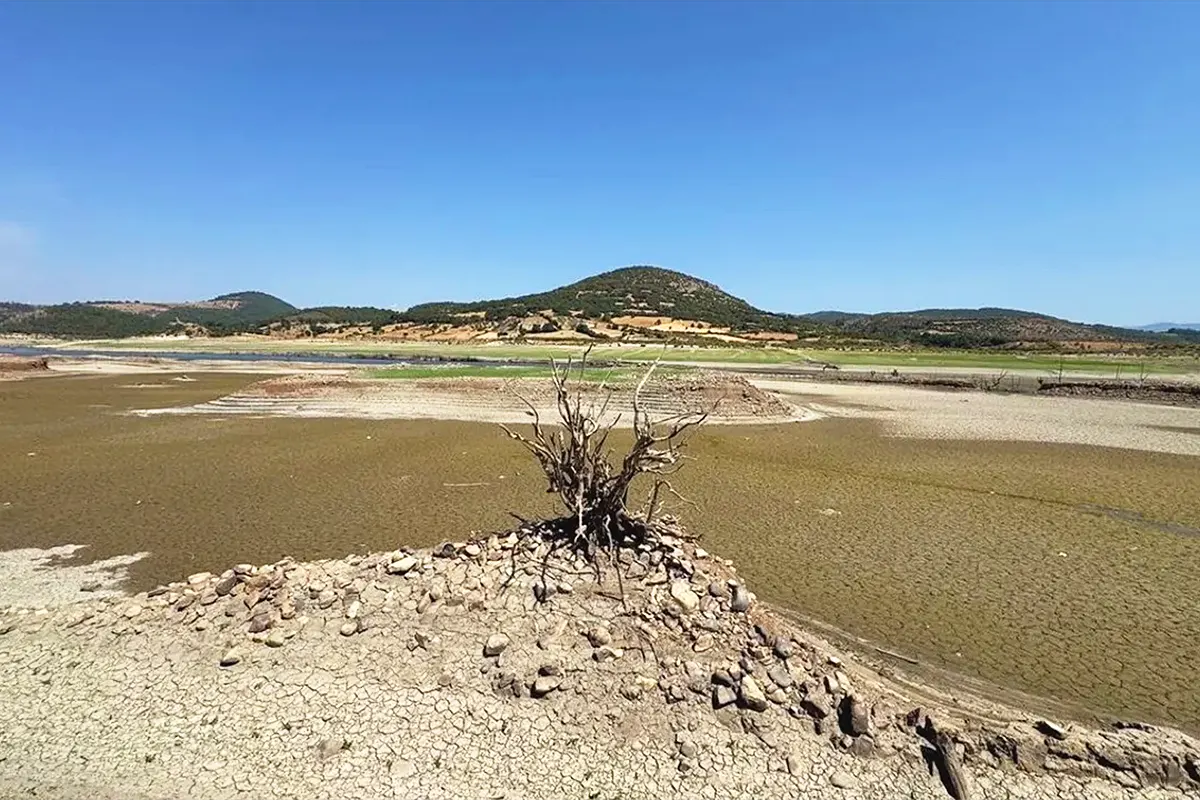
A South Korean study warns that, due to the accelerating impact of climate change, the Turkish cities of Adana and Mersin – on Turkey’s Mediterranean coast – could face extreme drought and a ‘Day Zero’ by 2030, while Istanbul and Diyarbakır could experience a similar situation and run out of water by 2050.
The term ‘Day Zero’ is used to describe the moment when a city or region runs out of drinking water reserves and water stops coming out of the tap. The research, reported by numerous Turkish media and carried out by scientists from the University of Pusan, published in the scientific journal ‘Nature’ under the title “The First Emergence of Unprecedented Global Water Scarcity in the Anthropocene”, presents projections of when ‘Day Zero drought ’ could occur in different regions of the world: factors such as evaporation, river flow, water scarcity and dams depletion were taken into account.
According to the study, many drought-prone areas will experience unprecedented water scarcity in the coming decades, with prolonged and severe droughts that could last for several years, especially towards the end of the 21st century. The experts used two different climate models: one developed in the United States, based on high-emissions scenarios, and another in France, which combines high and medium emissions scenarios.
According to the French model, 51% of the most vulnerable regions – including those with large dams – could face water shortages before 2100, and 22% of them already between the 2020s and 2030s. In the more pessimistic US scenario, 74% of affected regions would face an unprecedented water crisis before the end of the century, and about 35% would do so already during this decade.
Adana and Mersin could run out of water by 2030
The report warns that total water demand will outstrip supply capacity in the future, and that affected regions will expand, concentrating mainly in the western United States, the Mediterranean, North and Southern Africa , India, northern China and southern Australia.
One of the study’s authors, Professor Christian Franzke, stressed that “drought conditions have been increasing in some regions of Turkey since 2000. In the high-emissions scenario developed in the United States, Adana and Mersin could face a Day Zero drought by 2030, and Istanbul and Diyarbakır by 2050,” he explained.
The expert also stressed the importance of promoting sustainable irrigation in the most affected agricultural areas, noting that water scarcity can lead to food insecurity, disruptions in water-dependent industries such as mining and hydropower, and considerable economic losses. In addition, he warned that poor water quality could lead to the emergence of water-borne diseases, with serious consequences for public health.
Turkish Dr Tuğba Evrim Maden, coordinator at the Turkish Water Institute, warned that many densely populated areas, especially in semi-arid or arid climate regions, are at risk of ‘Day Zero drought’ due to the effects of climate change. He also recalled that the recent drought in Iran has brought the dangers of this global trend back to the table, noting that global water consumption has doubled compared to population growth, and warned that if the current rate continues, some 5 billion people could suffer from water stress (shortage of drinking water) by 2050.
VOTE

EDITORIAL TEAM
🧿 About us
.
Edited and reviewed by:

Pablo Gómez is a specialist in Turkey and has been editor-in-chief of Hispanatolia since 2011. He has been analysing current affairs and geopolitics in Turkey and the surrounding region since 2006.
…
📣 Your ADVERTISING on Hispanatolia
.
🤗 HELP US WITH A DONATION:
💗 Paypal