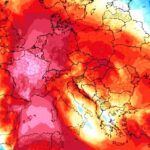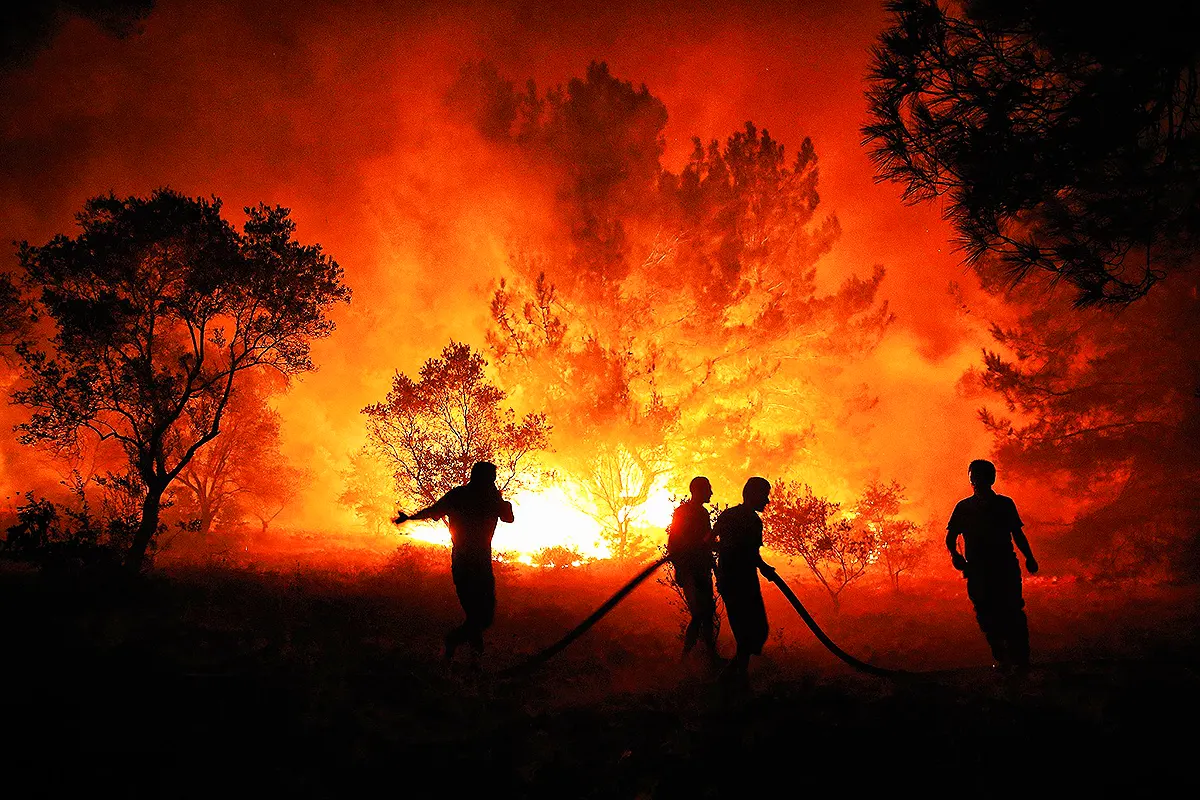
Climate change, which has led to record temperatures and reduced rainfall, is causing massive wildfires in the Mediterranean – including those in countries such as Turkey, Greece and the island of Cyprus this summer – to burn much more intensely, according to a new study published at the end of August by a group of experts.
These are the conclusiones according to a study by World Weather Attribution (WWA), which reveals that the fires in these countries – which killed 20 people and forced the evacuation of 80,000 others, as well as devastating more than one million hectares – were 22% more intense in 2025, as they were driven by temperatures above 40°C, extremely dry conditions and strong winds.
WWA, a group of researchers analysing the extent to which extreme weather events are linked to climate change, describes the findings of their study as “worrying“. The report’s data reveal that winter precipitation prior to wildfires had also decreased by about 14% compared to normal levels in the pre-industrial era, just as our civilisation’s heavy reliance on fossil fuels began; it also concludes that climate change has made it 13 times more likely that periods of up to a week’s duration with predominantly dry, warm air – which favours vegetation burning – will now occur.
The group of experts says the weather conditions that combined to cause the devastating and deadly forest fires in Turkey, Cyprus and Greece this summer are now 10 times more likely due to climate change, and their analysis also reveals an increase in the intensity of high-pressure systems in the atmosphere that favoured extreme northerly winds – known as Etesian winds – which helped fuel and spread the wildfires in the region.
“Empirical weather data suggest that, in today’s climate which is warmer by 1.3°C relative to preindustrial times, the extreme conditions that drove the recent wildfires are expected to occur approximately once every 20 years. Compared to a 1.3°C cooler climate this is an increase in likelihood of about a factor of 5 and an increase in the intensity of the DSR (Daily Severity Rating, which reflects how difficult a fire is to suppress once ignition has occurred) of about 14%. Meaning the event as characterised by the DSR over the region outlined above would only be expected to occur once per 100 years without climate change“, says the WWA, citing the main findings of its study
“With a further 1.3°C of global warming, causing global temperatures to reach 2.6°C, which is expected this century under current policies, the projected VPD7x (Vapour Pressure Deficit during 7 days, which indicates the difference between the amount of moisture the air can hold and the amount it actually holds) conditions are 18% more intense and about six times more likely to occur, compared to now. The DSR is projected to become another 25% more intense and another nine times more likely“, due to climate change in the Mediterranean, the study concludes, leaving a dark outlook for future wildfires in the region.
VOTE

EDITORIAL TEAM
🧿 About us
.
Edited and reviewed by:

Pablo Gómez is a specialist in Turkey and has been editor-in-chief of Hispanatolia since 2011. He has been analysing current affairs and geopolitics in Turkey and the surrounding region since 2006.
…
📣 Your ADVERTISING on Hispanatolia
.
🤗 HELP US WITH A DONATION:
💗 Paypal