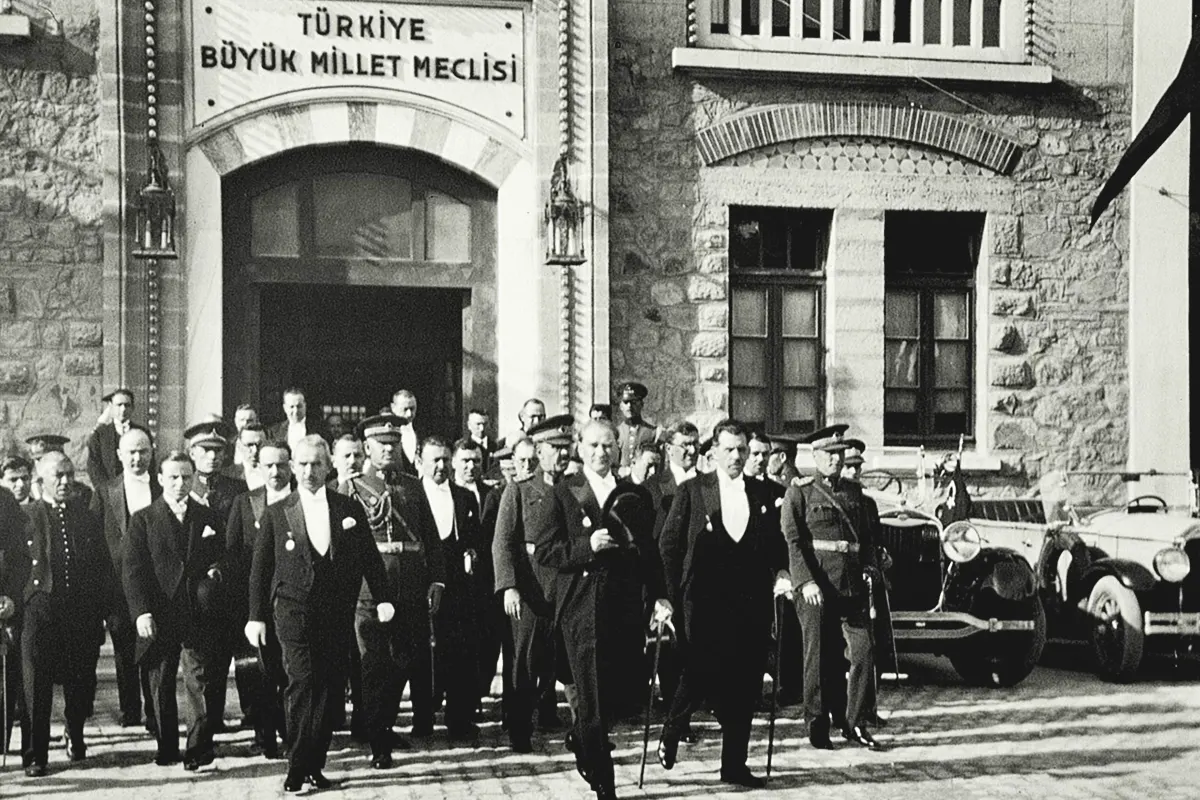
Ankara celebrated the 102nd anniversary of its designation as the capital of Turkey on 13 October with official events and tributes recalling the city’s central role in both the war of independence and the transformation of the country into a modern republic.
According to Turkish media reports, Ankara Governor Vasip Şahin led a delegation to visit Anıtkabir, the mausoleum of the founder of modern Turkey, Mustafa Kemal Atatürk, accompanied by the city’s mayor, Mansur Yavaş. In the book of honour, Şahin wrote that the decision to declare Ankara as the capital “was not just an administrative measure, but an expression of the will of the nation, its independence and its determination to move towards modern civilisation”, adding that Ankara was the heart of the resistance during the Turkish War of Independence and has since grown into a modern and vibrant capital.
When the Republic of Turkey was founded in 1923, the authorities made a historic decision: to designate Ankara as the new capital to replace Istanbul, which had been the capital during the rule of the Ottoman Empire, which came to an end after its defeat in World War I. At the time, the decision came as a surprise: Ankara was a modest, sparsely populated Anatolian city; but at the same time, it was strategically located far from Istanbul, which was occupied by foreign powers after the Ottoman defeat in the war. The resolution that named Ankara as the new capital was adopted on 13 October 1923, a few days before the official proclamation of the Republic on 29 October. But how and why exactly was it decided to set Ankara as the new capital?
How and why did Ankara become the capital of Turkey?
After the occupation of the remaining territories of the Ottoman Empire at the end of World War I, Mustafa Kemal Pasha (later nicknamed ‘Father of the Turks’ or ‘Atatürk’) landed in Samsun on 19 May 1919, starting the War of Independence. The Ottoman Parliament met for the last time in Istanbul on 12 January 1920, but on 16 March 1920 British troops occupied the city, preventing it from functioning. In view of this situation, it was necessary to establish a new seat from which to run the country and where the deputies could meet.
On 19 March 1920, Mustafa Kemal sent a circular to several provinces stating: “The Turkish nation will protect its own existence and independence“. From that moment on, representatives and former members of the Ottoman Parliament began to meet in Ankara, which offered ideal strategic conditions.
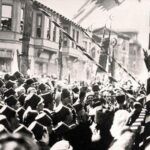
Ankara’s importance during the war of independence was due to its railway connections with enemy-occupied areas – such as the strategic Geyve Gorge, Kütahya or Afyonkarahisar – and its secure geographical position in the Anatolian hinterland. Mustafa Kemal arrived in the city on 27 December 1919, where he was enthusiastically welcomed by the population and the military authorities.
It was from Ankara that he planned the operations that would lead to his victory. It was also in Ankara that the creation of regular armies, fundamental to the victories of İnönü, Sakarya and Dumlupınar, was decided. The war ended with the decisive victory at the Battle of Dumlupınar on 30 August 1922.
It was proposed to rename Ankara after Atatürk
On 9 October 1923, Foreign Minister İsmet Pasha presented a bill to the Parliament in Ankara with a single article stating: “The administrative centre of the Turkish state is the city of Ankara“. The text was adopted on 13 October 1923 after an intense parliamentary debate; when some deputies asked for it to be recorded as having been adopted “unanimously”, the president of the session, Ali Fuat Pasha, replied: “Gentlemen, there are some hands that have not been raised. I cannot say unanimously; it has been approved by a large majority”.
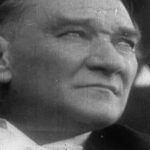
According to the press at the time, it was even proposed that the city be named after Gazi Mustafa Kemal Pasha, in reference to Atatürk, although Atatürk himself rejected the idea as soon as it was put to him. With this parliamentary resolution, Ankara consolidated its role as the country’s political and administrative centre, a position it had already exercised de facto since Mustafa Kemal’s arrival.
Atatürk himself later underlined the importance of this decision when he declared: “All ideas converged that the capital of the new Turkey should be in Anatolia, and in Ankara. Geography and strategy were of the utmost importance. It was essential to determine the capital of the state as soon as possible, and to put an end to internal and external doubts”.
VOTE

EDITORIAL TEAM
🧿 About us
.
Edited and reviewed by:

Pablo Gómez is a specialist in Turkey and has been editor-in-chief of Hispanatolia since 2011. He has been analysing current affairs and geopolitics in Turkey and the surrounding region since 2006.
…
📣 Your ADVERTISING on Hispanatolia
.
🤗 HELP US WITH A DONATION:
💗 Paypal