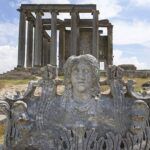
İznik, the ancient Nicaea, a small city on the shores of the lake of the same name that still retains remains of its glorious past as the capital of the Roman Empire, wants to be a World Heritage Site: it is already included in the list of World Heritage candidates for 2024 of UNESCO, and experts from this organization have been visiting the place to find out the state of conservation of its main monuments and historical artifacts, including its 5-kilometre-long Roman walls – built by order of Emperor Hadrian – which are preserved in great part.
It was in İznik, then called Nicaea, where Emperor Constantine the Great held the first Christian ecumenical council, from which came the single doctrine for all Christians, the so-called “Nicene Creed“. When the Crusaders sacked Constantinople in 1204, the Eastern Romans – the so-called “Byzantines” – moved their capital to Nicaea, from where they reigned for several decades. İznik, which submitted its candidacy for World Heritage status in 2014, was throughout its history also the temporary capital of the Seljuks and Ottomans, preserving remains of all the civilizations it has seen pass through. Of course, it is also famous for the renowned İznik tiles, used extensively during the Ottoman Empire and which decorate the Blue Mosque in Istanbul.
VOTE

As a history lover, Pablo Gómez was captivated by Turkey from the first day he visited it in 2006: he got married there, has a house there… and has since become an expert on Turkey’s current affairs. With a long experience in media, he has been at the helm of hispanatolia.com since 2011.