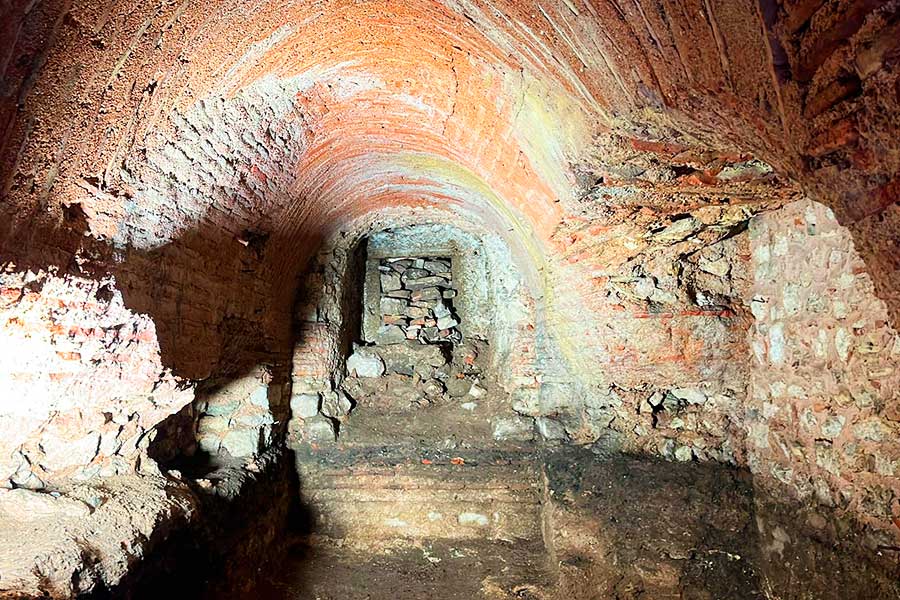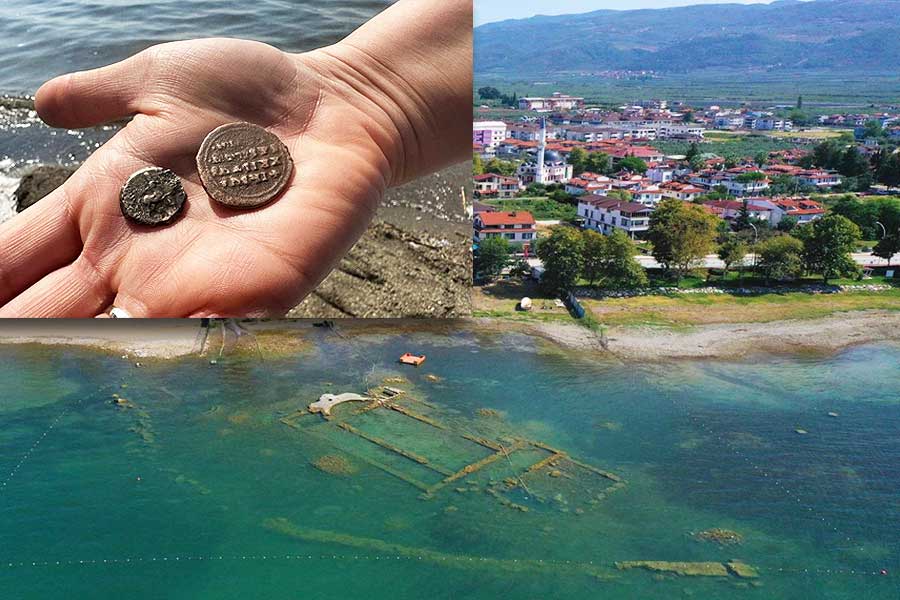
A couple who were walking along Lake İznik, in the province of Bursa in northwestern Turkey, found several 2,000-year-old coins a few days ago on the shores of the lake, which has receded several meters due to the drought that is plaguing the country. It is believed that the coins, which show images of Jesus and other inscriptions, could belong to the ancient Byzantine basilica discovered submerged in the lake in 2014, and that with the lowering of the water level has begun to emerge.
The couple delivered the coins to the İznik Archaeological Museum, where experts determined that the coin with the figure of Jesus is Byzantine and dated to the 9th century, while another coin with several inscriptions is from the Hellenistic period (after the conquests of Alexander the Great), about 200-300 years BC.
Nikaia, Nicaea, Iznik… a bit of history
Located in the middle of the route that, through the ancient Constantinople, connected Europe with Asia, İznik is a city with a rich history that goes back to about 2,500 years before Christ, although it would be in the 4th century BC when Lysimachus, one of Alexander the Great’s generals, named this city Nikaia in honor of his wife Nike. When Rome conquered the region, its name was Latinized as Nicaea, although it coexisted with its Greek name.
In the year 123 AD the famous emperor Hadrian visited the city, which at that time had been badly damaged by an earthquake, and ordered its reconstruction, surrounding it with an impressive line of walls 5 kilometers long, which is still in good condition today, and which, however, did not prevent the city from being sacked by Gothic Black Sea raiders in AD 258. It was in this city where the Emperor Constantine held the first Christian council, from which the so-called “Nicene creed” emerged, which established the common doctrine for all Christians.
After the division of the Roman Empire in the year 495 on the death of Emperor Theodosius, Nicaea became part of the Eastern Roman Empire (Byzantine Empire), being an important city that even became the Byzantine capital for several decades when, in 1204, the Crusaders sacked Constantinople and took over the city.
After passing through several hands, in 1331 Nicaea was definitively conquered by the Ottomans of Orhan Gazi, becoming called İznik in Turkish, a word that derives from the Greek Eis Nik, which is an abbreviation of the expression Eis ten Nikaieon (“Go to Nicaea”, in Greek) with which the Byzantines referred to Nicaea. Today Nicaea, İznik, is a small town in Turkey with just over 40,000 inhabitants, but with a glorious past of which these newly discovered coins are only a small reminder.
VOTE

As a history lover, Pablo Gómez was captivated by Turkey from the first day he visited it in 2006: he got married there, has a house there… and has since become an expert on Turkey’s current affairs. With a long experience in media, he has been at the helm of hispanatolia.com since 2011.