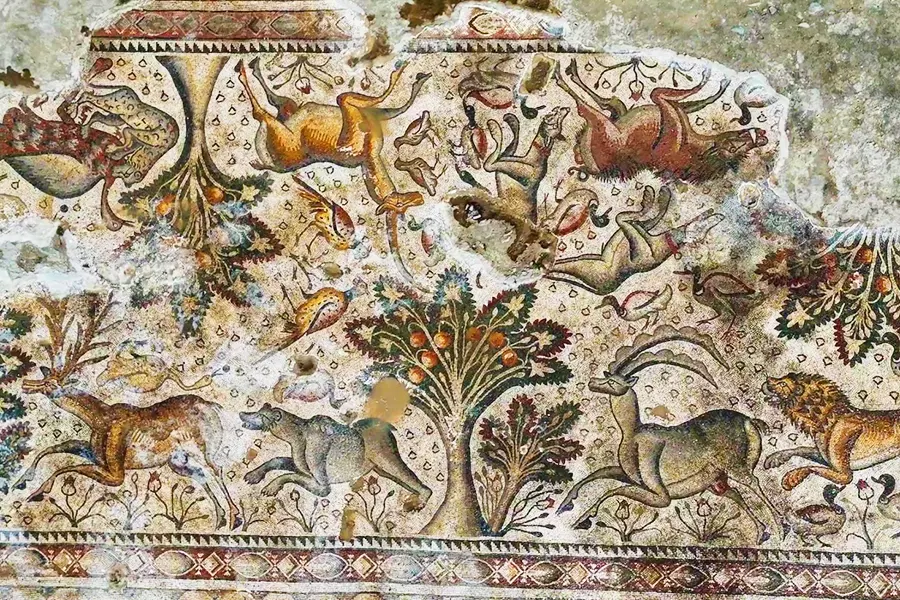
An accidental discovery by a farmer in Elazığ in eastern Turkey has led to the discovery of an impressive 84-square-metre Roman mosaic that archaeologists date to the late Roman or early Byzantine period, featuring intricate depictions of various animals, including leopards, wolves and deers.
As reported by the Anatolia news agency, it was in August 2023 that Mehmet Emin Sualp, a farmer from Elazığ, made this phenomenal finding while digging holes in the ground to plant trees in the village of Salkaya. Aware that it could be an important discovery, Sualp immediately notified the gendarmerie and the officials of the Elazığ Museum, who, after examining the find, concluded that it was a mosaic belonging to the Late Roman Empire or the proto-Byzantine period.
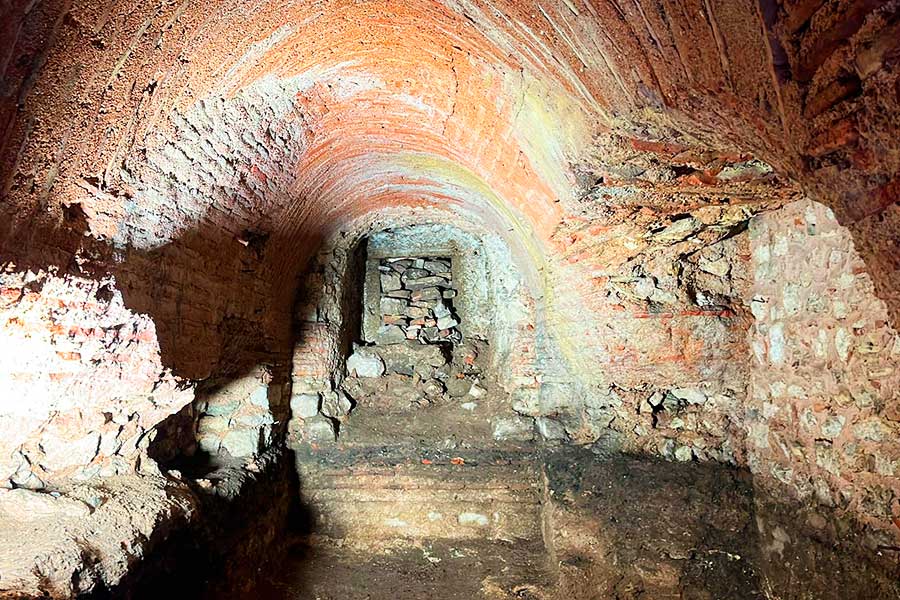
Archaeological excavations at the site uncovered an impressive 84-square-metre mosaic depicting images of various animals that inhabited the Anatolian region at the time, as well as various trees and plant species. Archaeologists have also unearthed the remains of a church and a wine cellar in the area.
The governor of the province, Numan Hatipoğlu, congratulated the landowner for notifying the authorities of such an important discovery, and said that if enough artefacts are unearthed during the excavations, an exhibition could be organised to show them to the public.
For his part, Sualp, the farmer on whose land this magnificent Roman mosaic was discovered, explained that he bought the land in 2020 for 120,000 liras (about €3,500) and that since the finding he has been working side by side with archaeologists to bring it to light: ‘I discovered it while starting to plant trees; I kept digging half a metre square and saw that it was a floor mosaic. Realising its importance, I contacted the museum. Since that day I have been here, helping with the excavations.’
VOTE

EDITORIAL TEAM
🧿 About us
.
Edited and reviewed by:

Pablo Gómez is a specialist in Turkey and has been editor-in-chief of Hispanatolia since 2011. He has been analysing current affairs and geopolitics in Turkey and the surrounding region since 2006.
…
📣 Your ADVERTISING on Hispanatolia
.
🤗 HELP US WITH A DONATION:
💗 Paypal