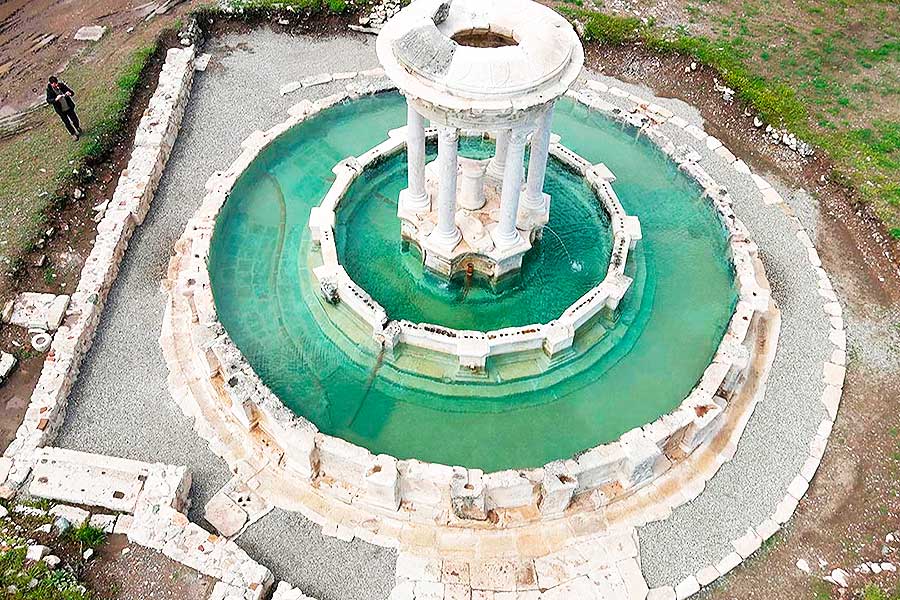
A team of archaeologists in Turkey is reconstructing the ancient temple of the Greek goddess Hecate, built 2,100 years ago in the ruins of Lagina in the present-day Turkish province of Muğla, where it is expected to become a major focus for tourists but also for archaeology and history buffs once the reconstruction is complete.
Located in the Yatağan district, the temple is dedicated to Hecate, the Greek goddess of roads, crossroads, gates, night, magic, witchcraft and ghosts. Experts are currently reconstructing the upper part of the columns surrounding the naos, the inner chamber and the most sacred part of the temple, located in the ruins of Lagina: an ancient pagan religious centre built 3,000 years ago and located on the west coast of Anatolia, where the worship of Hecate was the main cult.
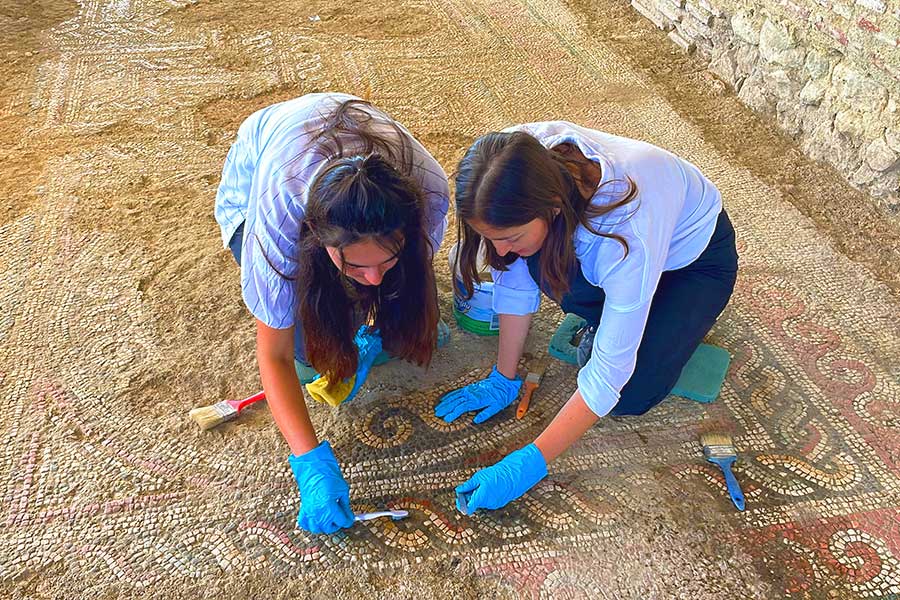
In statements made to the Anatolia news agency and quoted by Turkish media, Professor Bilal Söğüt, head of the archaeological excavations in the ancient cities of Stratonikeia and Lagina, explained that the excavation and restoration work has been going on for the past 12 months, He pointed out that the importance of Lagina – one of the two religious centres of Stratonikeia (located some 8.5 km away) – lay precisely in the cult of Hecate, to the extent that Lagina housed the largest sanctuary dedicated to this goddess in Antiquity.
‘This is one of the first places where the Ottoman archaeologist Osman Hamdi Bey (founder of the Istanbul Archaeological Museum) excavated in Western Anatolia during the Ottoman period. He worked here on behalf of the Ottoman Empire between 1891 and 1892. We are carrying out both excavation and layout work of the temple, and also carrying out a temporary anastylosis (reconstruction of the unearthed structure without adding new elements) of the upper structure of the temple. We have gained a better understanding of the ancient architecture and the functioning of such an important cultural centre,’ said Söğüt.
A destination for tourists interested in archaeology and history
The professor said that as the blocks of the temple, built 2,100 years ago, are uncovered and unearthed, they are being carefully placed in their original location. ‘We are placing the blocks of the superstructure in phases, both in the naos part of the temple and in the columns surrounding it, what we call the peristasis,’ he said.
Once the archaeologists completely rebuild this temple dedicated to the goddess Hecate, the expert believes that the number of visitors to this ancient sanctuary of Greek mythology will increase considerably and it will become an important destination for tourists interested in archaeology and history, especially in pagan cults during Antiquity.
VOTE

EDITORIAL TEAM
🧿 About us
.
Edited and reviewed by:

Pablo Gómez is a specialist in Turkey and has been editor-in-chief of Hispanatolia since 2011. He has been analysing current affairs and geopolitics in Turkey and the surrounding region since 2006.
…
📣 Your ADVERTISING on Hispanatolia
.
🤗 HELP US WITH A DONATION:
💗 Paypal