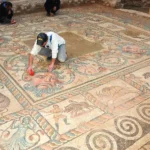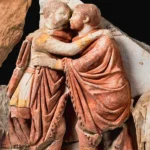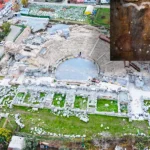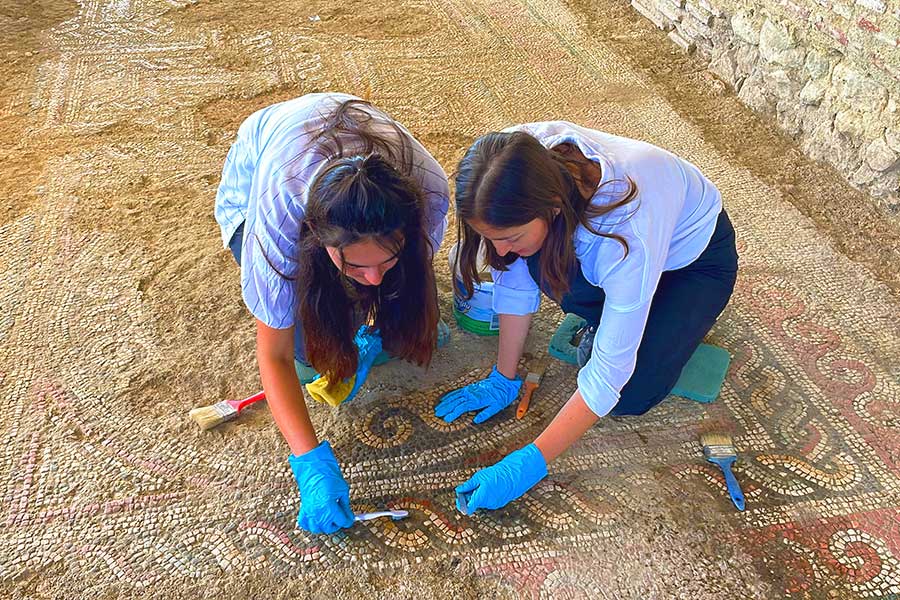
Turkish archaeologists have made a remarkable archaeological discovery by finding several mosaics dating back 1,800 years during excavations in the ancient Roman city of Pompeiopolis, located in northern Turkey in the former region of Paphlagonia, now the province of Kastamonu, and which have been financed by the Ministry of Culture and Tourism.
The efforts of archaeologists have focused especially on a section of Pompeiopolis where the remains of an opulent ancient Roman villa have been unearthed; the villa extends over an area of about 1,600 square meters, being an example of the advances in architecture of the time, containing numerous private rooms with all kinds of decorative elements.
“Pompeiopolis stood out as a regional capital during the 2nd century AD. Its heritage has allowed us to unearth the remnants of the glory of the Roman Empire within the very fabric of the city,” said Mevlüt Eliuşük, an expert from the Department of Archeology at Karabük University. Inside the lavish Roman villa, a complex system of water pipes and fountains has been unearthed, as well as impressive mosaics that decorated the interior floors.
A roof has been built over the mosaics to safeguard them from the elements, and they are scheduled to open to the public in late 2023, as the excavations are expected to be completed this year; there are already plans to create guided tours so that visitors and history lovers can “marvel first-hand at the magnificence of Pompeiopolis,” an ancient city that “has been attracting history enthusiasts for years and years,” according to Eliuşük.
“Our goal is to create an accessible space for everyone to explore and experience this place… A testament to the earliest phase of this villa at Pompeiopolis, these ornamental mosaics have come to light as a true spectacle. As we painstakingly unearthed these treasures, we have uncovered a female figure along with a letter that we believe was inscribed by her husband… We estimate these mosaics to be around 1,800 years old, offering a rare glimpse of artistic prowess that existed in the late 2nd century or in the beginning of the third century of our era”, explained the Turkish archaeologist.
VOTE

EDITORIAL TEAM
🧿 About us
.
Edited and reviewed by:

Pablo Gómez is a specialist in Turkey and has been editor-in-chief of Hispanatolia since 2011. He has been analysing current affairs and geopolitics in Turkey and the surrounding region since 2006.
…
📣 Your ADVERTISING on Hispanatolia
.
🤗 HELP US WITH A DONATION:
💗 Paypal