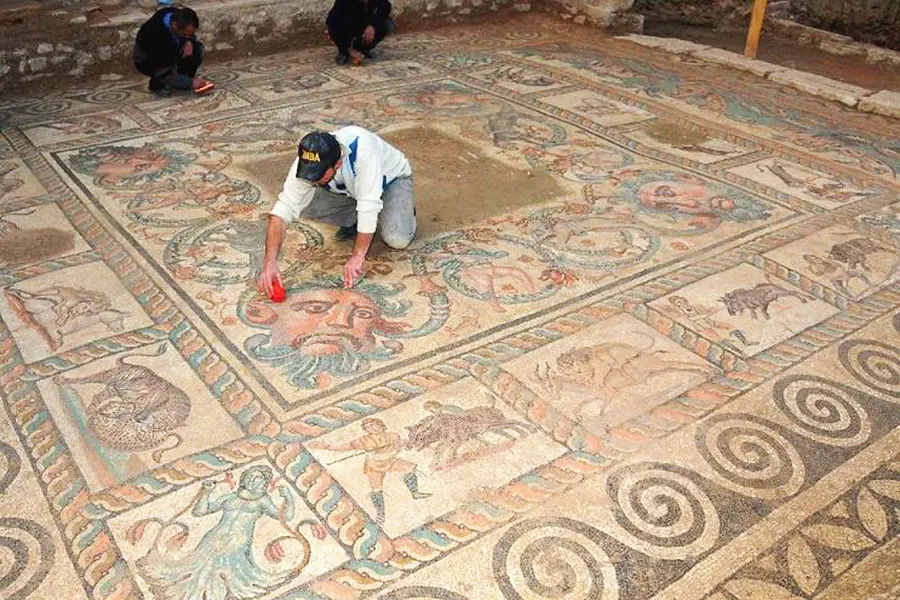
Archaeological experts and local residents have called on the authorities to protect Roman mosaics discovered 16 years ago in the Çaycuma district of Zonguldak province, on the western coast of Turkey’s Black Sea region, which offer great potential for attracting tourism to the area but which they warn are in danger of serious deterioration if urgent steps are not taken to preserve them.
Discovered in 2008 on a private land, the quality of the mosaics found in this region has led experts to refer to the area as the ‘Zeugma of the Black Sea’, a reference to the ancient city in southeastern Turkey whose famous mosaics are on display in Gaziantep, in what is considered the largest mosaic museum in the world.
Speaking to the Turkish daily Milliyet, archaeologist Selahattin Aydın complained that the 1,750-year-old mosaics have begun to deteriorate and that 16 years later nothing has been done to protect them, despite repeated calls from local residents and experts for the authorities to take action.
‘The mosaics have started to deteriorate’
Aydın explained that the so-called Lykurgos-Ambrosia mosaics, dating from the late 3rd century, probably belonged to a villa of a wealthy Roman family from the ancient city of Filyos. ‘These mosaics are of a similar quality to those from Zeugma. The owner of the land found them while working in the garden, and the Ereğli Museum of Zonguldak carried out excavations in the area between 2008 and 2010. Since then, there has been talk of many projects but nothing has been done. The mosaics have been covered with sand for years. Now, the mosaics are covered with grass, and they have started to deteriorate,’ the expert warned.
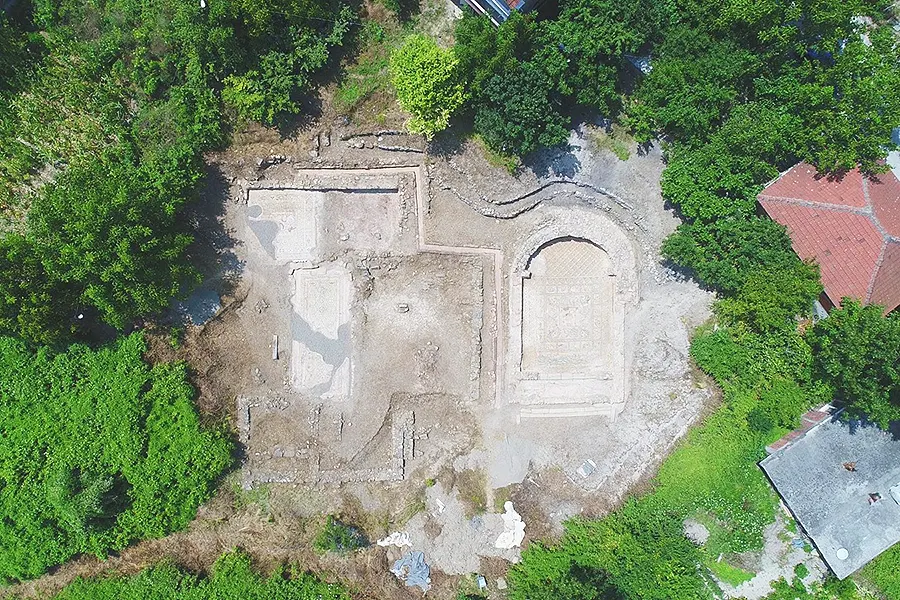
‘Thousands of cubic stones are exposed when the mosaics are brought to light. These stones fill with moisture underneath if they are not maintained for years. Then they start to burst and disintegrate. That is what is happening here now,’ said the archaeologist, who called on the Turkish Ministry of Culture and Tourism to take urgent measures to protect the mosaics as soon as possible.
Vedat Çıtak, muhtar of the village where these Roman mosaics were discovered, also denounced the lack of preservation measures: ‘Years have passed without anything being done, this must change so that we can save these findings. The mosaics can attract tourism, which will also lead to the development of the village,’ he said.
VOTE

EDITORIAL TEAM
🧿 About us
.
Edited and reviewed by:

Pablo Gómez is a specialist in Turkey and has been editor-in-chief of Hispanatolia since 2011. He has been analysing current affairs and geopolitics in Turkey and the surrounding region since 2006.
…
📣 Your ADVERTISING on Hispanatolia
.
🤗 HELP US WITH A DONATION:
💗 Paypal