Turkish archaeologists uncovered impressive mosaics dating back to the Roman Empire during an emergency excavation about 30 kilometres from the city of Mardin in southeastern Turkey, in an area known as Kela Hanma. The work was initiated following reports that illegal excavations were taking place in the area, resulting in the destruction of historical remains, so a team of experts was sent to the area to complete the excavations and preserve the unearthed remains.
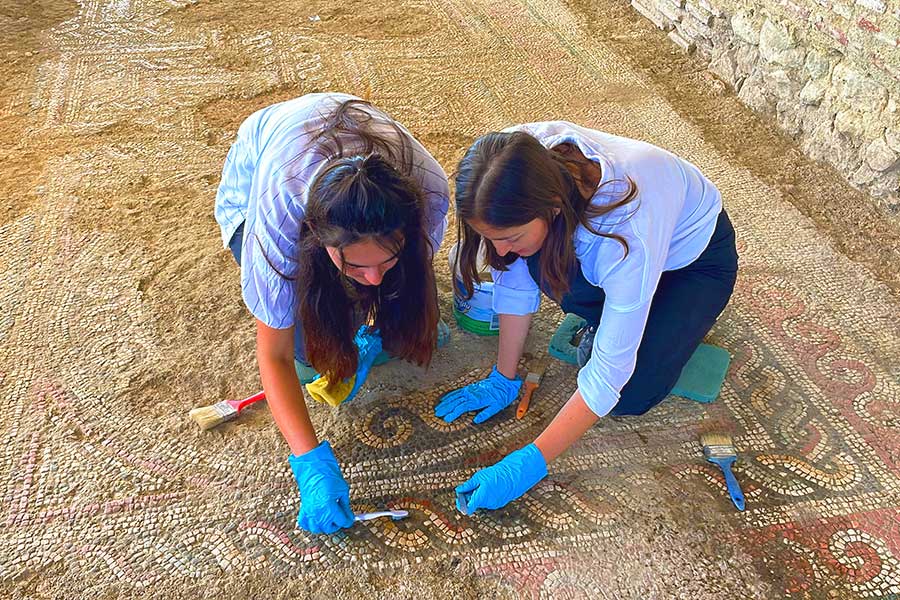
Following the start of archaeological excavations on 2 October under the direction of Mardin Museum Director Abdulgani Tarkan, with the help of two expert archaeologists and teams from the Diyarbakır Regional Restoration and Conservation Agency, a floor decorated with impressive mosaics from an ancient Roman villa was found. The decorated floor, measuring approximately 100 square metres, is covered with mosaics showing all kinds of geometrical figures as well as depictions of fish, trees, octopuses, birds, seals and other animals and plants.
Tarkan stressed the importance of this archaeological discovery, underlining that this Roman enclave followed the typical structure of a late Roman manor villa, during the Late Roman Empire, including in addition to the lord’s residence other adjacent buildings, and even a necropolis, dated between the 5th and 7th centuries AD.
“These Roman mosaics, adorned with animal figures and strange sea creatures such as octopuses and various species of fish, are unique in this region. Our priority now is to preserve these historical relics to prevent them from deteriorating,” explained the archaeology expert. For now, plans are to unearth the mosaics and carefully transfer them to the Mardin Museum in southeastern Turkey, where they will be displayed to the public.
VOTE

EDITORIAL TEAM
🧿 About us
.
Edited and reviewed by:

Pablo Gómez is a specialist in Turkey and has been editor-in-chief of Hispanatolia since 2011. He has been analysing current affairs and geopolitics in Turkey and the surrounding region since 2006.
…
📣 Your ADVERTISING on Hispanatolia
.
🤗 HELP US WITH A DONATION:
💗 Paypal