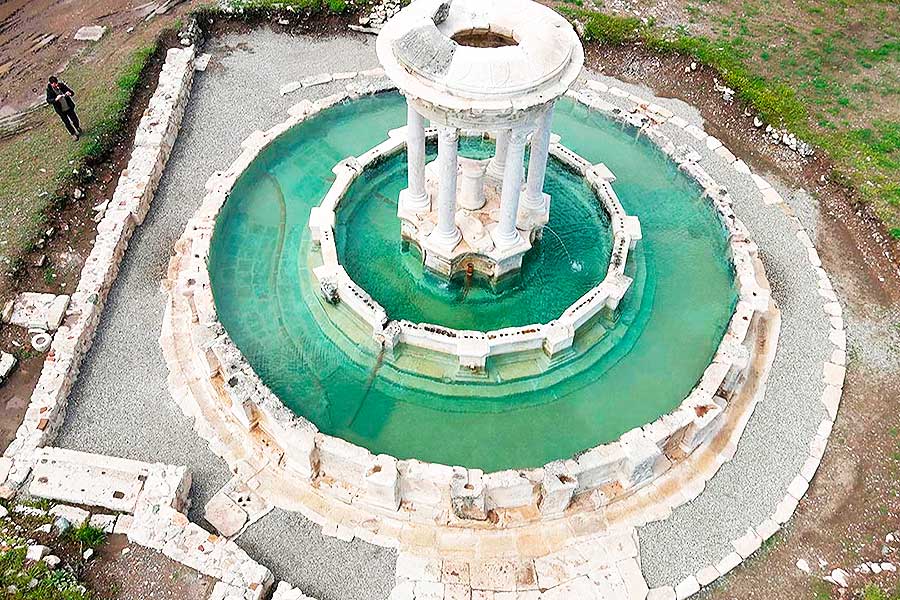
A2,000-year-old Greco-Roman fountain that was active until the 7th century AD has been restored and once again provides fresh water in the ruins of the ancient city of Kibyra (or Cibyra), located in the Turkish province of Burdur, in whose remains archaeologists have found numerous discoveries.
Excavations began in 2006, and 10 years later, Professor Şükrü Özüdoğru and his excavation team found a fountain structure located in the center of the city agora. As the professor explained, the fountain was decorated with several columns and sculptures and divided into two pools, although after its initial construction it was modified over the centuries. It is known that there were 12 bronze statues decorating the fountain, but they have not been found.
The investigations have allowed archaeologists to date the date of its construction during the reconstruction works of the city, after the earthquake that it suffered in the year 23 AD. “Although the roof of the fountain is known to have collapsed in the earthquake of 417 AD, our data show that the structure (of the fountain) continued to be used in the same function through the Early Byzantine Age with some modifications, and possibly until the end of the 7th century,” said Özüdoğru.
To carry out its restoration, started in August of last year and completed at the end of last December, elements of its original architecture have been used except for some parts of the roof of the fountain; several decorative elements that have not been found, have been replaced by replicas. The water in the fountain comes from the same spring from which the fountain was originally supplied 2,000 years ago.
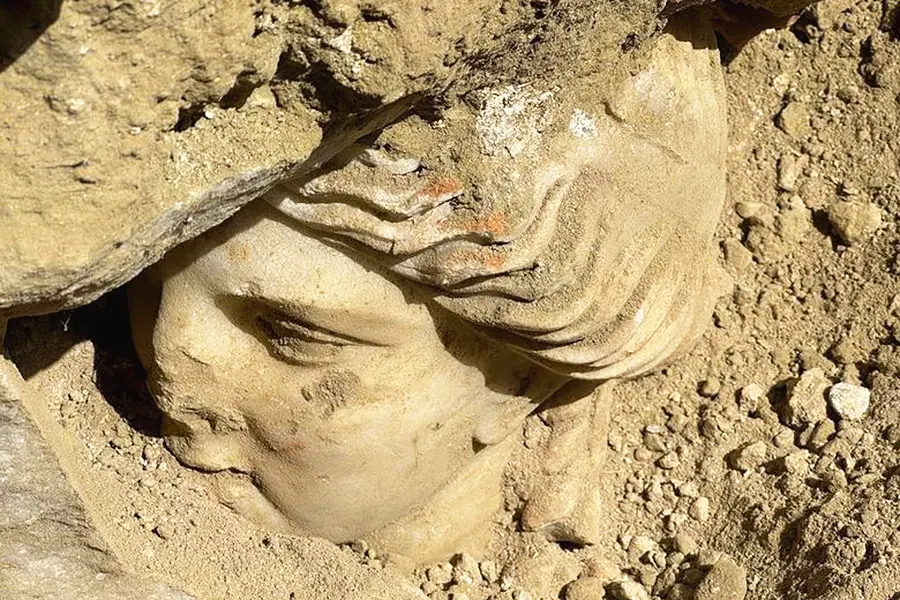
“In its original state, the water from the fountain flowed through the gargoyles in the shape of a lion or panther. Two of these statues, one probably depicting Heracles and one depicting the young Dionysus, are in the Burdur Museum. During the restoration work on this Roman fountain, limestone replicas of these statues have been placed in their place,” said the professor.
VOTE

EDITORIAL TEAM
🧿 About us
.
Edited and reviewed by:

Pablo Gómez is a specialist in Turkey and has been editor-in-chief of Hispanatolia since 2011. He has been analysing current affairs and geopolitics in Turkey and the surrounding region since 2006.
…
📣 Your ADVERTISING on Hispanatolia
.
🤗 HELP US WITH A DONATION:
💗 Paypal