A magnificent relief showing two Roman emperors (Diocletian and Maximian) embracing is on display in an archaeological museum in Kocaeli, a city in northwestern Turkey that was once the capital of the Roman Empire.
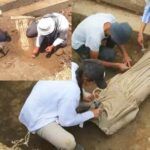
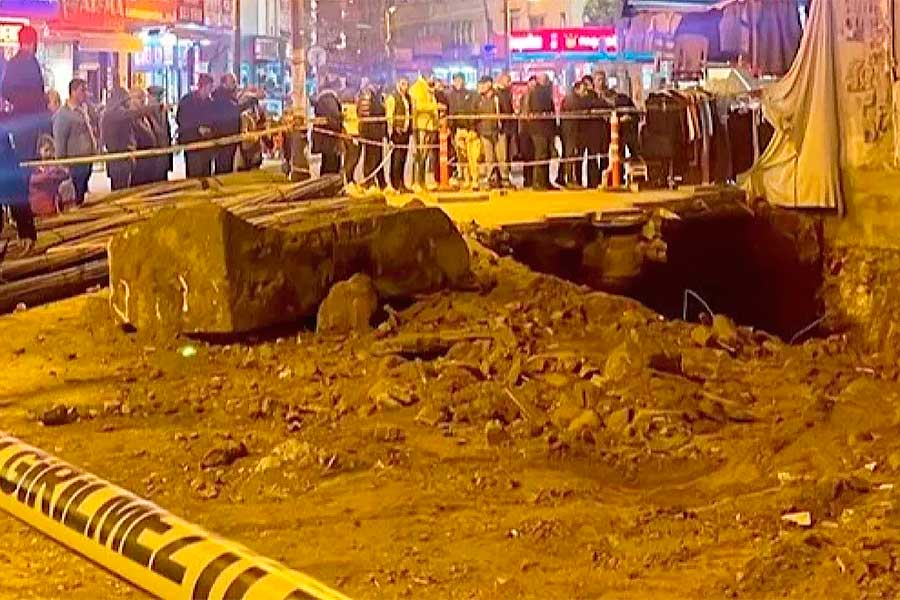
According to Turkish media reports, the relief was discovered during construction work carried out in 2001 in the Çukurbağ district of the city of İzmit (also known as its province, Kocaeli) during reconstruction work following the Great Marmara Earthquake of 1999, which devastated the entire northwestern region of Turkey killing nearly 20,000 people.
The relief, found under the ruins of a building, was found broken into 10 different parts, and depicts a scene of the Roman emperors Diocletian and Maximian embracing each other as they descend from their chariots during a parade on their arrival in the city of Nicomedia, the former name of the present-day city of İzmit. After a thorough restoration, the relief was exhibited to the public for the first time in history at the Kocaeli Archaeological Museum, where it has been on display since 2022.
Serkan Gedük, head of the Turkish Ministry of Culture and Tourism’s General Directorate of Cultural Heritage and Museums, gave more details about the relief, explaining that it shows an imperial procession approaching from both sides. ‘One of the scenes shows adventures, or a parade, held at the entrance to the city, with Emperor Diocletian on the left and Emperor Maximian on the right embracing each other. Both emperors are depicted in magnificent attire, wearing a tunic with a belt and sleeves decorated with gold bands, trousers and an imperial cloak with tassels. Their short hair and beards are one of the most important scenes, in terms of depicting a typical example of what Roman emperor-soldiers of the 3rd century were like,’ he explained.

The earliest known scene of two Tetrarchy emperors embracing each other
The expert pointed out that this way of representing two Roman emperors embracing symbolised the new form of government that had to be imposed in the Roman Empire during the period, known as Tetrarchy, which consisted of the government of two emperors – one in the West and the other in the East – assisted in turn by two Caesars: Diocletian himself, who ruled from his capital at Nicomedia, established this system to deal with the usurpations, barbarian invasions and insecurity of the time.
This depiction was intended to show the collaboration and harmony between the two co-emperors, who were supposed to rule as one over a Roman Empire that was not yet politically divided into two (the final division would come in 395 after the death of Theodosius) and was considered a single entity, with Diocletian being the emperor whose decisions prevailed over those of the others.
Gedük further noted that this is the first time an emperor has been depicted in such physical proximity in Roman art: ‘This depiction (of the embrace) derives from the motif of the right hand shaking, which in antiquity was a common iconographic symbol of marriage in Roman art and literature. It can be described as a sign of political harmony. This relief belongs to the period of the Tetrarchy. It is the oldest and most unique example of the ‘tetrarchic embrace motif’ of all the sculptural groups erected throughout the Roman Empire,’ he said.
Such depictions would later also lead to the iconic porphyry sculpture of the four embracing tetrarchs that stands today in St Mark’s Square in Venice, where it was taken after being stolen from the imperial palace during the sack of Constantinople by the Crusaders in 1204. The Turkish expert also stressed that archaeologists have been able to obtain a lot of information about the period from this relief, such as what the horse-drawn ceremonial chariot used by the Roman Emperor Maximian looked like and how it was used. ‘I invite all those who visit the archaeological museum to come and see this scene,’ concluded Gedük, emphasising its enormous historical value.
VOTE

As a history lover, Pablo Gómez was captivated by Turkey from the first day he visited it in 2006: he got married there, has a house there… and has since become an expert on Turkey’s current affairs. With a long experience in media, he has been at the helm of hispanatolia.com since 2011.