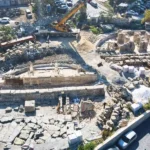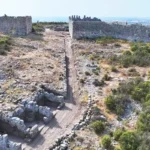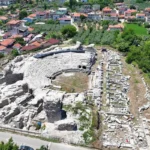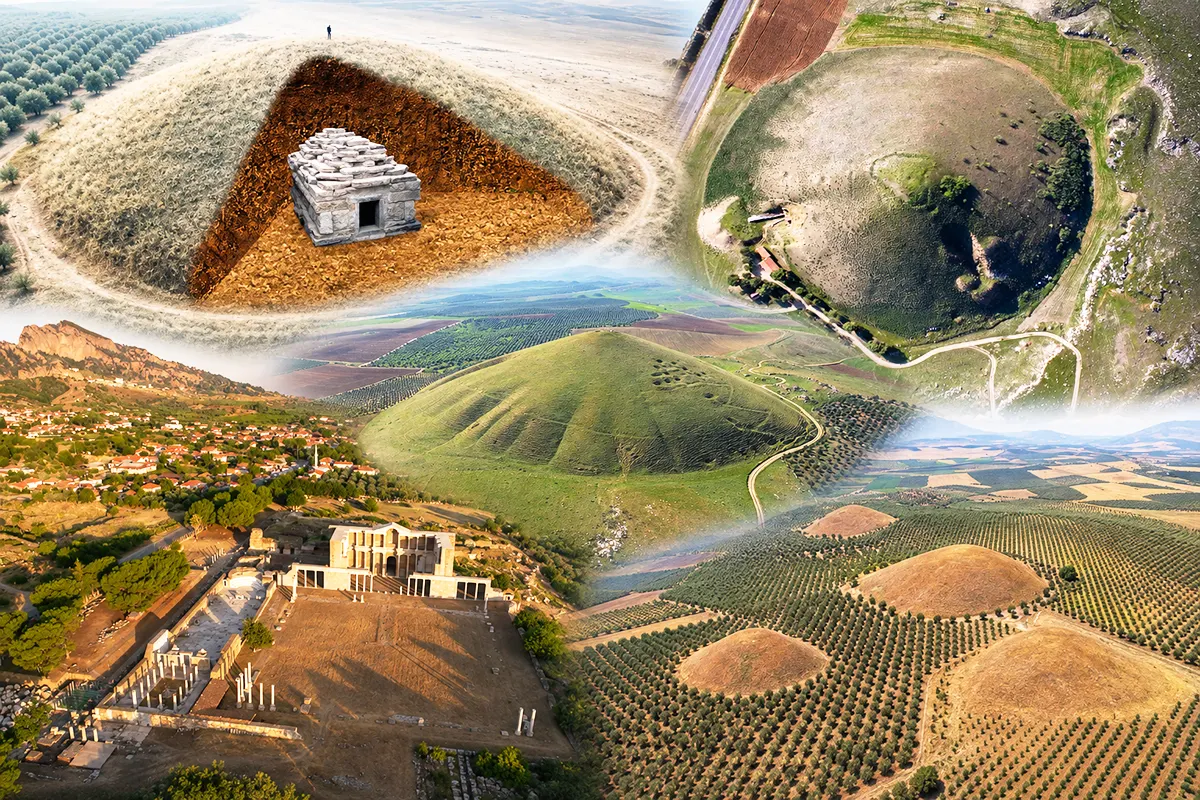
On the plain to the north of the ancient city of Sardis, in the present-day province of Manisa (western Turkey), a series of enormous mounds has dominated the landscape for more than 2,000 years. This is Bintepeler, a monumental necropolis nicknamed the ‘pyramids of Anatolia’, consisting of burial mounds associated with the elites of ancient Lydia and constituting one of the most outstanding archaeological sites in the whole of western Anatolia.
Bintepeler lies between 7 and 17 kilometres north of the ruins of Sardis, situated near the town of Salihli; Sardis, once the capital of the Kingdom of Lydia, was situated beside the ancient Lake Gygaean, now known as the Sea of Marmara (today an almost dry lake). The burial landscape of Bintepeler covers some 75 square kilometres on the Gediz River plain and features more than 119 burial mounds documented by UNESCO; although at least 149 were documented in 1940, many were subsequently destroyed by agricultural activity in the region.
Bintepeler, the ‘pyramids’ of Anatolia
The burial mounds consist of large artificial mounds built over burial chambers, a tradition that took on particular significance amongst the Lydian elites. In what was once the ancient kingdom of Lydia, more than 500 structures of this type have been documented, covering chambers built from stone blocks or directly hewn out of the rock. Inside, burials could take place in sarcophagi or on stone funeral beds known as klinai.
Due to their size and appearance, the Bintepeler burial mounds have been compared to the pyramids of Egypt, and the Harvard University’s own Archaeological Exploration of Sardis project notes that the complex is much larger than the Giza Plateau. The comparison is particularly striking in the case of Karnıyarık Tepe, one of the three great burial mounds in the necropolis, whose footprint has approximately the same diameter as the Great Pyramid of Khufu; but the mound of Alyattes is even larger, measuring some 355 metres in diameter.
The gigantic monuments of the Lydian elite
The formation of this great necropolis is closely linked to the rise of the Kingdom of Lydia, a power in Western Anatolia that reached its zenith between the 8th and 6th centuries BC. Sardis was the capital and the political, economic and cultural centre of a kingdom whose magnificence was embodied in the famous treasure of King Croesus and which went on to conquer much of western Anatolia – then known as Asia Minor – until it was forced to face the Medes in numerous battles. The burial mounds at Bintepeler also reflect the status and power of the Lydian elites who were buried there.
Among the most important monuments in the complex, the aforementioned tumulus of Alyattes stands out; it is traditionally identified as the tomb of the Lydian king Alyattes, father of Croesus. Measuring some 355 metres in diameter and 63 metres in height, it is considered one of the largest burial tumuli in the world. The Greek historian Herodotus already mentioned its extraordinary dimensions in the 5th century BC and wrote that, apart from the great monuments of Egypt and Babylon, it was the largest monument of its kind he had ever seen.
Alyattes: the great tumulus that impressed Herodotus
The very construction of Alyattes’ tumulus reveals the enormous organisational capacity required to erect these monuments. Archaeological studies have enabled the identification of different materials and layers within the mounds, whilst research on Karnıyarık Tepe has even documented a retaining wall, known as crepis, belonging to an earlier funerary structure that was buried when the mound was extended. This evidence shows that the construction was a planned process and that these unique monuments could even undergo significant modifications during their construction.
The Alyattes monument forms part of a group of three large burial mounds that dominate one of the ridges of Bintepeler. Another of these is Karnıyarık Tepe itself, which measures some 230 metres in diameter and 53 metres in height. Archaeological research has revealed a unique stone structure inside this mound and various pieces of evidence regarding its construction phases. However, even today, it remains a mystery to researchers who was buried there, although its dimensions suggest a member of the Lydian royal family.
Tombs that reveal the power of the ancient Lydians
But the importance of Bintepeler is not limited to its size. The burial mounds constitute a fundamental source of information on the funeral customs of the Lydians, a civilisation that developed its own language, religion and cultural traditions. Their elevated position, close to a major transport route, meant that these great monuments were visible from Sardis and from great distances, thus also making them symbols of power and prestige for the elites.
The historical context of Sardis provides a better understanding of the site’s significance. The Lydians were one of the major powers in Anatolia during the Iron Age and maintained political, commercial and cultural relations with both the Greek world and the great empires of the Near East. The kingdom’s wealth was linked, amongst other factors, to the region’s gold resources, and indeed Lydia was the first kingdom in the Western world to develop minted currency, a major innovation that would have far-reaching economic repercussions in antiquity.
The conquest of Sardis by the Persians in the mid-6th century BC marked the end of the Lydian kingdom, but not the end of the city’s importance. Sardis continued to be a significant centre under Persian rule, as well as during the Hellenistic, Roman and Byzantine periods. The burial mounds of Bintepeler, for their part, remained one of the most visible manifestations of Lydia’s ancient funerary landscape.
UNESCO designated them a World Heritage Site
The exceptional value of this heritage was finally recognised in 2025. On 12 July 2025, UNESCO designated Sardis and the Bintepeler burial mounds as a World Heritage Site, considering them a unique cultural complex. The organisation highlights that the three great burial mounds of Bintepeler are among the largest burial mounds in the world and that the site as a whole constitutes an exceptional testament to Lydian civilisation.
Beyond their monumental appearance, Bintepeler represents an essential part of the history of Lydia, Anatolia and humanity, which remains unknown to the general public. These enormous burial mounds enable us to reconstruct the funerary practices, social structure and displays of power of the Lydians, a civilisation that played a decisive role in the history of western Anatolia. Together with Sardis, these ‘pyramids of Anatolia’ form an exceptional archaeological landscape, standing as a silent witness to how one of the great powers of the ancient world left a mark that has endured for millennia, right up to the present day.
📚 If you want to learn more about the history of Turkey, we recommend:
🧿 Discover here more recommended products about Turkey
As an Amazon Associate, we earn from qualifying purchases. This comes at no extra cost to you and helps support this website.
VOTE

EDITORIAL TEAM
🧿 About us
.
Edited and reviewed by:

Pablo Gómez is a specialist in Turkey and has been editor-in-chief of Hispanatolia since 2011. He has been analysing current affairs and geopolitics in Turkey and the surrounding region since 2006.
…
📣 Your ADVERTISING on Hispanatolia
.
🤗 HELP US WITH A DONATION:
💗 Paypal