As excavations at the ruins of the ancient city of Troy – which began in 1871 – continue, experts point out that the UNESCO World Heritage Site, which dates back 5,500 years and receives thousands of tourists every year, was also a well-known tourist attraction two millennia ago during the Roman Empire.
In recent statements made to Turkish media by Reyhan Körpe, an academic and professor at the Department of History at Çanakkale 18 March University (ÇOMÜ), and also vice-president of the Trojan excavations, he recalled that the city was called ‘Ilion’ in ancient times and was a small village in the early Hellenistic period, until its fate changed with Alexander the Great‘s visit to the site.
‘Alexander the Great visited Troy in 334 at the beginning of his Asian campaign. He was someone who knew the Trojan wars, who had read the Iliad and who knew Homer. It is said that he always carried a copy of the Iliad with him. When he came here and saw the miserable state Troy was in, was deeply affected by it. He promised to revive this place when he returned from the expedition, but he did not return. Later, his generals came and transformed this city: they built new temples and structures, and renovated the city walls,’ Körpe recounted.
‘Another character who changed the fate of Troy was the Roman Julius Caesar. Caesar came here after a war and promised to invest heavily (in Troy) because he traced his ancestry back to (the Trojan hero) Aeneas. However, he could not keep his promise because he was assassinated,’ the expert added. It was during the rule of his successor Octavian Augustus, the true founder of the Roman Empire, that Troy reached its splendour and became one of the most important and magnificent cities in Asia.
‘During the Roman Empire, Troy reached its splendour’
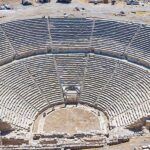
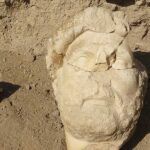
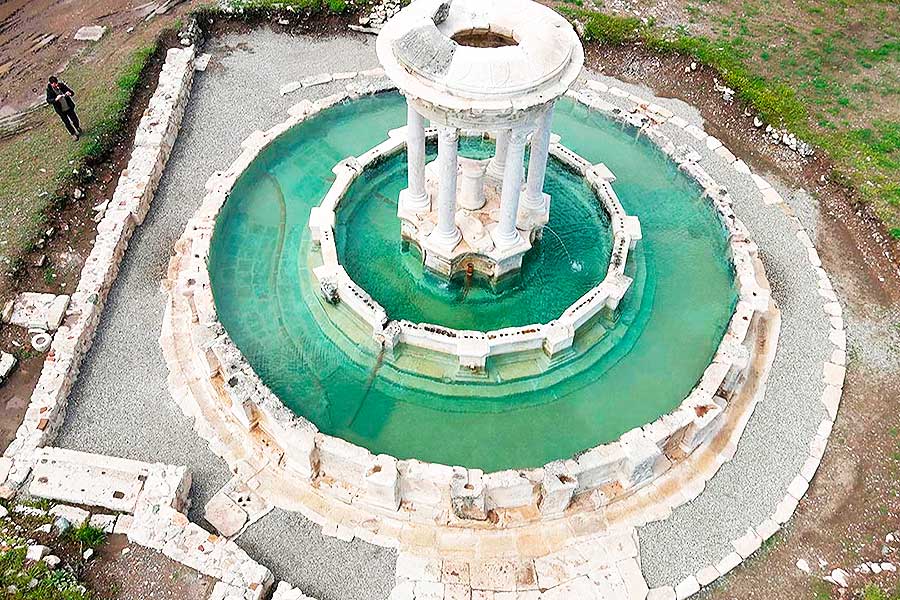
‘During its time and later, great temples, great structures and an Odeon were built. During previous excavations, we have found statues of Augustus and Hadrian, who visited the site after him, in the Odeon,’ said Körpe, who assured that under these Roman emperors Troy became one of the most important tourist centres in the Mediterranean and the entire Roman world.
According to the historian, Roman tourists came here because it was the birthplace of Aeneas: ‘The guides of Troy, like tour guides today, showed the city around. They showed the places where Aeneas was born or where the Trojan War took place,’ he explained.
Troy remained an important city in the Roman world until the spread of Christianity throughout the empire, which, along with the destruction caused by earthquakes in the region, killed its importance and relegated it to oblivion. ‘The site gradually lost its importance and was almost forgotten until the 19th century. Especially during Roman times, it was a prominent destination in the Mediterranean world along with Egypt, Athens and Antioch. We know that Romans, especially intellectuals, visited Troy,’ Körpe said.
‘In fact, this place was not known for its land or trade, like other cities; during the Roman Empire, its main source of income was tourism, especially from Roman tourists and benefactors. Like today, Troy was one of the most important tourist centres in the ancient world,’ he concluded.
VOTE

As a history lover, Pablo Gómez was captivated by Turkey from the first day he visited it in 2006: he got married there, has a house there… and has since become an expert on Turkey’s current affairs. With a long experience in media, he has been at the helm of hispanatolia.com since 2011.