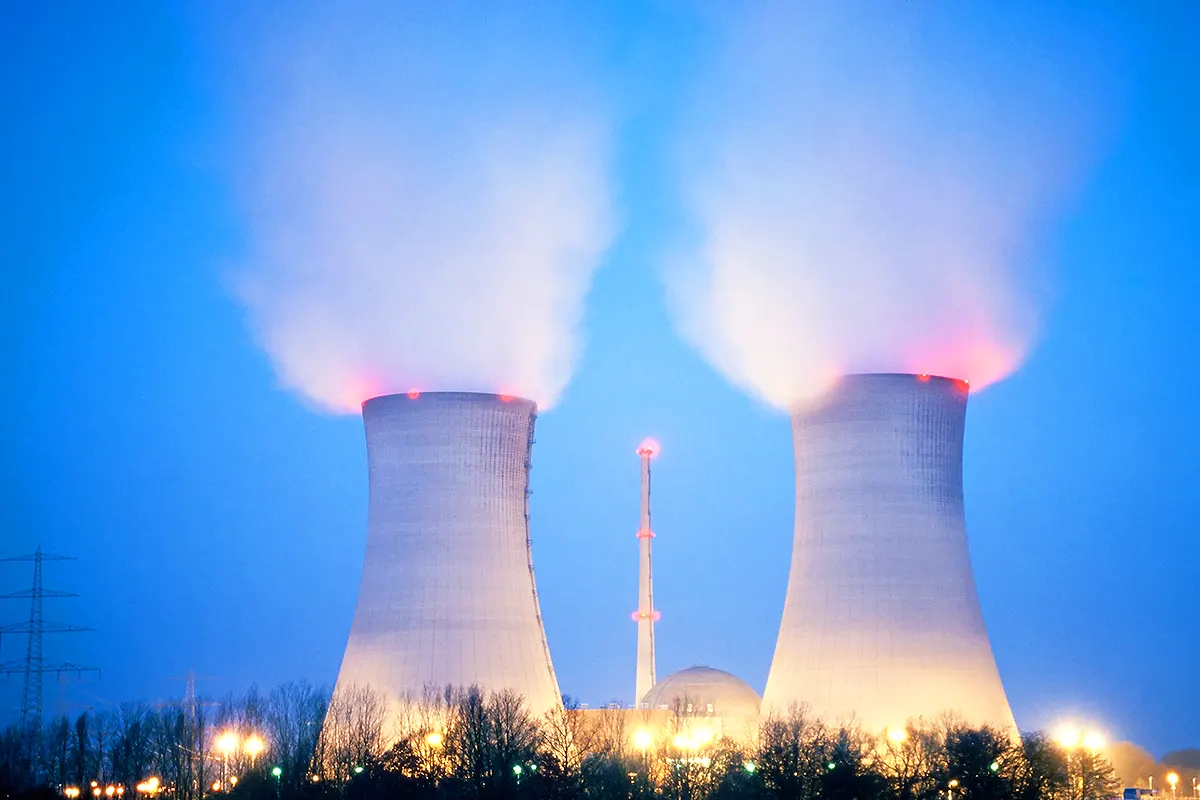
Turkey’s Minister of Energy and Natural Resources, Alparslan Bayraktar, confirmed that Ankara is in talks with South Korea, the US and China on the construction of the country’s next nuclear power plants, which will be located in the Black Sea coastal province of Sinop and in the European region of Thrace.
In an interview with the private economy channel A Para, Bayraktar stressed that preparations for the Sinop site are well advanced, with environmental impact studies, seismic analyses and marine investigations already completed.
“We are currently working on the ground in both Sinop and Thrace. Sinop is a very well prepared site. We have completed all environmental impact studies, site-related seismic studies and sea-related studies,” the minister said of the planned nuclear projects in both regions, quoted by the Turkish daily Milliyet. Bayraktar added that seismic studies are also continuing in the Thrace region – in the European part of Turkey – and confirmed contacts with South Korea, the United States and China for the construction of these atomic plants.
During the interview, the minister also highlighted progress at the Akkuyu nuclear power plant, and confirmed that the Turkish government intends to start generating electricity this year from the first reactor of what will be the country’s first nuclear power plant. In this context, Bayraktar recalled the country’s long-term nuclear plans, which envisage a total of 12 atomic reactors in three plants located in Akkuyu, Sinop and Thrace, plus at least 5,000 additional megawatts generated by small modular reactors.
Target: 20,000 megawatts of nuclear capacity by 2050
“Our target for 2050 is to reach 20,000 megawatts of nuclear capacity, covering 10-15% of Türkiye’s energy needs with atomic energy,” Bayraktar said.
As of January 2026, the Akkuyu nuclear power plant – located in Turkey’s Mersin province – has not yet started commercial operation. The first unit is 99% complete, with commissioning and testing work underway; although construction and fuel loading have been completed, official start-up has been delayed due to logistical and supply chain problems. Russia’s state-owned Rosatom, which is in charge of design and construction, said this week that it plans to start operation of the first unit in the coming months, according to Russia’s Interfax news agency.
VOTE

EDITORIAL TEAM
🧿 About us
.
Edited and reviewed by:

Pablo Gómez is a specialist in Turkey and has been editor-in-chief of Hispanatolia since 2011. He has been analysing current affairs and geopolitics in Turkey and the surrounding region since 2006.
…
📣 Your ADVERTISING on Hispanatolia
.
🤗 HELP US WITH A DONATION:
💗 Paypal