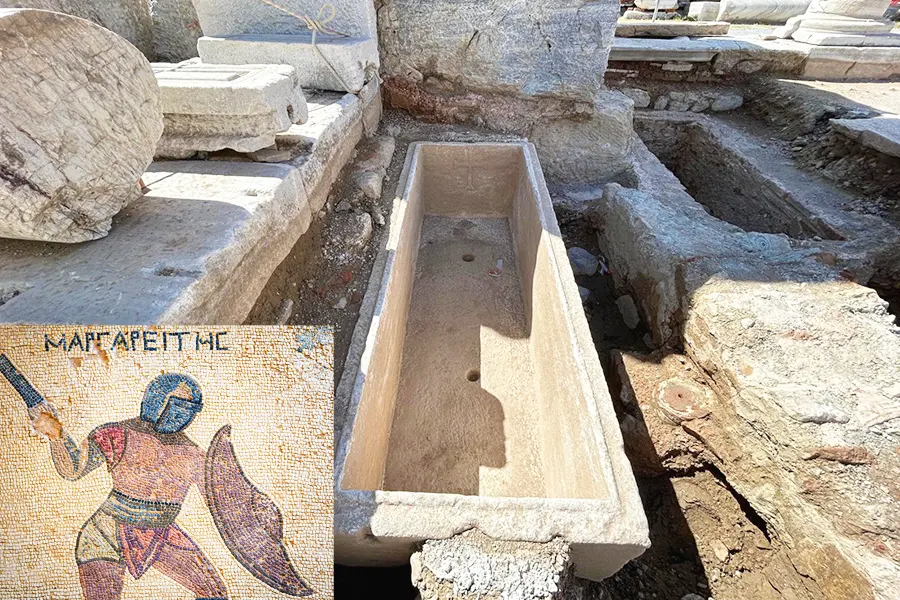
A team of archaeologists in Turkey have discovered a strange 2,200-year-old sarcophagus that apparently belonged to a Roman gladiator named Euphrates, but the skeletons of up to 12 different people have been found inside.
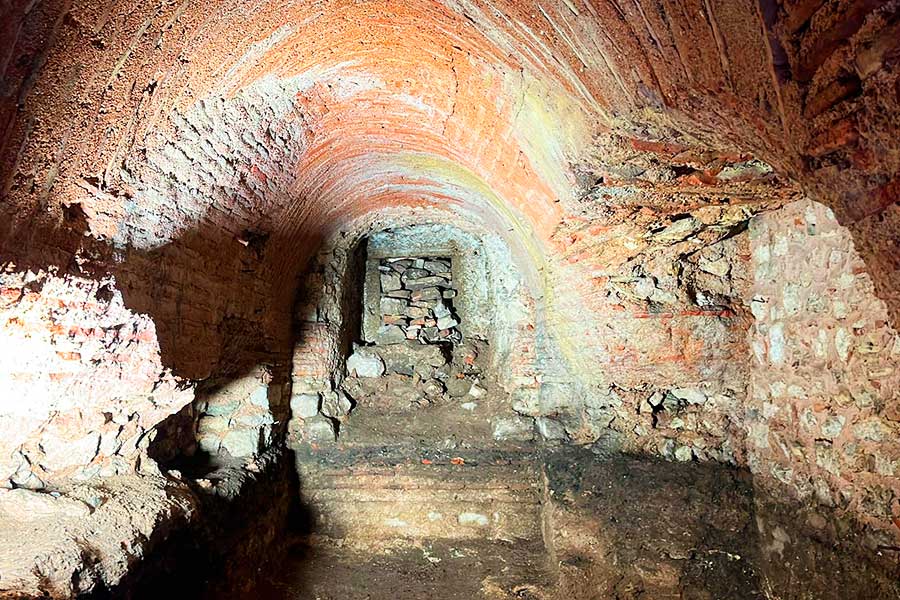
Turkish media reported that the find was made during archaeological excavations on Ayasuluk Hill, located in the western Turkish province of Izmir. While the sarcophagus dates back to the 3rd century BC, the remains of a dozen different individuals dating back to the 5th century AD have been found inside, as Sinan Mimaroğlu, director of the excavation, explained.
‘The fact that this sarcophagus was reused centuries later during the Christian era is evidence of the complex layers of history that overlap at this site,’ said the historian, noting that this find sheds new light on burial practices in Antiquity and the early Middle Ages.
‘There is a beautiful epic inscription on the sarcophagus indicating that it belonged to a Roman gladiator named Euphrates,’ explained the expert, who added that three crosses were carved inside the sarcophagus during the 5th century to serve as a Christian burial place. The fact that up to 12 people were buried in the same tomb, and its elaborate quality, point to a mass burial related to upper-class individuals or members of the clergy.
Stone tombs and Byzantine mosaics
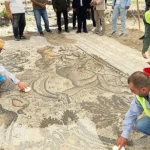
Mimaroğlu also reported that during the archaeological excavations they were surprised to find a water channel, a pipe system and mosaics just 20 cm below the surface. Along with the Roman sarcophagus belonging to the gladiator, three other tombs carved in stone were also found below the surface. Evidence suggests that the crosses inside the Roman sarcophagus were carved during the 5th century, while the cross-shaped reliefs on the lid were added in the 7th and 8th centuries.
Archaeological evidence suggests that the mosaics were placed on the site after the reign of Emperor Justinian I. The expert further added that such crosses carved on Roman or Byzantine sarcophagi are common in other archaeological excavations in Turkey: ‘We regularly see examples of sarcophagi with crosses on Imperial sarcophagi found in Istanbul, although they are made of higher quality materials. A sarcophagus similar to this one was found on Marmara Island, and there is another one in Syria, although the crosses have a different shape,’ he said.
VOTE

EDITORIAL TEAM
🧿 About us
.
Edited and reviewed by:

Pablo Gómez is a specialist in Turkey and has been editor-in-chief of Hispanatolia since 2011. He has been analysing current affairs and geopolitics in Turkey and the surrounding region since 2006.
…
📣 Your ADVERTISING on Hispanatolia
.
🤗 HELP US WITH A DONATION:
💗 Paypal