The archaeologists working at the Troy site, designated a World Heritage Site by UNESCO, have unearthed new evidence of a major earthquake that occurred some 1,500 years ago, causing a paved Roman-era street to collapse and inflicting widespread destruction on the city, thereby hastening its decline. The archaeological work, carried out in the north-western province of Çanakkale, is providing new insights into what life was like in Troy during the Roman Empire.
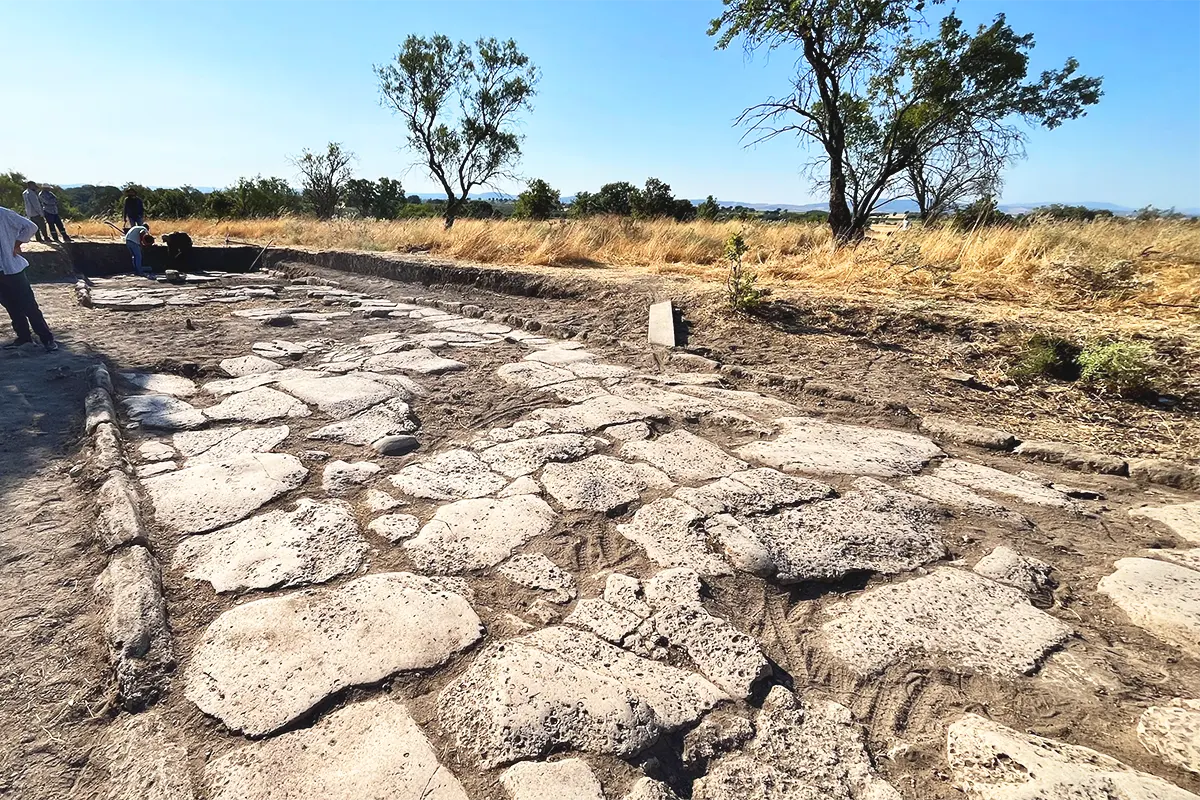
The archaeological excavations, led by Çanakkale 18 March University (ÇOMÜ) with authorisation from the Turkish Ministry of Culture and Tourism, have identified traces of the earthquake on a street in the ancient Roman city. The director of the excavations at the ancient city of Troy, Professor Dr Rüstem Aslan, explained in statements to the Anatolia news agency that “the lower town from the Roman period, where we are continuing our excavations, experienced a very significant and splendid period under Roman rule; in particular, following Augustus’s visit to Troy in the 20s BC, the city’s splendour increased even further”.
“From what we know from historical records, the Roman city of Troy was in fact destroyed by two major earthquakes. The last major destruction occurred around 500 AD. From the traces preserved on this street, we can see that those earthquakes in the late Roman period caused very significant damage to the street. It was an earthquake that destroyed Troy. We know that the last major destruction of Troy was caused by an earthquake approximately 1,500 years ago: we can see this quite clearly in the traces here, in the remains of this Roman street,” said Aslan.
The professor pointed out that the history of settlement at ancient Troy spanned approximately from 3000 BC to 500 AD, and stated that these new findings support the idea that the earthquakes that occurred at the end of the Roman period led to the destruction of the city. In this regard, Aslan said that, whilst Troy was rebuilt following previous earthquakes, after the major earthquakes that occurred at the end of the Roman period the city was unable to recover.
Historians now believe that the major earthquakes of the late Roman period left permanent marks on the physical structure of Troy, which never regained its former splendour and was abandoned. Although the city had managed to survive natural disasters at various stages of its history, the last major earthquake is regarded by archaeologists as the major turning point that sealed the fate of Troy forever; and the archaeological finds now made in Turkey constitute, precisely, one of the most significant pieces of evidence to reinforce our archaeological and historical understanding of the fall of Troy.
VOTE

EDITORIAL TEAM
🧿 About us
.
Edited and reviewed by:

Pablo Gómez is a specialist in Turkey and has been editor-in-chief of Hispanatolia since 2011. He has been analysing current affairs and geopolitics in Turkey and the surrounding region since 2006.
…
📣 Your ADVERTISING on Hispanatolia
.
🤗 HELP US WITH A DONATION:
💗 Paypal