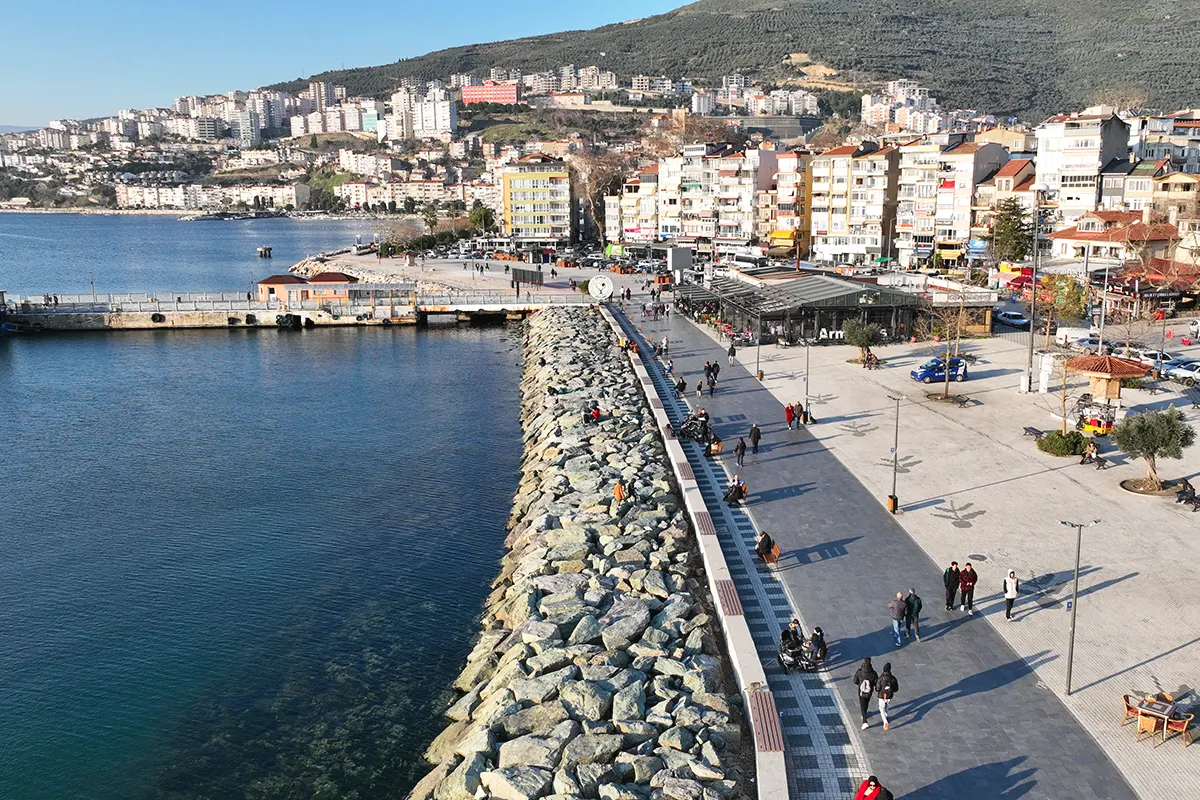
A series of earthquakes in recent days in Gemlik, an important port city on the Marmara Sea coast of the province of Bursa, in north-western Turkey, have reopened the debate about a possible relocation of the city , which now has a population of over 100,000, after the Turkish government proposed a relocation plan a few years ago but it was not implemented.
Between 1 and 2 July, Gemlik experienced up to three earthquakes of increasing magnitude, measuring 3.9, 4.2 and 4.3 on the Richter scale, which could even be felt in Istanbul. Gemlik has an official population of around 130,000, but during the summer months the number of residents in the entire district soars to around 700,000 people, as many holiday in their second homes along the Marmara coast, from Kurşunlu to Narlı: and many of these seasonal residents have also been able to feel these earthquakes.
Concern over this series of tremors has been aggravated by serious warnings from a number of experts, including renowned geologist Naci Görür, who said after the first quakes in Gemlik that “there is a danger” of a major earthquake in the city, which could reach a magnitude of up to 7.6 on the Richter scale, and insisted that “Gemlik must be moved“.
“Sooner or later a major earthquake could occur and cause serious damage. Maximum attention should be paid to the earthquake resistance of Gemlik,” Görür wrote on social media, warning that “energy is accumulating” on a branch of the North Anatolian Fault that crosses through Gemlik.
A city relocation first proposed in 2017
In 2017, the Turkish government issued a decree to relocate the town of Gemlik due to earthquake risk; it planned to build new residential areas on higher ground in the town, and to demolish buildings currently located in high-risk areas and replace them with green areas and social facilities. Local administrators determined that the most at-risk areas of the city were the Doktor Ziya and Hamidiye neighbourhoods, the area around Ilıca Street and the Orhaniye neighbourhood, all in the city centre; the foundations of buildings in the area around Kordon Street – which runs along the southern coast of the city – were also found to be flooded with seawater, according to Turkish news portal Haber Global.
Despite these warnings and all the planning that took place at the time, the project to relocate Gemlik was eventually shelved due to its complexity and disputes over the future use of the evacuated areas. The previous mayor, Mehmet Uğur Sertaslan, considered the project to relocate the city to another location unrealistic, and the authorities limited themselves to launching an “urban transformation” project in the neighbourhoods of Balıkpazarı, Yenimahalle, Orhaniye, Halitpaşa and part of Cumhuriyet, which has yet to be implemented.
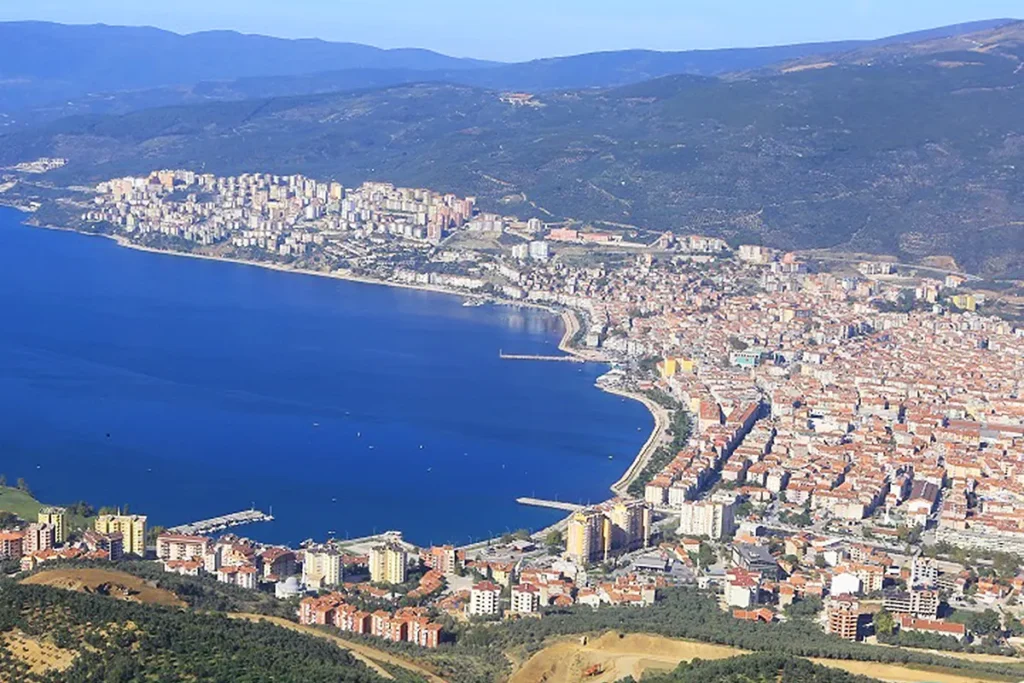
The main problem lies in the fact that the entire city centre is located on an alluvial plain: it is a silty and sandy soil formed by fluvial and marine sedimentation, very unstable; and to make thins worse, it is located on a major tectonic fault which is one of the main branches of the great North Anatolian Fault. We are talking about a built-up area of 320 hectares which, according to a report by the Uludağ University of Bursa, presents a very high risk of soil liquefaction in the event of an earthquake.
The conclusion of experts and local authorities is clear: any multi-storey building erected on this soil, regardless of the construction technique used, presents a serious risk of collapse. The city’s current mayor, Şükrü Deviren, was quoted by the daily Milliyet as saying that at least “60,000 people are at risk” – almost half of the city’s permanent population – because of the instability of the ground on which the buildings they live in are built.
Half of Gemlik’s buildings at risk of collapse
But the problem goes even further: the mayor himself acknowledges that at least half of Gemlik’s 20,000 buildings were built without a licence (that is, they are illegal, although an ‘amnesty’ was subsequently applied to them), and therefore lack the minimum building guarantees: “These people are literally living at risk to their lives… Especially the structures in the coastal areas are very old, and there are problems with the ground on which they are built”, Deviren admitted.
Another added obstacle to a possible ‘relocation’ of the town is the future location of new housing: there was once talk of building residential areas on the slopes of the mountains surrounding Gemlik – away from the alluvial valley – which have a solid rocky base; but these slopes are full of olive trees dedicated to the production of olives and olive oil, of which Gemlik is an important producer.
“One day we woke up in the morning and heard that Gemlik would be relocated,” a Gemlik resident told the press. “But there was no social consensus on the relocation. The buildings built before the 1999 earthquake do not comply with earthquake building regulations, and the residents living in these buildings are in serious danger,” he added. Many of these residents now regret living under this risk: “We feel like something could happen at any moment. We don’t trust what will happen to the buildings, or in the future,” confess other resident, adding that they are afraid of new tremors.
“The houses that were built before 1999 and are still standing, it’s pure luck,” some residents of the city openly declare. “For years it has been said that Gemlik will be relocated, but nothing concrete has been done. There has been no urban transformation, no preparations for the relocation,” commented Hikmet Kabaklı, a café owner for 35 years in Küçük Kumla, a tourist area on the outskirts of Gemlik. “We are aware of the risk, but we have been living here for many years… Where else can we go? There is nothing we can do“, he concluded.
VOTE

As a history lover, Pablo Gómez was captivated by Turkey from the first day he visited it in 2006: he got married there, has a house there… and has since become an expert on Turkey’s current affairs. With a long experience in media, he has been at the helm of hispanatolia.com since 2011.