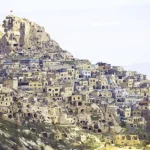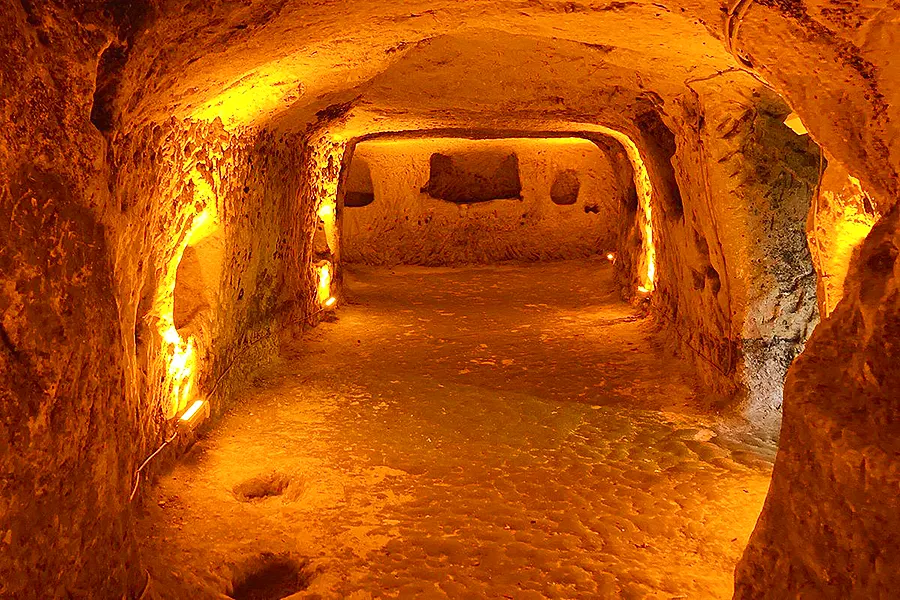
An underground city in Cappadocia region, one of Turkey’s top tourist destinations, has had to close its doors to tourism due to the risk of collapse, Fikret Fidan, director of culture and tourism for the province of Kırşehir in central Turkey, has told the media.
“We have temporarily closed the underground city of Mucur to visitors as a precautionary measure due to runoff from recent rains, and any potential malfunction of electrical equipment,” Fidan said.
Built between the 3rd and 4th centuries AD as a refuge for early Christians against persecution by Roman emperors, Mucur is an underground city in Cappadocia with 1,700 years of history that attracts hundreds of visitors every year, despite not being one of the best known to tourists. The underground city consists of two underground levels up to 8 metres deep, and is carved out of volcanic tuff.
“Our underground city of Mucur is an archaeological site built during the early Christian period to protect its inhabitants against the pagan emperors. Naturally, it is an area that is visited by hundreds of people every year,” explained Fidan. “During the closure period, cleaning work will be carried out, and in the next phase, plans include fixing any potential problems due to humidity, or dry-fixing work on the upper part,” added the tourism official, who announced that as soon as the maintenance work is completed, the underground city will reopen its doors to tourists.
VOTE

EDITORIAL TEAM
🧿 About us
.
Edited and reviewed by:

Pablo Gómez is a specialist in Turkey and has been editor-in-chief of Hispanatolia since 2011. He has been analysing current affairs and geopolitics in Turkey and the surrounding region since 2006.
…
📣 Your ADVERTISING on Hispanatolia
.
🤗 HELP US WITH A DONATION:
💗 Paypal