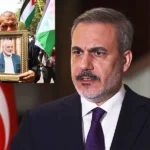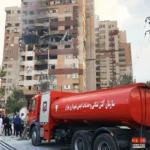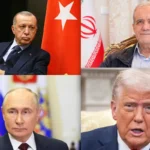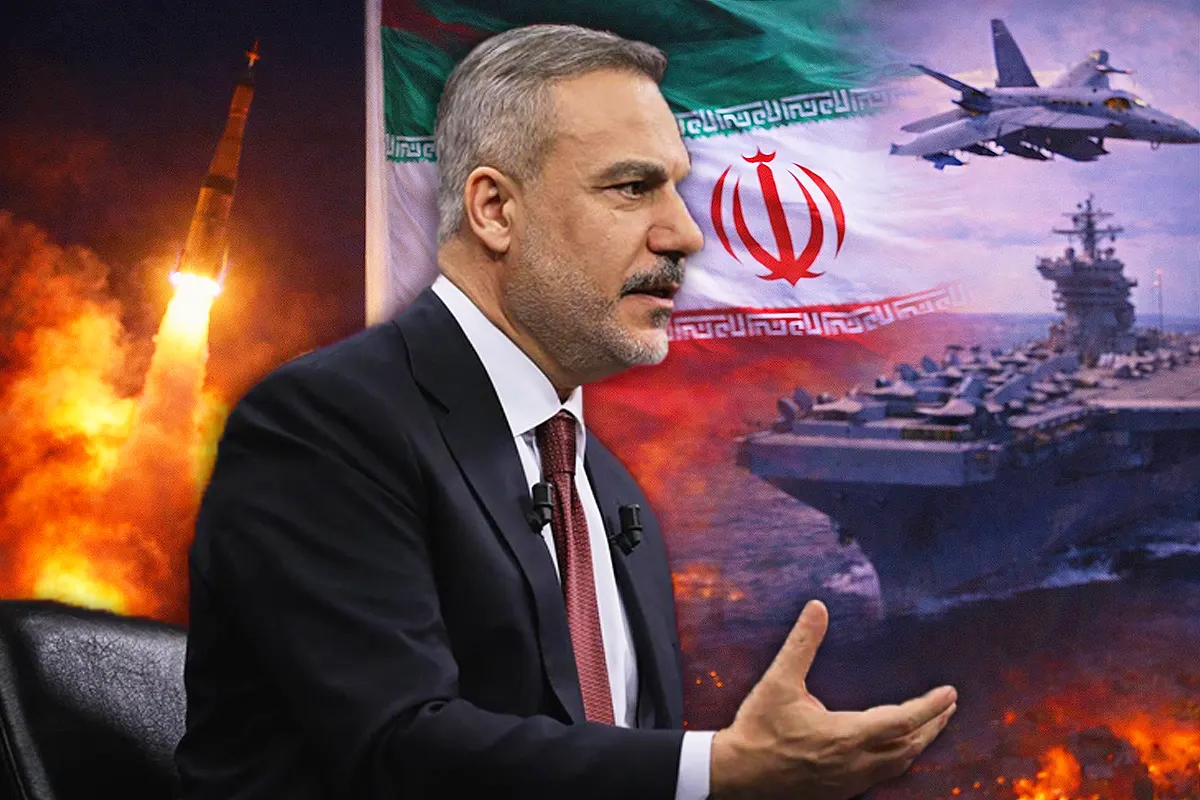
The worst-case scenario in the face of the current armed conflict in Iran would be its transformation into a war that would engulf the entire Middle East region and trigger a global energy and economic crisis, warned Turkish Foreign Minister Hakan Fidan. The head of Turkish diplomacy stressed that Turkey is prepared for any contingency, both in terms of security and in the energy and economic spheres, and took the opportunity to put to rest any speculation about Turkey’s response to a direct attack by Iran with a categorical statement: “We will always defend ourselves“.
During a meeting with media representatives in Ankara on the occasion of an iftar (dinner to break the fast during Ramadan), Fidan responded to the question currently dominating public debate in Türkiye: can Iranian missiles be directed against Turkey? In this regard, the Turkish foreign minister sent a clear and forceful message: “Türkiye will always defend itself. We have both the will and the capacity to do so,” he said.
The minister painted an extremely fragile regional security picture. According to Fidan, right now the worst-case scenario for what could happen would be an escalation that generates a whirlwind of instability capable of involving the entire Middle East region, including Iran. The possible closure of the Strait of Hormuz and the stoppage of energy imports from the Gulf would, in his view, be a nightmare scenario for international markets. The minister also warned that the disruption of the flow of Iranian natural gas “could create a significant risk to the security of global energy supplies“.
“These developments could jeopardise both the future of our region and global stability. The fact that Iran directly attacks US bases in Arab countries increases the likelihood that these actions could lead to a wider regional security crisis. Another issue is the Strait of Hormuz. The closure of the strait could cause sharp fluctuations in global financial and energy markets. This could force the US to act quickly,” Fidan was quoted as saying by the Turkish daily Sözcü.
The worst-case scenario: a war that drags the whole region down
Regarding Tehran’s allied actors in the region, the Turkish foreign minister noted that the attacks on Iran have not initially provoked significant movement among Iranian proxy elements in the Middle East, although there have been some actions by Hezbollah. Fidan also noted that a wave of internal unrest in Iran pointing to regime change from within, as Trump seeks, is not yet apparent either. “Under the current conditions, the most negative scenario is this: the escalation of the conflict and the creation of an environment of instability that will drag the whole region along with Iran,” he warned.
The minister emphasised the energy dimension of the risks posed by the current conflict: the disruption of natural gas from Iran or a serious disruption of imports from the Gulf countries would pose a major threat to the world’s energy supply. In this regard, Fidan said that Ankara is analysing the military, security, political, economic and energy aspects of the situation separately, and is preparing to make decisions according to each scenario. “Our fundamental demand is clear: an immediate cessation of mutual attacks and a resumption of diplomacy. We reiterate this in all our meetings,” he added.
On the intentions of Israeli Prime Minister Benjamin Netanyahu, whose country was in fact the first to launch the attack on Iran on Saturday, Fidan argued that Netanyahu seeks to completely eliminate the Iranian threat, both present and future, moving from talking about the danger to Israel posed by Iran’s nuclear or missile capabilities, to talking about the Iranian regime itself as an “existential threat” to the Israeli state.
“He (Netanyahu) wants regime change. We tried to avoid war. We fought against it and offered creative solutions. In fact, we delayed the start of the war: actually, it could have started earlier but we managed to delay it a bit with our efforts. Perhaps (negotiations) could have led to a result, but (Israel and the US) preferred to go back to the old ways. This war started in the middle of negotiations, so the Iranians see it as a betrayal of diplomacy. We must seriously consider what will happen next,” he commented.
“Iran will not get the US response it expects“
“Of course, we have to look at the intentions of the attacking powers. I think Israel and the US want to eliminate Iran as a future threat. Now, Iran is also trying to cause costs (for the war) by bombing energy targets in the Gulf. We will see how long these attacks continue and what happens next. But it seems that Iran will not get the response it expects… Iran thinks that bombing these areas will put pressure on the US to stop the war, but that doesn’t seem likely. I don’t know how many missiles Iran has left… Nevertheless, Iran could put Israel in serious trouble with its missiles and drones if it uses them seriously,” Fidan warned.
Regarding the recent Iranian attacks on targets in Cyprus, the Turkish representative considered the risks to the north or south of the island to be “very limited”, although he admitted that an eventual response by countries in the region to Iran’s attacks could create a worrying scenario. “We are meticulously pursuing the necessary initiatives with all our counterparts. We are making intensive efforts to ensure calm and create a peaceful environment. Maintaining stability in Iran and in our region is crucial. That is why we reiterate on every occasion that the conflict must end as soon as possible and that the diplomatic process must begin,” he said of Turkish efforts to curb the escalation of war in the region.
“Actually, this is not a one-level negotiation, but a multi-level negotiation. First of all, can we bring the warring parties back to the table? When will the aggressor cease or be willing to cease its attacks? The minimum condition is to bring them (Iran) to a state of military ineffectiveness that satisfies them (Israel and the United States). The maximum, is regime change. That is, the war can end, at the earliest, with the destruction or neutralisation of (Iran’s) basic military capabilities and, ultimately, with regime change in Iran. Fulfilling this minimum condition will require a certain period of time, a certain series of military operations. Iran has an extensive geography: missile systems, radar systems, air defence systems, electronic warfare systems, naval forces…”, Fidan stressed.
Finally, the Turkish foreign minister referred to the approximately 20,000 Turkish citizens – including dual nationals – who are currently in Iran. “We are closely following the situation of our citizens in the conflict zones (in the Middle East). So far, none have been injured or killed in the attacks… Our Consulate Call Centre has received requests for information from about 1,500 Turkish citizens across the region,” Fidan reported.
VOTE

EDITORIAL TEAM
🧿 About us
.
Edited and reviewed by:

Pablo Gómez is a specialist in Turkey and has been editor-in-chief of Hispanatolia since 2011. He has been analysing current affairs and geopolitics in Turkey and the surrounding region since 2006.
…
📣 Your ADVERTISING on Hispanatolia
.
🤗 HELP US WITH A DONATION:
💗 Paypal