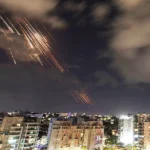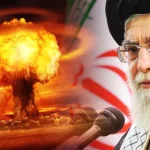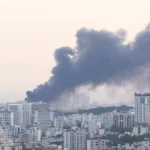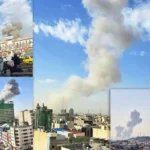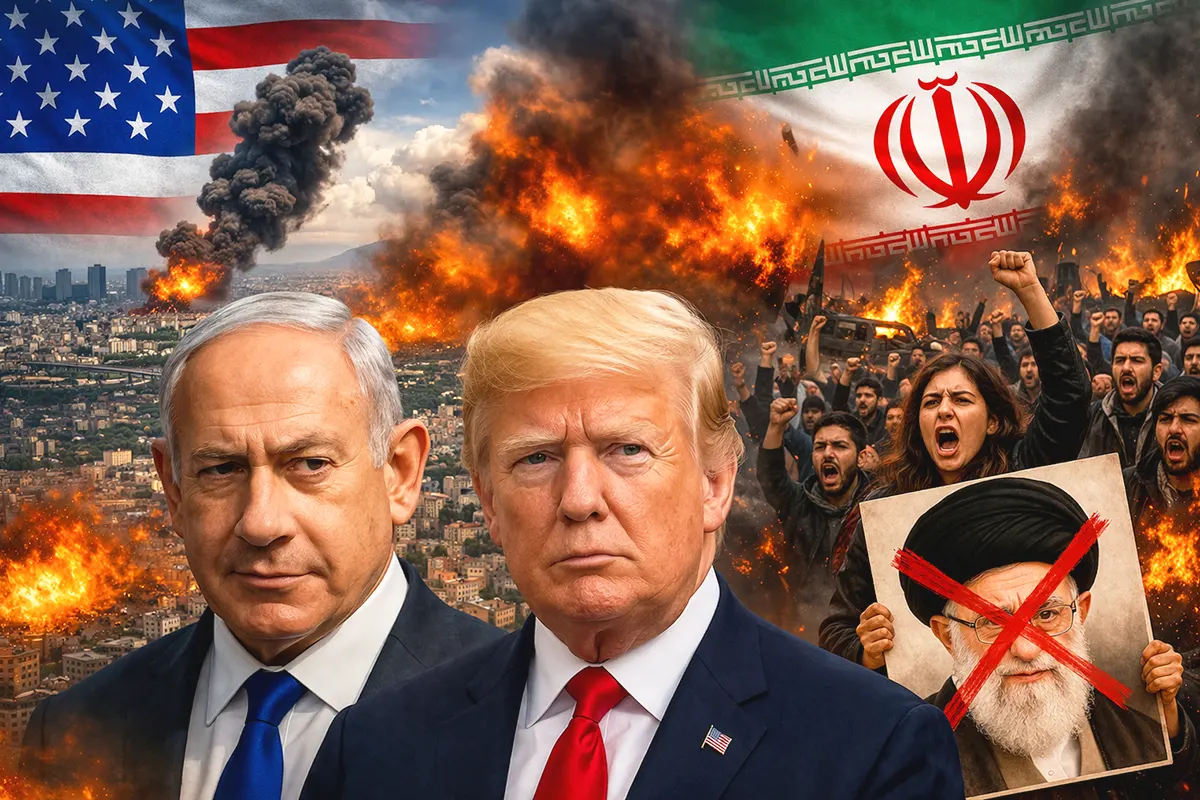
One of the central assumptions of the US-Israeli military campaign against Iran launched on 28 February – that the first strikes would be followed by a popular uprising or a rebellion that would defeat the Iranian regime from within – has not only failed to materialise after three weeks of fighting, but as the weeks go by and the conflict becomes more entrenched and escalating, it seems increasingly clear that it will not happen, at least not under current conditions.
This scenario confirms the doubts that numerous analysts have been expressing from the outset about the lack of preparation for this offensive, especially on the part of Donald Trump’s administration, whose advisors did not even consider Iran as an imminent threat, nor did they mention it in US national security strategy reports; in fact, the US Secretary of War himself, Pete Hegseth, confessed at the time that the US was “forced” to launch the attack – in the midst of negotiations with Iran – after Israel decided to launch the operation without their permission.
This lack of preparation is also evident in the numerous miscalculations about the consequences of the attacks and about Tehran’s own response, including the apparent absence of a contingency plan for Iran’s predictable blockade of the Strait of Hormuz.
According to reports published by The New York Times and quoted by numerous media outlets, based on testimonies from current and former officials in several countries, Mossad chief David Barnea assured Israeli Prime Minister Benjamin Netanyahu before the start of the war that his agency could succeed in rousing internal opposition to the ayatollahs’ regime and trigger a popular uprising within days – not weeks, but days… – of the first bombing raids.
Netanyahu convinced Trump that the downfall of the Iranian regime was a matter of days
Netanyahu, confident by this statement and by his own convictions already expressed during the ‘Twelve-Day War’ of 2025, used this assessment by the head of his intelligence services to convince Donald Trump that overthrowing the Iranian government was not only possible, but that it was a simple task and that it would be quick. In his eyes, the Islamic Republic‘s regime was hanging by a thread after the mass protests of recent months, and its downfall was just a matter of ‘giving it the final push’.
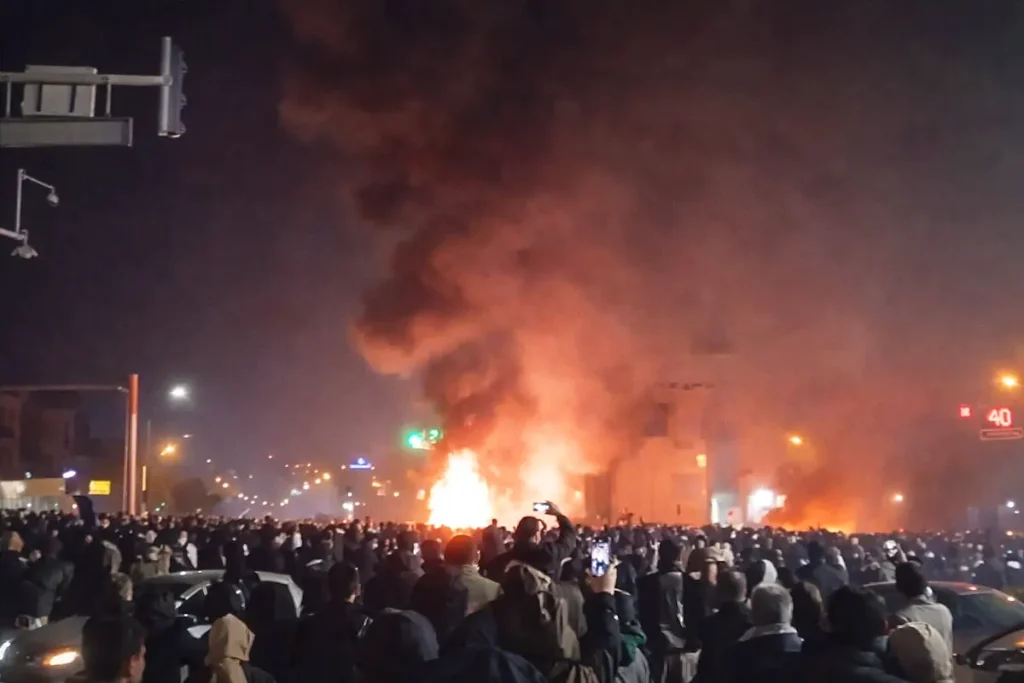
However, both senior US officials and Israeli military intelligence analysts had already warned both leaders that no one in Iran was likely to take to the streets amid Israeli and US aerial bombardment – a prediction that, in the light of events, clearly proved to be entirely accurate.
After more than three weeks of war, US and Israeli intelligence services see the Iranian government as weakened, yes; but they also note that it remains firmly in power and far from imminent collapse, while the threat of repression and the US and Israeli attacks themselves keep the population at home and any opposition quiet.
The very idea of toppling a regime that has been in power for half a century and has penetrated all layers of political, social and economic life in a country of 90 million people nearly four times the size of Spain – or seven times the size of the UK – in a matter of days, and solely by air strikes, clearly seems little more than a fantasy from today’s perspective.
Trump reversed plans to use the Kurds
A second component of the plan devised by Washington and Tel Aviv – backing Iranian Kurdish militias in northern Iraq to launch a cross-border incursion against Iran, where a significant Kurdish minority lives – has also ended in failure before it has even begun. Using the Kurds as a mercenary force to open another front against Iran was an option that was contemplated as part of the Israeli bombardment of northwestern Iran, and was intended to run parallel to the expected internal rebellion.
But Washington’s initial interest in this plan faded quickly, especially after NATO member Turkey warned against any such action that would destabilise its border with Iran. Although Kurdish armed militias have claimed to be prepared, pressure from Ankara and the obvious risk that a Kurdish separatist rebellion could lead to a strengthening of the regime and the internal cohesion in Iran, led Trump to finally ask Iraq’s Kurdish leaders not to intervene.
According to The New York Times, Netanyahu reportedly privately expressed frustration at the absence of an internal Iranian opposition revolt, complaining during a security meeting – shortly after the start of the recent Middle East conflict – that Mossad operations were not working as expected and warning that the US could withdraw from the war at any time, leaving Israel alone against Iran in the conflict.
Lack of foresight and serious military miscalculations
The truth is that, after more than three weeks of military actions and attacks, no significant uprising has emerged in Iran, the Iranian government remains in control of the country, and the regime’s response to the attacks is far from that of a collapsing or “defeated” enemy, as Trump has claimed. The US president has even been forced to ask his NATO allies – the same allies he has systematically mistreated and vilified since taking office – for help in reopening the vital energy corridor of the Strait of Hormuz, through which one in five barrels of the world’s crude oil transit.
The closure of Hormuz itself, as well as Iran’s ability to launch multiple attacks against countries in the region or even thousands of miles away (such as the attack on the US-British base at Diego Garcia in the Indian Ocean), and the growing evidence that the US military deployment – despite being the largest since the invasion of Iraq in 2003 – has proved insufficient, are among the major serious military miscalculations of this campaign, along with – of course – the aforementioned belief that aerial bombardment could trigger a popular uprising in Iran.
Iran is not Venezuela… And no one wants the Shah back
As many analysts and media have repeatedly pointed out, Iran is not Venezuela. Trump was most likely hoping for a quick and successful operation, similar to the one that led to the capture of Maduro; and his angry reactions, threats and repeated changes of opinion on the conflict (in a few hours he goes from issuing threats of “mass destruction” against Iran to talking about “fruitful negotiations”), reveal the very psychology of a child who is not getting the ‘game’ to turn out as he had planned in his mind.
Likewise, and despite the protests in the country, we at Hispanatolia have warned time and again – as have other analyses, or even the Turkish government itself – that there is insufficient evidence to date to conclude that a majority of the Iranian population wants a regime change, however much the violent repression of the demonstrations may be repugnant.
Not forgetting, of course, that far from the perception in much of the West, there is no consensus among the Iranian opposition today either on how the country should be governed if the ayatollahs’ regime falls, or who should govern it… And no, there has certainly never been a majority of Iranians who support the return of the Shah, something that was only ever a reality in Netanyahu’s most deluded dreams.
Trump looks for a quick and successful way out of conflict
With the conflict in the Middle East spiralling out of control, pressure mounting inside and outside the US from rising oil prices and the serious risk of a global recession, and having failed to muster any meaningful international support, Trump is now looking for a quick way out of the war from which he can emerge as a winner and with the slogan ‘mission accomplished’ to his voters, who are his only concern.
The US president has repeatedly claimed that Iran is desperate to negotiate, despite the fact that none of the initial objectives that Israel and the US set out to achieve in this campaign can be considered fulfilled, and while Tehran repeatedly denies that they have engaged in any negotiations following the US-Israeli aggression.
A war with Iran without obvious objectives or reasons, absurd – as almost all wars are – which has already claimed more than 1,300 dead, forced millions of people to flee their homes, and destabilised what was already the most troubled region in the world for years – perhaps decades – to come, with who knows what medium and long-term consequences. As Carl von Clausewitz wrote, “War is the continuation of politics by other means”; and in this case, neither Israel nor the US have properly calculated the consequences of their ambitions in the Middle East.
VOTE

EDITORIAL TEAM
🧿 About us
.
Edited and reviewed by:

Pablo Gómez is a specialist in Turkey and has been editor-in-chief of Hispanatolia since 2011. He has been analysing current affairs and geopolitics in Turkey and the surrounding region since 2006.
…
📣 Your ADVERTISING on Hispanatolia
.
🤗 HELP US WITH A DONATION:
💗 Paypal