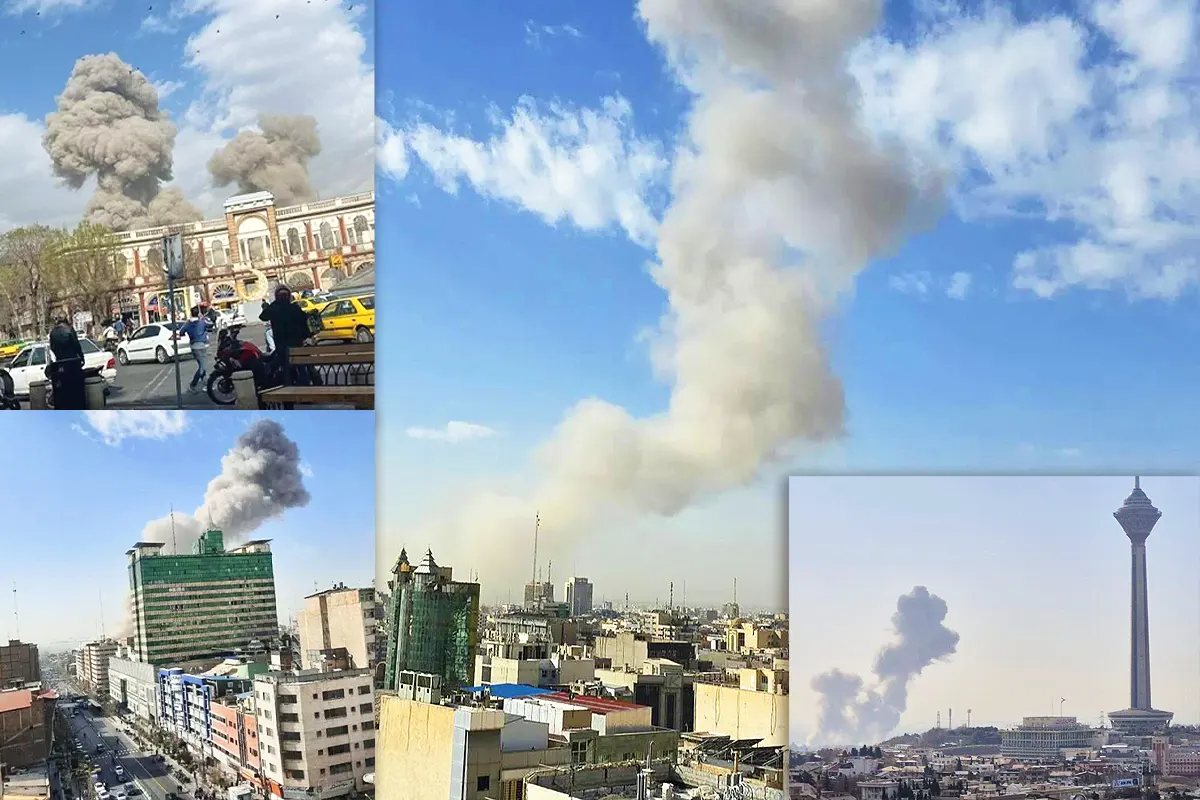
Turkey‘s Foreign Ministry on 28 February issued a security alert to all Turkish citizens in Iran, urging them to exercise extreme caution and postpone any travel to the country that is not absolutely necessary, warning that the current situation in the region is “critical“, while airlines such as Turkish Airlines have suspended flights across the Middle East following US and Israeli strikes on several cities in Iran.
According to Turkish media reports, Turkey’s foreign ministry warned that the security situation in Iran is “critical” and urged its citizens to exercise the utmost caution and postpone any travel to the country except in cases of emergency. Ankara also issued recommendations for Turkish citizens already in Iran or residing in the country, advising them to stay in safe areas, avoid military areas and crowded buildings, and not to go abroad unless strictly necessary.
The statement added that Turkish citizens in Iran can return by land to Turkey through the Esendere, Kapıköy and Gürbulak border crossings between the two countries. The Turkish Foreign Ministry also released the emergency telephone numbers and emails of its representations in Iran, including the embassy in Tehran and consulates in the Iranian cities of Tabriz, Urmiye, Urmia and Mashhad.
Turkish Airlines cancels flights to 10 countries in the Middle East
Meanwhile, Turkish Airlines Communications Director Yahya Üstün announced that the Turkish airline had suspended all flights to 10 countries in the Middle East, but warning that the airline is monitoring the security and airspace situation in the region in real time and that further cancellations could be announced in the near future.
According to an airline statement quoted by Turkish media, Turkish Airlines (THY) specifically announced the cancellation of all flights to Lebanon, Syria, Iraq, Iran and Jordan until at least 2 March 2026. Likewise, all flights to Qatar, Kuwait, Bahrain, United Arab Emirates and Oman will not operate until 28 February 2026, pending further updates.
Its low-cost subsidiary AJet also communicated via social media its decision to cancel all flights to Iran, Iraq, Syria and Lebanon between 28 February and 2 March, as well as an AJet flight scheduled for 28 February to the United Arab Emirates. Other international airlines, including Air France, Air India, Norwegian, Air Algerie, British Airways and Lufthansa, also announced widespread cancellations, including on their routes to Israel, which has nevertheless closed its airspace to civilian flights, according to its transport minister, Miri Regev.
Trump urges Iranians to overthrow their government
The United States and Israel launched large-scale strikes on Iranian territory on Saturday as US President Donald Trump urged Iranians to “take over your government” in a public call that appears to seek to end the theocratic regime of the ayatollahs with a revolution from within, following the failure of negotiations over Iran’s disputed nuclear programme.
The initial bombings, which Israeli Prime Minister Benjamin Netanyahu justified as a response to the “existential threat” posed by the Iranian regime, appeared in fact to be directed against targets and leaders of Iran’s own top government, including air strikes on the compound housing the residence of Iran’s supreme leader, the 86-year-old Ayatollah Ali Khamenei, located in the heart of Tehran, although it is unclear whether Khamenei was there at the time of the attack. Large plumes of smoke rising over the Iranian capital were visible after the attack from several kilometres away.
“For 47 years, the Iranian regime has chanted ‘Death to America’ and waged an unending campaign of bloodshed and mass murder, targeting the United States, our troops and the innocent people in many, many countries,” Trump said in a video in which he sought to justify launching the attacks. “We are going to destroy their missiles and raze their missile industry to the ground. It will be totally, again, obliterated. We’re going to annihilate their navy,” Trump stated emphatically in his message, accusing Iran of wanting to develop nuclear weapons with which to threaten several countries in the region: “They will never have a nuclear weapon,” he said.
The US president also urged the Iranians to take cover during the bombing, but at the same time sent them a direct message: “When we are finished, take over your government. It will be yours to take. This will be probably your only chance for generations,” Trump said,adding in his message that “The hour of your freedom is at hand“.
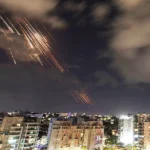
In response to these initial bombings, Iran launched a barrage of missiles against Israel this morning as a retaliatory measure, Iran’s state-run IRNA news agency reported. The Islamic Revolutionary Guard Corps called the action a “response to the aggression of the hostile and criminal enemy”, the agency announced. Shortly after this announcement, the Israeli military itself confirmed that Iran had begun launching missiles at Israel, reporting a second wave of missiles and drones launched from Iranian territory shortly afterwards.
A conflict with serious consequences for the region and Europe
Foreign policy experts and diplomatic sources in the Middle East have expressed concern about the serious consequences for the region of these new attacks launched by the US and Israel, given the risk that Iran will respond forcefully and the crisis will spread throughout the Middle East, triggering in the short term a possible closure of the Strait of Hormuz as well as actions by Tehran’s allies in the region.
Iranian retaliation will also possibly include US air bases located in several Middle Eastern and Persian Gulf countries, but also numerous vital infrastructures in the region vulnerable to Iranian short and medium-range missiles, including desalination plants, hydrocarbon processing centres and power plants.
Moreover, if the US decides to overthrow or change Iran’s regime, many experts fear that the country could descend into violence, with separatist groups and armed militias vying for control of Iran: chaos that would end up affecting Turkey and the European Union in the short term, triggering a massive influx of refugees to Europe and Turkish territory but also to other countries in the region, such as Pakistan; this situation would also lead to a dramatic increase in instability in the Middle East and in the global terrorist threat, especially in Western countries.
VOTE

EDITORIAL TEAM
🧿 About us
.
Edited and reviewed by:

Pablo Gómez is a specialist in Turkey and has been editor-in-chief of Hispanatolia since 2011. He has been analysing current affairs and geopolitics in Turkey and the surrounding region since 2006.
…
📣 Your ADVERTISING on Hispanatolia
.
🤗 HELP US WITH A DONATION:
💗 Paypal