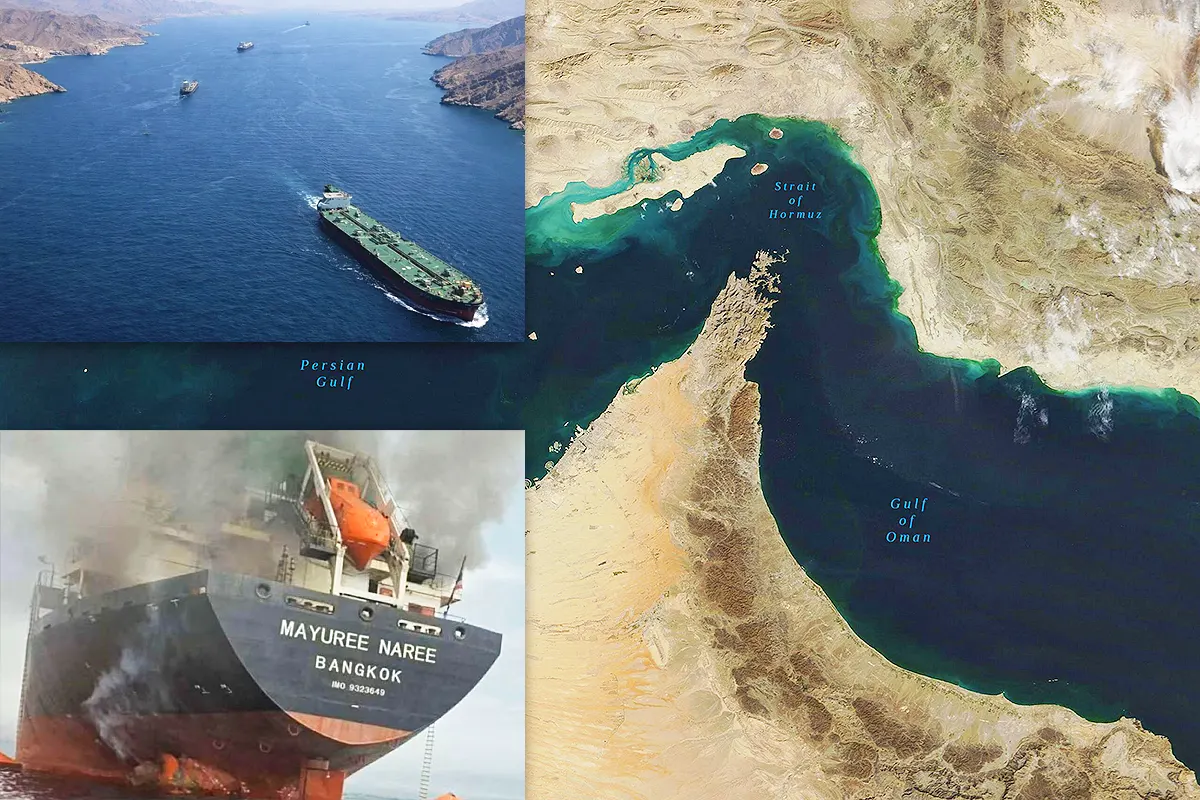
The blockade of the Strait of Hormuz by Iran following attacks by Israel and the US, which has caused turbulence in energy markets and sent the price of a barrel of crude oil soaring, does not pose a risk to Turkey’s natural gas or oil supplies for the time being, according to Turkish Energy and Natural Resources Minister Alparslan Bayraktar.
Bayraktar made these statements to Turkish media today in response to journalists’ questions about the security of energy supply, shortly before a meeting of the AKP party’s parliamentary group. Just yesterday an unusual closed-door session was held in the Turkish parliament to discuss the escalating war in the Middle East between the US, Israel and Iran and its possible consequences for the country and the region, in the context of the current collapse of the old world order that emerged after World War II.
The fact is that since the attacks on Iran began on 28 February, energy markets have experienced a sharp rise in prices as several major oil producers have cut oil and gas production and shipments, raising fears of a prolonged disruption to shipping in this key region because of the closure of the Strait of Hormuz due to the conflict. Oil prices touched as high as $120 a barrel on Monday, with Brent crude currently trading above $90 a barrel, about 25% higher than before the war.
“There is no risk to Turkey’s supply”
Despite this delicate situation, the minister said that for now there is no risk to Türkiye’s supply: “There is no need to worry about natural gas. As I have said before, we do not expect to have any problems with the security of supply. This applies to oil and oil products, i.e. fuel, as well as natural gas. We do not foresee any problems at the moment, but we are closely monitoring developments,” Bayraktar told reporters.
The minister explained that the increase in crude oil prices is mainly due to fears of global supply disruptions, as the escalating war in the Middle East is creating uncertainty in the energy market, which is reflected in price fluctuations.
In this context, he stressed: “There is a global concern about a supply disruption, which is indeed happening. That is why we see prices rising. I hope that this conflict in the region will end as soon as possible and that world markets will normalise to some extent,” said Bayraktar, who added that the recent drop in oil prices is related to expectations that the war could end soon, especially after some statements made by Trump, which would augur a possible return to normality in supply.
Energy diversification and nuclear energy, key for Turkey
Bayraktar pointed out that, before the outbreak of the conflict, Türkiye expected oil prices to remain at around $60 per barrel this year; however, the war has introduced a new scenario of uncertainty. Regarding the blockade of the Strait of Hormuz, the minister nevertheless clarified that Turkey has diversified energy supply routes and that these, for the most part, are located outside this strategic passage: “Our main crude oil purchases are outside Hormuz, so we don’t see a risk from our perspective at the moment,” he said.
In remarks made earlier on Monday at the Nuclear Energy Summit in Paris, the minister also stressed that Turkey obtains energy from numerous suppliers and is not experiencing supply difficulties. In this context, Bayraktar insisted on the importance of diversifying energy sources, including renewables and nuclear energy, and stressed that the construction of nuclear power plants is a central pillar of Turkish energy strategy to face challenges such as growing electricity demand, energy security and climate change.
VOTE

EDITORIAL TEAM
🧿 About us
.
Edited and reviewed by:

Pablo Gómez is a specialist in Turkey and has been editor-in-chief of Hispanatolia since 2011. He has been analysing current affairs and geopolitics in Turkey and the surrounding region since 2006.
…
📣 Your ADVERTISING on Hispanatolia
.
🤗 HELP US WITH A DONATION:
💗 Paypal