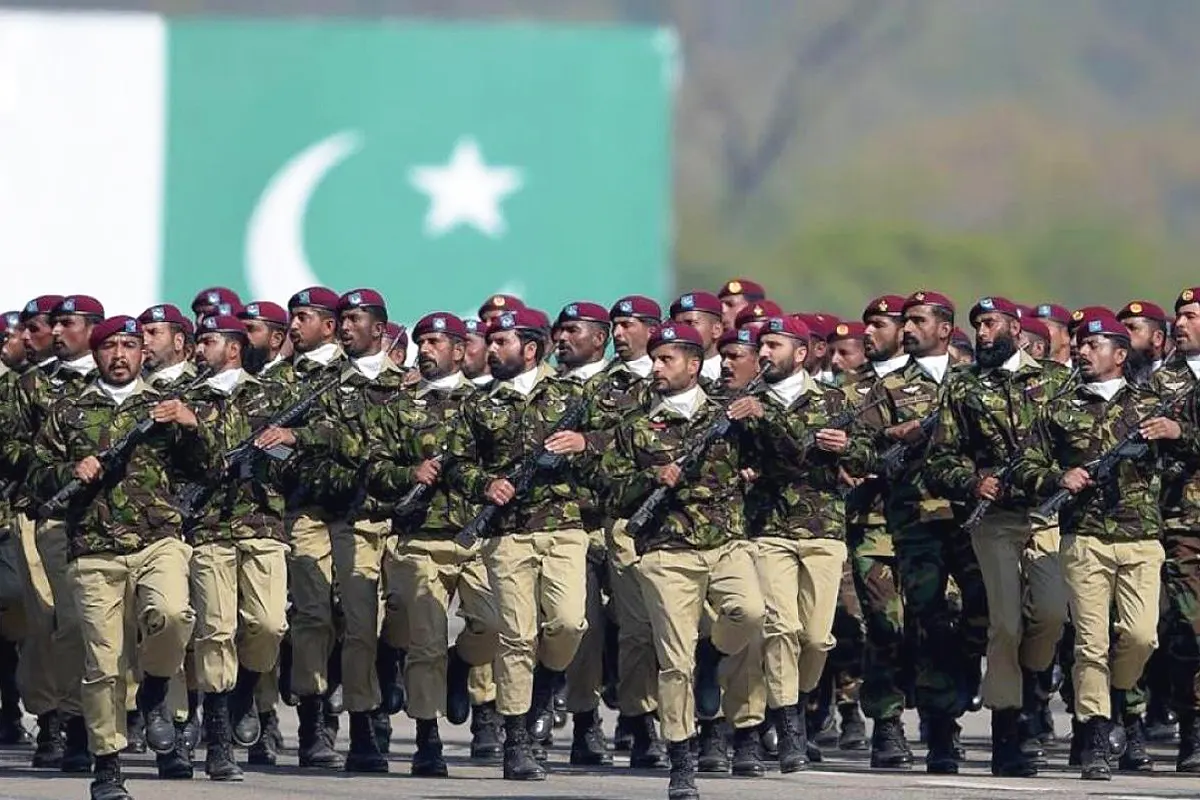
The government of Pakistan said on Wednesday that it has ‘credible intelligence’ indicating that India is planning an ‘imminent’ military attack in retaliation for the recent attack in Kashmir, promising a ‘decisive response’ to any external aggression amid spiraling tensions between the two neighbouring countries, both of which possess nuclear weapons.
According to several news agencies and media outlets such as Al-Jazeera, Pakistan’s Federal Information Minister Attaullah Tarar said on social media that Islamabad has ‘credible’ intelligence reports that India will launch an attack on the country ‘in the next 24 to 36 hours, under the pretext of baseless and false allegations of (Pakistan’s) involvement in the Pahalgam incident,‘ he said, referring to the recent terrorist attack in Indian-administered Kashmir.
‘Any act of aggression will be met with a decisive response. India will be held fully responsible for any serious consequences in the region,’ Tarar warned in a message posted on social media. Earlier, Pakistani Defence Minister Khawaja Muhammad Asif had already warned on Monday that an Indian incursion into Pakistani territory is ‘imminent’ and confirmed that the armed forces are on high alert, adding that Islamabad will use nuclear weapons ‘if there is a direct threat to our existence’.
India retaliates against Pakistan after attack in Kashmir
Tensions between the two countries remain at their highest level in more than two decades after New Delhi directly accused Pakistan of being behind the terrorist attack on 22 April at a mountain resort in Pahalgam, a town in the Indian-controlled part of Kashmir. In the attack, several armed men separated the men, looking for those of Indian origin, and shot them, killing a total of 26 people, although one of the victims turned out to be of Nepalese origin.
Responsibility for the massacre was claimed by the so-called The Resistance Front (TRF), a group that emerged in 2019 to fight against the Indian presence in Kashmir and is believed to have links to or be a splinter group of Lashkar-e-Taiba, a Pakistan-based terrorist organisation. Indian Prime Minister Narendra Modi has vowed to pursue the perpetrators of the brutal attack ‘to the ends of the Earth,’ and Delhi’s intelligence services have identified the three perpetrators of the attack, including two Pakistani nationals.
Pakistan has repeatedly denied any involvement in the attack and accuses India of using it as an excuse to further its own interests. Since then, the two countries and old rivals – which emerged from the partition of British India after its independence in 1947 – have taken mutual retaliatory measures: India suspended the vital Indus Water Treaty, threatening Pakistan’s drinking water supply, which Islamabad said could be considered an act of war.
In response, Islamabad closed Pakistani airspace to flights from India, adding up to six hours to some westbound flight times, and suspended diplomatic relations and all trade with India. The Delhi government has also suspended visas for Pakistani citizens, while the international community attempts to halt an conflict escalation that threatens stability in a key region of the world.
‘If India has evidence of Pakistan’s involvement (in the terrorist attack in Pahalgam), share it with us and the world,’ said Pakistani Foreign Minister Ishaq Dar. In a recent televised interview, Pakistan’s defence minister warned that the growing tensions following the attack in Kashmir could lead to ‘all-out war’ with India.
VOTE

EDITORIAL TEAM
🧿 About us
.
Edited and reviewed by:

Pablo Gómez is a specialist in Turkey and has been editor-in-chief of Hispanatolia since 2011. He has been analysing current affairs and geopolitics in Turkey and the surrounding region since 2006.
…
📣 Your ADVERTISING on Hispanatolia
.
🤗 HELP US WITH A DONATION:
💗 Paypal