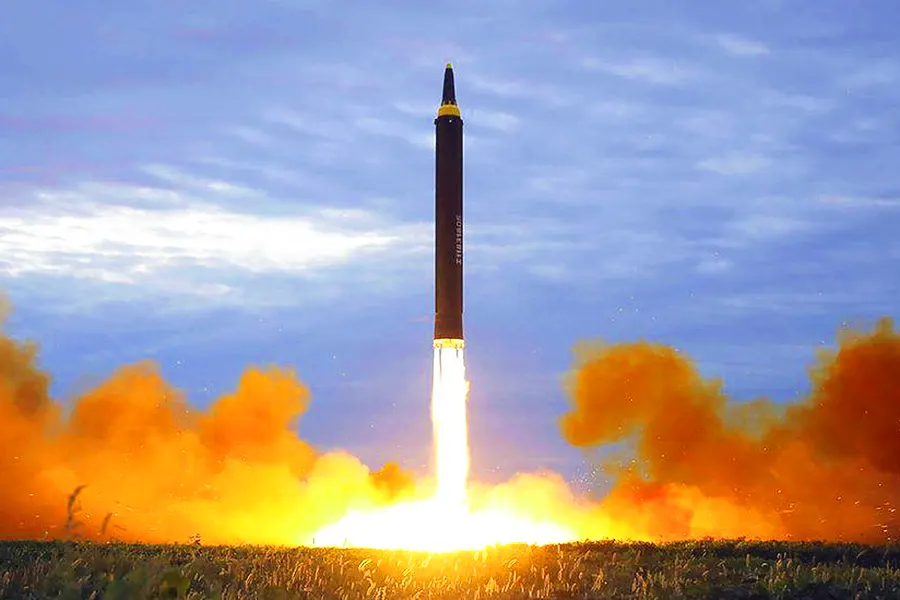
Global spending on nuclear weapons soared in 2023 among the world’s nuclear powers, which have increased their spending on nuclear weapons by a third over the past five years as geopolitical tensions around the world have grown, according to two reports recently published by two leading international think tanks.
The world’s nine nuclear powers together spent $91 billion last year on their nuclear arsenals, according to reports published by ICAN (International Campaign to Abolish Nuclear Weapons) and SIPRI (Stockholm International Peace Research Institute), which alert that nuclear nations are dramatically increasing their spending, both on modernising their existing arsenal and on developing new nuclear weapons, something they warn has not happened “since the Cold War” and which leads to the conclusion that “a nuclear arms race is underway”.
The SIPRI report shows that the total number of atomic warheads in the world fell slightly from 12,512 at the beginning of 2023 to an estimated 12,121 at the beginning of 2024. However, if old warheads in stockpiles scheduled for dismantlement are excluded, the actual figure indicates that there were 9,585 nuclear warheads ready for use at the beginning of this year: 9 more than a year ago. In addition, 2,100 of them remain in a state of “high operational alert“, meaning that they are mounted on ballistic missiles ready to be launched at any time.
While the majority of all these ready-to-use warheads are in the possession of the United States or Russia, for the first time China is listed as possessing some of these warheads on “high operational alert”, according to the SIPRI report. In short, the total number of nuclear warheads is declining as those dating from the Cold War are dismantled; but at the same time, the number of warheads in high operational status is growing year by year, which means a greater risk of an incident with atomic weapons in the event of escalation.

More geopolitical tension, more nuclear weapons
These conclusions seem to be supported by spending on nuclear weapons, which the ICAN report notes grew by $10.8 billion globally in 2023, with the United States accounting for 80% of the increase in spending. The US alone spent some $51.5 billion on its nuclear arsenal in 2023, which is “more than all other nuclear nations combined“, according to ICAN.
The next biggest spender on its atomic armament in 2023 was China, with $11.8 billion, followed by Russia ($8.3 billion) and the UK, whose spending grew for the second year in a row, increasing by 17% to $8.1 billion.
Thus, global spending on nuclear weapons among the countries that possess this weaponry – also including France, India, Pakistan, Israel and North Korea – grew by 33% in 2023 compared to five years earlier (in 2018, since ICAN began collecting data), when it amounted to “only” $68.2 billion.
The report also reminds that, if we add up the total expenditure on atomic weapons since 2018 for all countries, the figure rises to $387 billion: an expenditure that exceeds what the World Food Programme estimates would be needed to end world hunger, and with which – for example – “you could plant a million trees for every minute of nuclear weapons spending”, according to Melissa Parke, director of ICAN, who warns that this expenditure is not only wasteful but also extremely dangerous: “What happens when deterrence fails?”
VOTE

As a history lover, Pablo Gómez was captivated by Turkey from the first day he visited it in 2006: he got married there, has a house there… and has since become an expert on Turkey’s current affairs. With a long experience in media, he has been at the helm of hispanatolia.com since 2011.