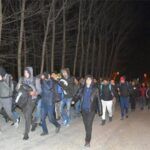
Turkish Interior Minister Ali Yerlikaya has announced that more than a quarter of a million Syrian refugees who have been hosted for years in Turkey have already returned to Syria since 9 December, following the fall of the Assad dictatorship.
In statements made to CNN Türk and reported by several Turkish media, Yerlikaya informed that a total of 250,064 Syrians have returned to their country after the end of Assad’s regime, and that a total of 1.1 million have returned to Syria since 2016. Even so, the minister recalled that Turkey – once the country with the largest number of refugees in the world– still has ‘more than 2.7 million Syrians under temporary protection status’.
Yerlikaya stressed that Turkey is pursuing a policy of ‘voluntary, safe and dignified’ return of Syrians who want to return to their country. ‘We have established contact with non-governmental organisations here and in Syria on how to proceed with the returns. It was winter, and we also had refugee children attending school here. We discussed about how we could best proceed with the returns. Some refugees volunteered as pioneers to check if their houses or land still remained there after 13 years of war. So we issued permits for 27,000 pioneer refugees to travel back and forth three times from Syria to Turkey and viceversa, between 1 January and 1 July. They are still there. Soon the schools will close for the summer, and we expect more to return.’
More than half a million people are estimated to have died during Syria’s devastating 13-year civil war, which left the country with half its population turned into refugees – more than 6 million of whom fled to other countries, mostly Turkey – and a devastated economy that, according to the UN, will take more than half a century to recover. The end of the civil war, the recent lifting of sanctions and the return of foreign investment have opened the door to hope for many Syrians… But the road will be long and difficult.
It is precisely the return to their country of all the refugees who left that is a key factor in helping the economy recover and rebuild Syria, where 70% of its infrastructure has been destroyed and which, according to UN reports, will cost some $400 billion, about 20 times the current annual GDP of Syria. Many of these Syrians have gained technical and work experience abroad over the years that will be crucial, and especially the younger ones have received an education – many of them higher education at universities– that will be key for Syria to regain its potential, and one day return to what it once was.
VOTE

EDITORIAL TEAM
🧿 About us
.
Edited and reviewed by:

Pablo Gómez is a specialist in Turkey and has been editor-in-chief of Hispanatolia since 2011. He has been analysing current affairs and geopolitics in Turkey and the surrounding region since 2006.
…
📣 Your ADVERTISING on Hispanatolia
.
🤗 HELP US WITH A DONATION:
💗 Paypal