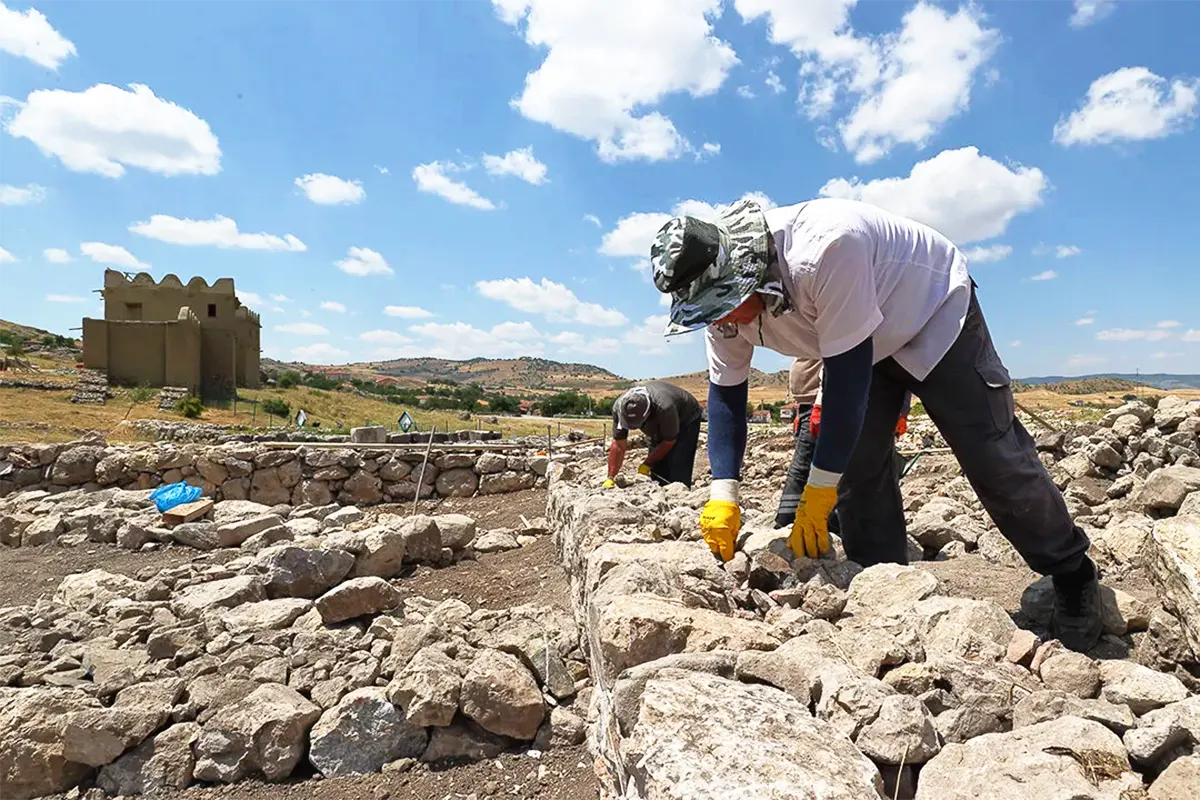
Ancient Hattusa, the capital of the Hittite Empire for approximately 450 years, is currently undergoing further restoration work aimed at preserving structures dating back some 3,500 years that were uncovered during the excavations, and at making them easier for visitors to understand. The work of the archaeologists at the ruins of Hattusa – designated a World Heritage Site by UNESCO – is concentrated in the Lower City, where the excavations were completed in 2022.
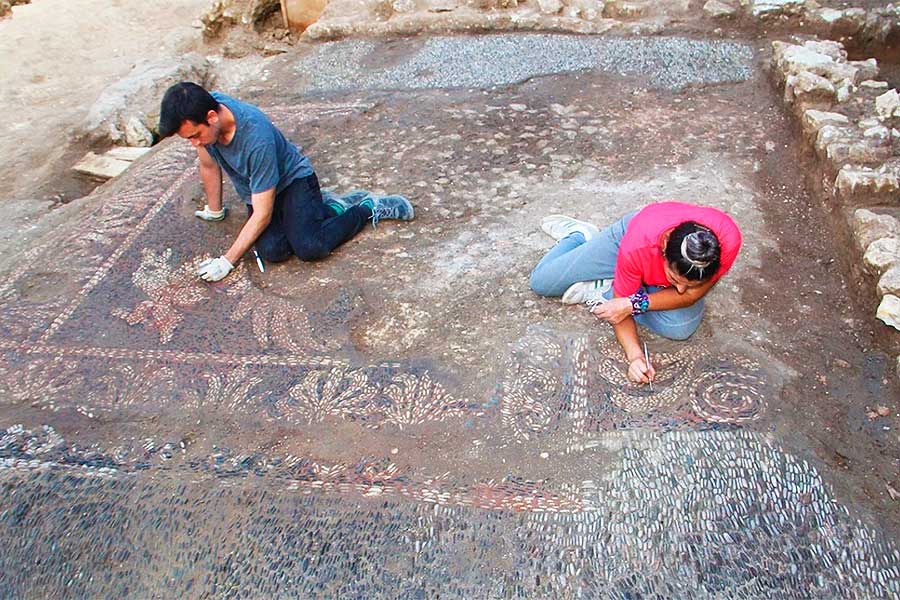
Whilst archaeological work continues at various points across the site, conservation teams are working on previously uncovered structures to ensure their preservation. Once the restoration is complete, visitors will be able to see more clearly what a Hittite neighbourhood was like and gain a better understanding of the urban layout of this ancient city, according to reports from Turkish media outlets specialising in archaeology.
A restoration to show what a Hittite neighbourhood was like
Excavations led by the German Archaeological Institute are bringing new finds to light in different areas of Hattusa. Professor Andreas Schachner, who has been in charge of the excavations at Hattusa since 2006, explained that this year’s work has focused on the restoration of the Lower City, where excavations concluded four years ago.
The aim is not only to conserve the architectural elements that have been uncovered, but also to enable visitors to understand what the urban layout was like during the Hittite period. Schachner pointed out that, once the work is complete, it will be possible to gain a clearer understanding of the urban structure of a Hittite neighbourhood.
The head of the excavations at Hattusa emphasised in this regard that the archaeologists’ work does not end when the excavations are complete: “Our task is not only to research and excavate, but also to restore and showcase our findings to future generations”. He explained that approximately 30% of the work carried out in Hattusa consists of restoration tasks.
A major earthquake destroyed the Lower City of Hattusa
The area of the Lower City where restoration work is currently taking place is providing important information both on the architecture of Hattusa and on the transformations and evolution the city underwent. This is because the Lower City contains both structures linked to the Hittite king’s entourage and buildings serving administrative and economic functions.
Excavations and research in the area have also revealed traces of earthquakes in the city’s buildings. Schachner noted on this point that the settlement in the Lower City came to an end precisely following the destruction caused by a major earthquake.
The grand square located opposite the city gate and the roads leading up to it, previously discovered in this area, also help us to understand the urban planning of Hattusa during the time of the Hittites, according to Schachner, who emphasised that the site is particularly important because it allows us to observe how the urban development of Hattusa evolved up to the 14th century BC.
Thus, by analysing the large square, the roads, the public and commercial buildings, and the residential areas together, it is possible to gain a better understanding of the role played by the Lower City within the great Hittite capital. “Here we have a city that offers us a good picture of what the landscape and urban development were like up until the 14th century BC,” said Schachner.
One of the great cities of the Bronze Age
Conservation efforts at Hattusa are not limited to the structures of the Lower City. The system of walls, approximately 7 kilometres long, has also been the subject of various restoration works in previous years.
In 2005, the Turkish Ministry of Culture and Tourism reconstructed the Hittite walls using adobe as the building material, in accordance with the original construction techniques. These defensive structures also undergo regular maintenance and repair work.
Hattusa, designated a UNESCO World Heritage Site, is of great importance to archaeologists not only for having been the Hittite capital, but also for encapsulating within its walls thousands of years of history of human settlements in Anatolia, as the archaeological site preserves remains dating from various periods, from the Chalcolithic to the Byzantine era. At its peak, the city covered some 180 hectares – almost 2 square kilometres – and had a population of around 50,000, making it one of the largest and most important urban centres in the Near East during the late Bronze Age.
VOTE

EDITORIAL TEAM
🧿 About us
.
Edited and reviewed by:

Pablo Gómez is a specialist in Turkey and has been editor-in-chief of Hispanatolia since 2011. He has been analysing current affairs and geopolitics in Turkey and the surrounding region since 2006.
…
📣 Your ADVERTISING on Hispanatolia
.
🤗 HELP US WITH A DONATION:
💗 Paypal