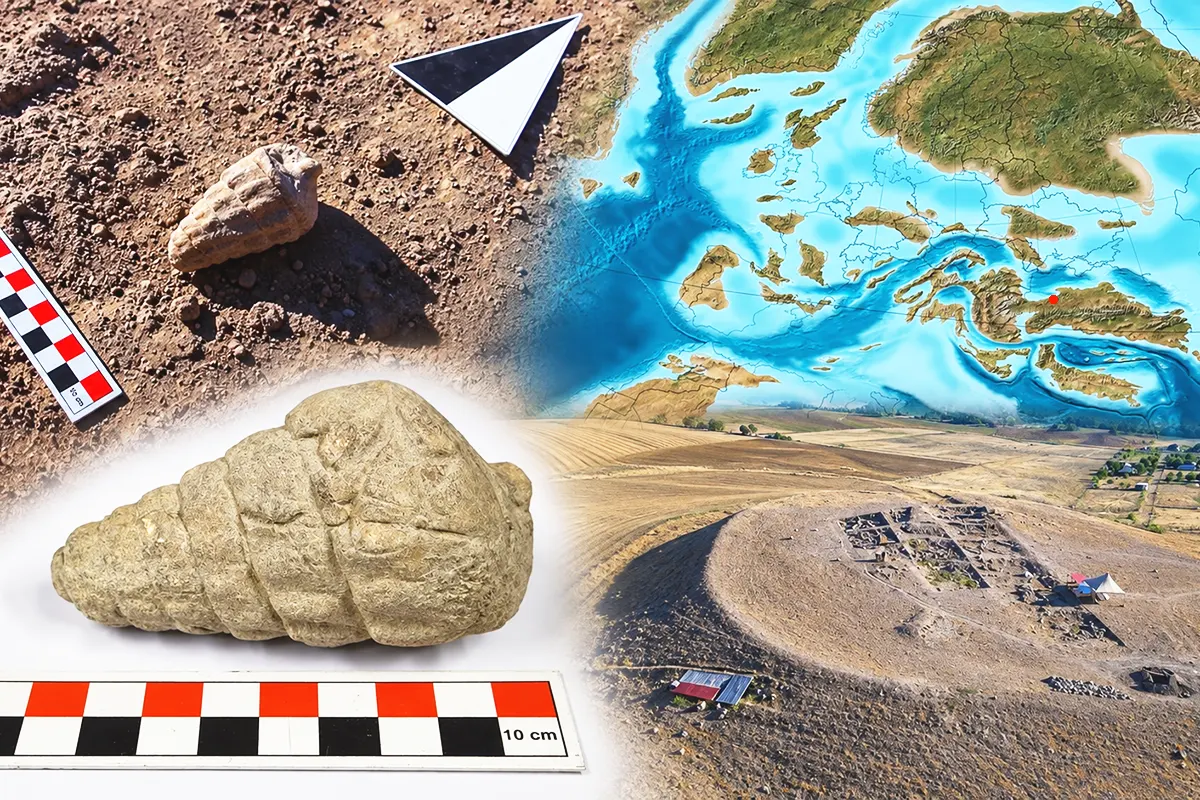
During archaeological excavations at Külhöyük, an ancient settlement in the Gölbaşı district, some 50 kilometres south of Ankara, a marine fossil of a sea snail that lived on the shores of the Tethys Sea 66 million years ago, right at the end of the Cretaceous period and shortly before the mass extinction that wiped out the non-avian dinosaurs, has been discovered.
The discovery was made at an ancient Hittite settlement dating back some 5,000 years, so it is thought possible that its inhabitants may have brought the fossil to the site thousands of years ago. According to Turkish media reports, Turkey’s Ministry of Culture and Tourism reported that the fossil, belonging to a snail of the class Gastropoda, corresponds to a species that inhabited the shores of the Tethys Sea.
Researchers believe it dates from the final stages of the Tethys Ocean, which began to form approximately 250 million years ago and came to cover much of what is now Central Anatolia, at a time when Europe resembled an archipelago of many islands.
A fossil from the age of the dinosaurs… in a 5,000-year-old settlement
One of the most striking aspects of the discovery is the context in which it was found. The marine fossil was found at Külhöyük, an ancient city linked to Hattusa, the capital of the Hittite Empire, which existed some 5,000 years ago.
The most likely hypothesis, according to experts, is that its inhabitants brought it to the settlement thousands of years ago; in any case, a line of investigation has been launched to try to clarify how a natural formation dating back millions of years found its way to a Bronze Age settlement.
Archaeological excavations at Külhöyük have been underway since 2021 and are led by Professor Derya Yılmaz Tekin, representing Ankara University and the Turkish Ministry of Culture and Tourism.
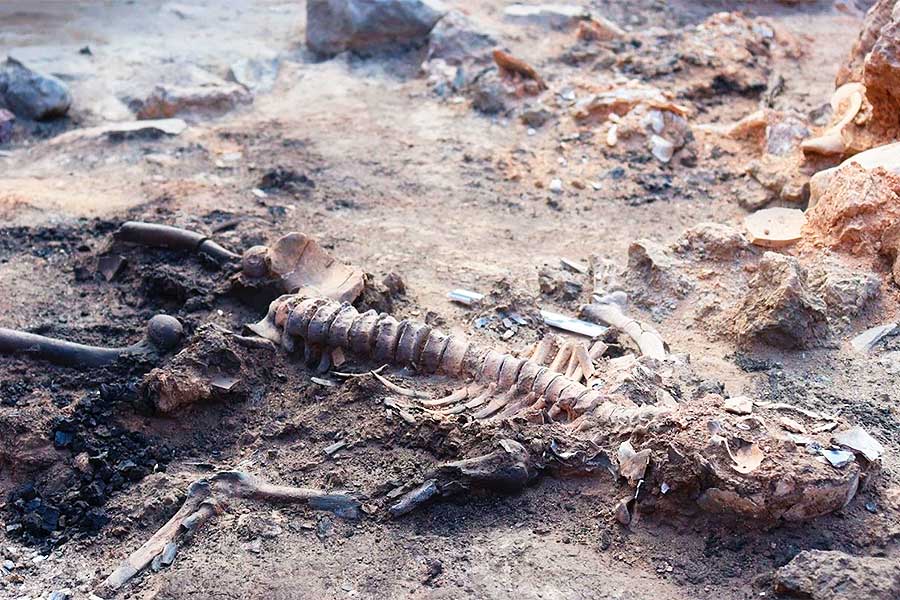
Külhöyük is a major archaeological site situated south of Ankara which has yielded significant evidence regarding the presence in this region of Turkey of the Hatti and Hittite cultures during the Bronze Age. The excavations have made it possible to document numerous remains dating back some 5,000 years and to recover various archaeological artefacts relating to the lives of its inhabitants. The discovery of this 66-million-year-old marine fossil now adds a much older dimension to the site, linking it to the very geological history of Anatolia.
VOTE

EDITORIAL TEAM
🧿 About us
.
Edited and reviewed by:

Pablo Gómez is a specialist in Turkey and has been editor-in-chief of Hispanatolia since 2011. He has been analysing current affairs and geopolitics in Turkey and the surrounding region since 2006.
…
📣 Your ADVERTISING on Hispanatolia
.
🤗 HELP US WITH A DONATION:
💗 Paypal