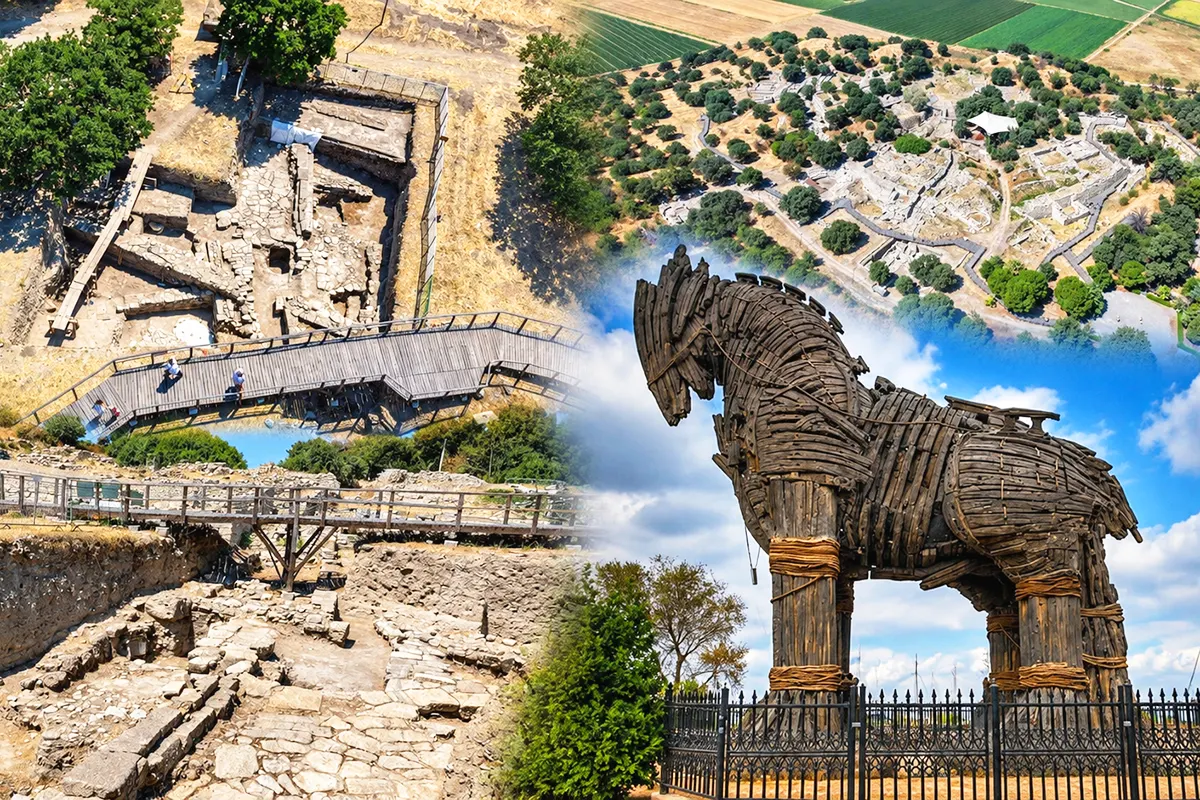
The archaeological excavations carried out at a 2,800-year-old agora in the ruins of ancient Troy are providing new insights into the development of this ancient city, mentioned in works such as The Iliad and The Odyssey by Homer, and situated in Çanakkale, Turkey. The discovery of this agora has shed new light on this 5,000-year-old city, which was destroyed at the end of the Bronze Age and rebuilt on numerous occasions following wars, fires and earthquakes.
Excavations uncover the ancient market of Troy
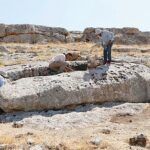
Work at the archaeological site of Troy, included on UNESCO’s World Heritage List in 1998 and considered the home of a civilisation with 5,000 years of history, is led by Professor Rüstem Aslan, head of the Troy excavation team, who has recently focused his efforts on the ancient agora – where the ancient market of Troy was situated – dating back 2,800 years – during the Troy VI period – and located in the area opposite the city’s southern gate.
Professor Reyhan Körpe, a member of the Department of History at the Faculty of Humanities and Social Sciences at Çanakkale 18 March University, and deputy director of the Troy excavations, explained in comments reported by the Turkish newspaper Milliyet that archaeologists have been trying for years to understand the connection between the Bronze Age Troy and the Ilion of the Archaic and Classical periods.
“This is the area opposite the southern gate of Troy, which dates back to the city’s sixth phase. Since 2014, we have been trying to understand the connection between Bronze Age Troy and the Ilion of the Archaic and Classical periods. We believe there was a market, an agora here, dating back to the Late Bronze Age. This agora came back to life thanks to the settlers who arrived here approximately 80–90 years after Bronze Age Troy was abandoned”.
The walls of Troy VI were reused by the new settlers
Körpe pointed out that the remains discovered suggest this site may be the oldest agora in Troy: “We can say that the site we have excavated is the oldest agora in Troy. The remains we have found show that parts of the walls of Troy VI were reused at the beginning of the Archaic period through the construction of dwellings on top of them. The marketplace of Bronze Age Troy continued to be used as an agora by the people who settled here. The excavations will continue over the coming years and we will seek to gain a much better understanding of this connection”, he said.
The archaeologist also explained that many areas of the city were destroyed during the excavations initiated by Heinrich Schliemann at Troy in the late 19th century. However, since 2014, researchers have been working in a much smaller area and paying close attention to every detail.
“During these excavations we discovered a pavement and an entrance leading from the lower city to the south gate. We also found the agora here. The excavations carried out at this site have brought to light some of the remains of the structures belonging to this agora,” explained Körpe.
The remains confirm that there was continuity after the end of the Bronze Age
Alongside the architectural remains, fragments of amphorae and other pieces of pottery were found, which have been dated to the Early Iron Age. “This means that Troy did not remain abandoned for long after the Bronze Age. It appears that approximately 80–90 years later new settlers arrived and built their own houses on top of the ancient ruins, perhaps even on top of the ancient walls,” the professor continued.
According to the deputy head of the archaeological excavations at Troy, the new settlers named their settlement Ilios/Ilion, after the site had previously been known, during the Bronze Age and the period described by Homer, as Wilusa, the name given to it by the Hittites. “They renamed the new settlement they established on the site of Troy… In a sense, this is how they ensured that the name of the ancient city would live on in history”, concluded the archaeologist.
📚 If you want to learn more about the history of Turkey, we recommend:
🧿 Discover here more recommended products about Turkey
As an Amazon Associate, we earn from qualifying purchases. This comes at no extra cost to you and helps support this website.
VOTE

EDITORIAL TEAM
🧿 About us
.
Edited and reviewed by:

Pablo Gómez is a specialist in Turkey and has been editor-in-chief of Hispanatolia since 2011. He has been analysing current affairs and geopolitics in Turkey and the surrounding region since 2006.
…
📣 Your ADVERTISING on Hispanatolia
.
🤗 HELP US WITH A DONATION:
💗 Paypal