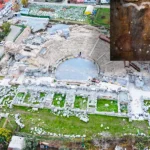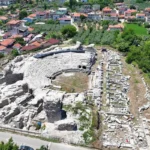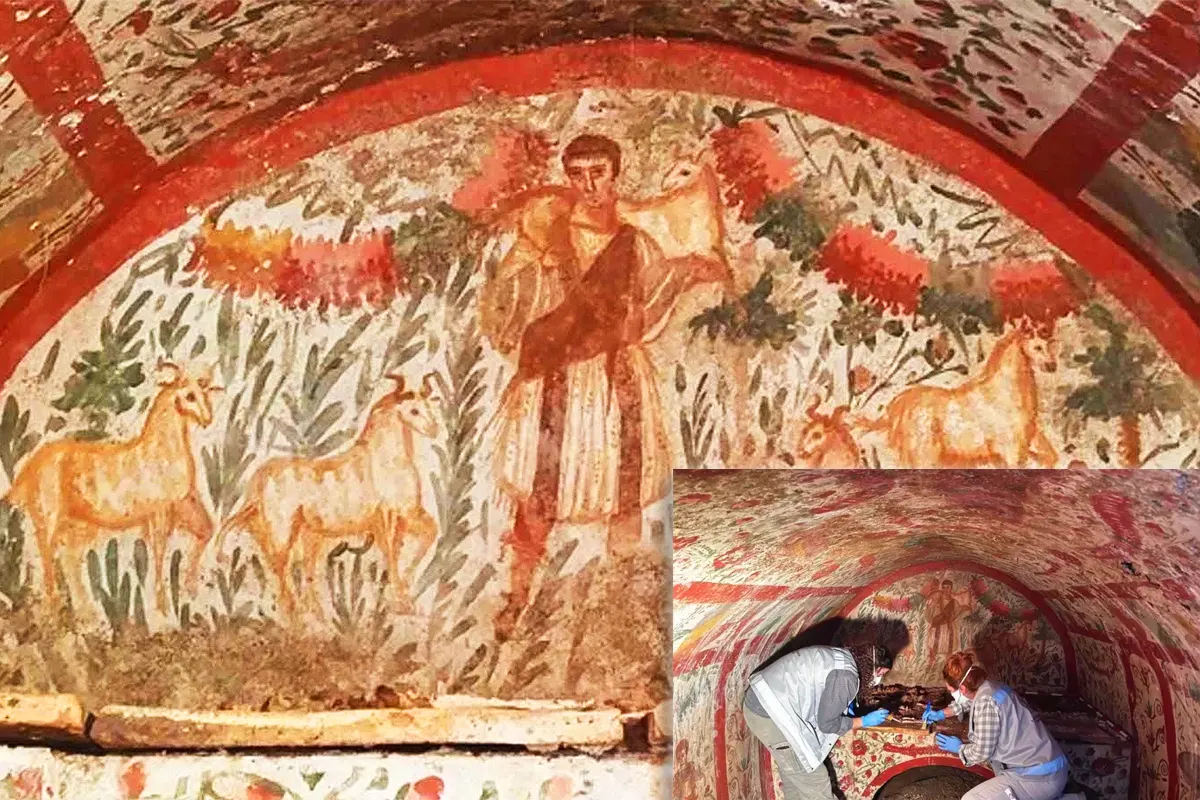
A team of Turkish archaeologists has discovered in the necropolis of Hisardere, located in the historic town of İznik (ancient Nicaea, in the Turkish province of Bursa), an exceptional representation of the ‘Good Shepherd’ showing Jesus, a find that could constitute the only known example of this iconographic motif in the whole of Anatolia.
According to Turkish media reports, the figure appeared as a fresco on the north wall of a hypogean (underground) tomb in the burial complex known as the ‘sarcophagi field’: a find of considerable significance for archaeology, both in Turkey and worldwide. The necropolis, used between the 2nd and 5th centuries AD, housed burials of both wealthy families and the lower social classes, and includes a wide variety of tombs, including chamber tombs found only in İznik, which are covered with terracotta tiles.
Turkish art historian Hüseyin Acarol noted the rarity and significance of having found a hypogean tomb within this necropolis, and recalled that the ‘Good Shepherd‘ is mentioned in the Gospel of John in chapters 10:11 and 10:18, adding that this motif was first identified in hypogea excavated in Rome during the 19th century.
“Hypogea with depictions of the Good Shepherd are usually located in areas with a densely settled civilisation,” stressed Acarol, who recalled that İznik has been known throughout history as Nicaea or as Helikore. “İznik remains a ‘golden city‘. The Good Shepherd symbolises guidance, leadership, protection, security and sacrifice, and is usually depicted carrying a sheep on his shoulders.”
The Turkish expert also emphasised the importance of the recently discovered floor mosaics, especially after the recent visit of Pope Leo XIV, and stressed the central role that İznik has played throughout the Roman, Byzantine and Ottoman periods, being at different periods even the capital of these empires. Finally, Acarol explained that major earthquakes in the 4th century AD buried much of the ancient city of Nicaea; therefore, future archaeological excavations are likely to uncover one of the largest ancient urban sites in the world.
VOTE

EDITORIAL TEAM
🧿 About us
.
Edited and reviewed by:

Pablo Gómez is a specialist in Turkey and has been editor-in-chief of Hispanatolia since 2011. He has been analysing current affairs and geopolitics in Turkey and the surrounding region since 2006.
…
📣 Your ADVERTISING on Hispanatolia
.
🤗 HELP US WITH A DONATION:
💗 Paypal