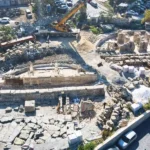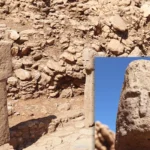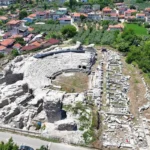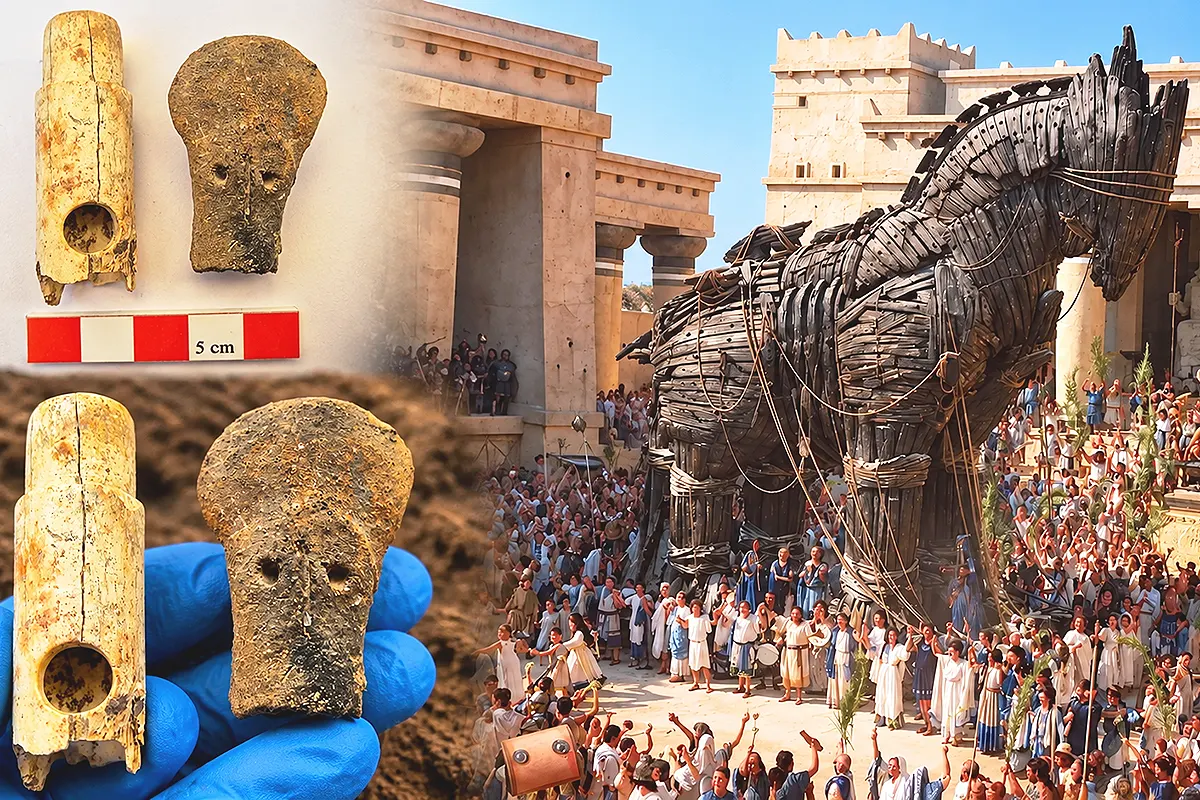
A team of archaeologists has discovered a 2,800-year-old bone flute and a 4,500-year-old anthropomorphic idol head during excavations at ancient Troy, which has been designated a World Heritage Site by UNESCO. The find is of enormous significance as it is the first musical instrument to be unearthed at this site since the first archaeological excavations began on Hisarlık Hill 160 years ago.
Turkey’s Minister of Culture and Tourism, Mehmet Nuri Ersoy, announced online both discoveries, made during the 2026 archaeological campaign. In a statement posted on his social media accounts, Ersoy emphasised that these two finds help to expand our knowledge of the millennia-old history of Troy’s culture and art.
“As part of our ‘Legacy for the Future’ project, which we are carrying out with the authorisation and support of our ministry, we have discovered a bone flute dating back approximately 2,800 years and the head of a human-shaped idol dating back 4,500 years during the 2026 excavations,” he announced.
The first musical instrument found at Troy
“The bone flute, dated to the Archaic period, is the first and only musical instrument found to date in the entire history of the Troy excavations, which have been ongoing for over 160 years. With this discovery, we have obtained direct archaeological evidence of Troyan musical culture,” explained the minister, according to reports by Turkish media outlets specialising in archaeology.
“With the idol’s head found near the gate of the city of Troy II, we have also unearthed a new artefact that will contribute to our understanding of the symbolic world of the Early Bronze Age and cultural interactions in western Anatolia,” added Ersoy.
The Archaic period is roughly dated between 750 and 480 BC. During this period, music played an important role not only in religious rituals but also in social and public life.
The find provides archaeological evidence of the existence of a musical culture in Troy during that period; furthermore, the preservation of the end piece attached to the body of the flute allows for a better understanding of the instrument’s structure, the manufacturing process and how it worked. The fact that it is extremely rare for musical instruments made from organic materials to survive to the present day further enhances the uniqueness and importance of this discovery.
An idol head from the Early Bronze Age
The second artefact discovered at the site by the archaeologists is an anthropomorphic idol head found during excavations carried out in the vicinity of the gate of Troy II. The object is dated to approximately 2500 BC. This artefact from the Early Bronze Age provides new insights into the culture of Troy during that period and the symbolic world of western Anatolia.
Small anthropomorphic idols are among the characteristic finds of archaeology in western Anatolia dating from the third millennium BC. Together with specimens previously found at Troy and other artefacts recovered from various sites in the region, the discovery of this idol will aid research into the traditions surrounding the production and use of these objects, as well as the cultural interactions between the populations of the time.
Troy II, a hub connecting Anatolia and the Aegean
During the period of Troy’s history known as Troy II, which spans approximately from 2,500 to 2,300 BC, the city became one of the centres of exchange between Anatolia and the Aegean world, and experienced remarkable advances in architecture and material culture. Indeed, the newly discovered idol head will help to expand our understanding of the social and cultural structure of that historical period.
Both the idol and the bone flute uncovered by archaeologists during this year’s excavations will help to broaden our understanding of the history of Troy, which spans multiple chronological strata: from its foundation at the beginning of the third millennium BC to the 13th century AD C, when – by the end of the Middle Ages – Troy was nothing more than a small Byzantine village full of ruins, which was eventually abandoned until its rediscovery in the 19th century by Heinrich Schliemann.
VOTE

EDITORIAL TEAM
🧿 About us
.
Edited and reviewed by:

Pablo Gómez is a specialist in Turkey and has been editor-in-chief of Hispanatolia since 2011. He has been analysing current affairs and geopolitics in Turkey and the surrounding region since 2006.
…
📣 Your ADVERTISING on Hispanatolia
.
🤗 HELP US WITH A DONATION:
💗 Paypal