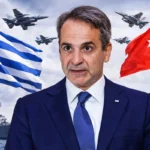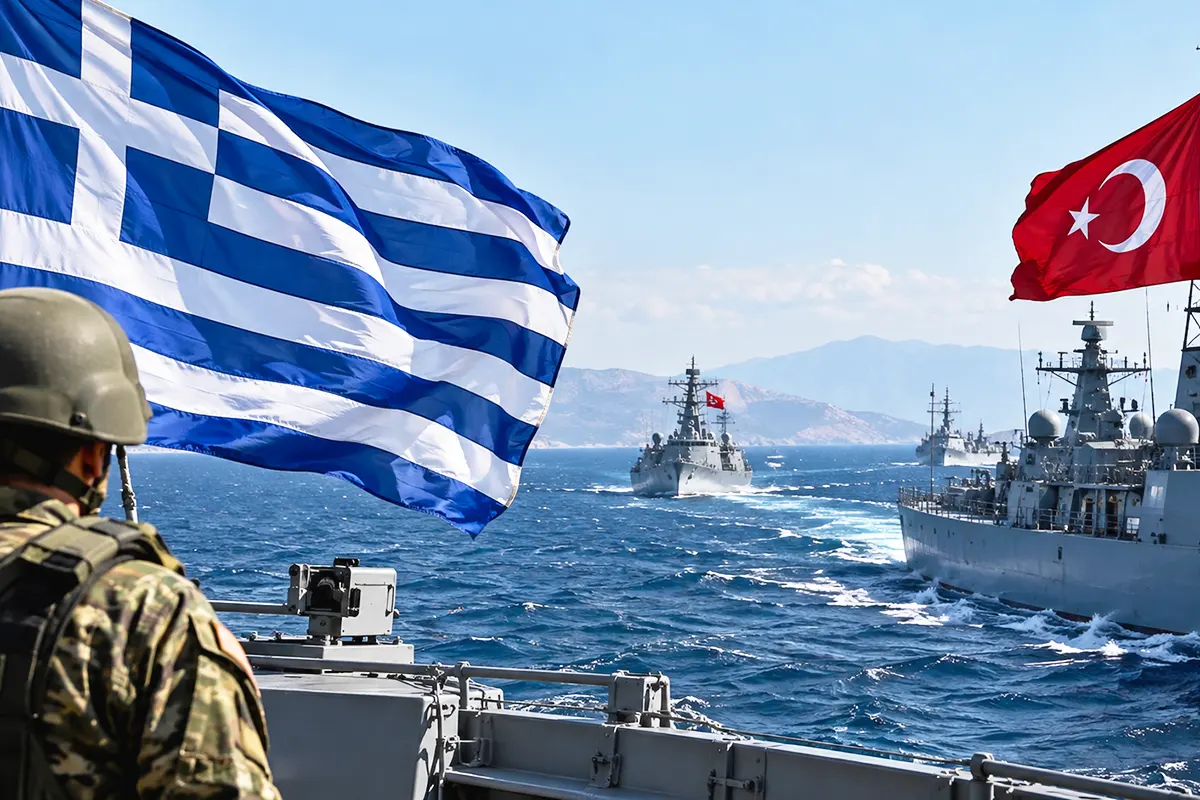
Given the ever-present possibility of rising tensions with its Turkish neighbour, many media outlets in Greece regularly report on the concerns of the Greek public regarding what might happen in the event of war. Now, in an analysis published in a Greek magazine specialising in military matters, the former spokesperson for the General Staff of the Greek armed forces acknowledges Turkey’s military superiority and draws a stark conclusion regarding a war with that country: “We are not prepared”.
The analysis, written by retired Lieutenant General Konstantinos Loukopoulos and published on the defence-specialist website Militaire, examines Athens’ level of preparedness in the face of a possible escalation of hostilities between the two countries. Under the title “10 tough questions about how prepared we are for a possible conflict with Turkey”, the Greek military officer compares Greece’s defence capabilities, the mobilisation capacity of its military forces and its level of military preparedness with those of Türkiye.
What is the Greek army’s actual combat capability?
Loukopoulos argues that Turkish policies in the Aegean have not arisen “suddenly” and asserts that Ankara has long been implementing a defence and security policy with clear objectives. According to this retired Greek general, Greek defence planning must take into account Turkey’s air and naval power, its missile capabilities, unmanned systems (drones), its electronic warfare capabilities and its ability to rapidly concentrate a large number of forces should a crisis erupt.
The former lieutenant-general also draws attention to the fact that the National Security Council, the creation of which was promised by the Greek Prime Minister before the 2019 elections, has still not been established. Furthermore, he warns that the National Defence Policy is 16 years old and no longer adequately reflects the current geopolitical situation.
When discussing the state of Greece’s modern weapon systems, Loukopoulos raises the question of how many of them are actually available for deployment. In his view, it is necessary to determine to what extent recent investments in armaments have translated into actual combat capability.
In the article, he also questions how many reservists could be mobilised rapidly if necessary, what their level of training is, and how long it would take for the units to reach their full operational capability. The military officer further points out that for years there have been calls for the reform of Greece’s reserve forces system, yet the progress and necessary reforms have not been made at the required pace.
“The infantry forces have been severely neglected”
In this context, Loukopoulos maintains that Turkey is indeed capable of concentrating its forces rapidly and warns: “Greece cannot afford to have a slow mobilisation mechanism in such a scenario”. He goes on to emphasise that “the real factor to consider is whether the adversary believes in what Greece is capable of doing and that it is determined to do so if there is a crisis”.
The retired general then identifies one of the “most unpleasant” current problems facing the Greek Armed Forces: the state of the land forces. Loukopoulos acknowledges the existence of serious structural problems and highlights the need to coordinate the air, naval and land components of the Armed Forces.
In this regard, he considers that the infantry units, which he describes as the backbone of the army, have been seriously neglected, insisting that Greece’s military preparedness in the face of a possible conflict cannot be assessed solely on the basis of the acquisition of new weapon systems.
Delving further into this issue, the former Greek defence spokesperson states that, in addition to troop numbers, troops’ morale, their trust in the institution and their faith in the command structure are also fundamental elements of the army’s readiness. In his view, what must be assessed to determine the Greek army’s actual current combat capability is not announcements regarding arms purchases, statements or public displays of force, but rather the actual ability of its units to engage in combat.
“Turkey’s strength is evident”
In concluding his analysis, Loukopoulos once again draws attention to Turkey’s military capabilities and argues that Ankara’s strategic objectives and the speed with which the Turkish army can deploy its capabilities in the event of a crisis must be fundamental elements of Greece’s defence planning.
“Whatever may happen,Turkey’s strength is evident. The truth stares us straight in the face,” he warns, adding that “Turkey’s strategy, military capability and available resources have long been a reality facing Greece”.
The retired lieutenant general also issues a serious warning: “Greece has repeatedly faced signs of Turkey’s strategy, which have been accompanied by a multitude of warnings. Have these warnings translated into genuine operational preparedness and military strength?” The conclusion drawn from his analysis is that they most certainly have not.
VOTE

EDITORIAL TEAM
🧿 About us
.
Edited and reviewed by:

Pablo Gómez is a specialist in Turkey and has been editor-in-chief of Hispanatolia since 2011. He has been analysing current affairs and geopolitics in Turkey and the surrounding region since 2006.
…
📣 Your ADVERTISING on Hispanatolia
.
🤗 HELP US WITH A DONATION:
💗 Paypal