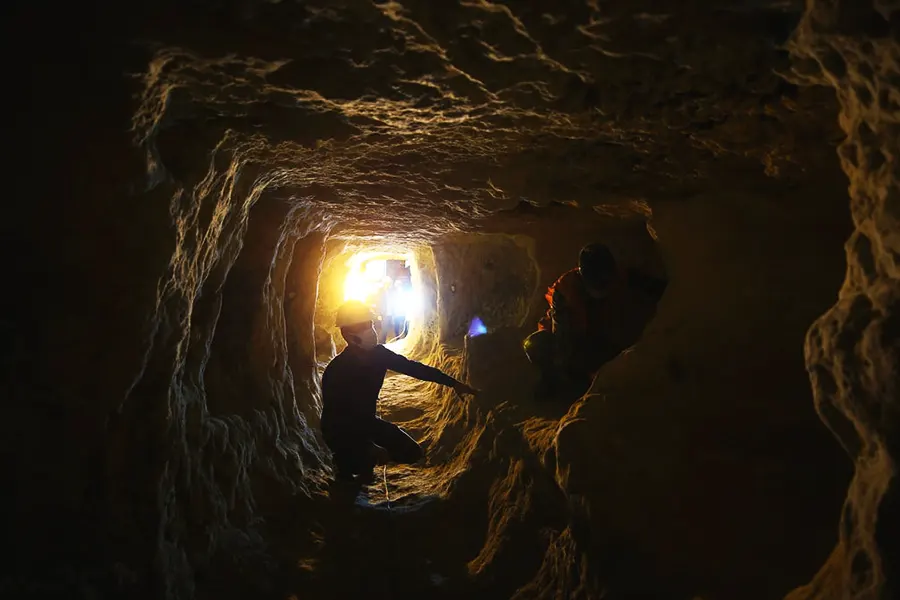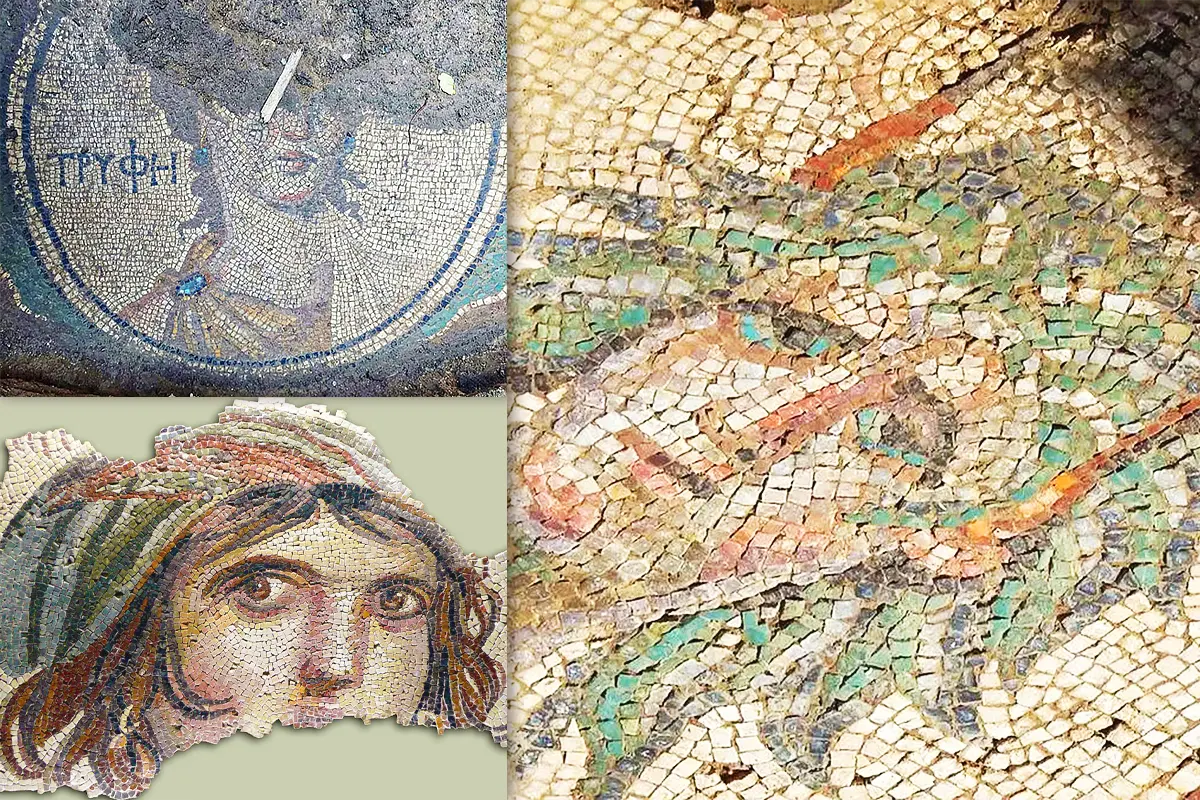
Illegal excavations carried out in the garden of a house in the Zile district of Tokat province, in north-central Turkey, brought to light some time ago a Roman mosaic depicting various figures, which has been dated to the 2nd century AD. After the authorities took control, subsequent excavations led by archaeologists have uncovered a spectacular mosaic bearing the ancient Greek inscription ΤΡΥΦΗ (Tryphe) – a term meaning ‘luxury’ or ‘abundance’ – which has attracted attention for its meticulous craftsmanship and its resemblance to the famous ‘Gypsy Girl’ mosaic on display at the Zeugma Museum, the world’s largest mosaic museum.
The initial discovery was made last year in Zile, when antiquities looters found the mosaic during an illegal excavation in the garden of a country house. After the authorities were alerted, teams from the Provincial Gendarmerie Command launched an operation on 6 May 2025 that led to the arrest of several suspects, two of whom were subsequently remanded in custody at the district prison by court order. Turkish authorities also discovered that one of those involved in the incident had shared videos of the excavations on his social media just one month before the operation.
It was here that Caesar uttered his famous phrase “Veni, vidi, vici”
Since then, specialists from the Tokat Archaeological Museum have been working in the area carrying out rescue excavations, according to reports by Turkish media outlets specialising in archaeology. It is a historical coincidence that it was at this site in northern Anatolia that Julius Caesar wrote his famous phrase Veni, vidi, vici (“I came, I saw, I conquered”) in a letter to the Senate following the famous Battle of Zela, which took place in 47 BC. The fact is that the modern Turkish city of Zile was known in antiquity as Zela, and has a history dating back to the Hittite period, so the recent discovery of this important mosaic provides new evidence of the Roman era in the region.
The head of the excavations at the ancient theatre situated next to Zile Castle, Murat Tekin, a lecturer in the Department of History at Gaziosmanpaşa University in Tokat, explained that the mosaic was found some 200 metres from the area where archaeological work is underway to uncover the remains of the theatre, dating from the Greek period. Tekin noted that the find once again demonstrates the historical importance Zile held in antiquity: “When we look at the history of Zile, we can say it dates back to the Hittite period. During that time it was called Anziliya; in antiquity, Zela; and today it retains and preserves that ancient past in its current name, Zile”.
The mosaic dates from the height of the Roman Empire in the region
Experts from the Tokat Archaeological Museum have determined that the Roman mosaics found at the site originally decorated the floor of a building that served an important social function and have dated them to the 2nd century AD, during the height of the Roman Empire’s rule in the region.
Associate Professor Alper Yılmaz, from the Department of Archaeology at the Faculty of Humanities and Social Sciences at Samsun 19 May University, noted that Zile was an important centre for cults related to fertility and abundance, such as the cult of the goddess Cybele. In this context, Yılmaz emphasised that the Roman mosaic now discovered, bearing the inscription ΤΡΥΦΗ (Tryphe), is linked to the region’s cultural context: “When we examine it within its architectural context, it becomes clear that this mosaic was part of an important structure of Roman social life,” he said.
“This luxurious lifestyle is reflected in the mosaics, and a kind of propaganda is being carried out here,” he stated. The expert also noted that, both in terms of its geometric motifs and its figurative representations, the Roman mosaic found in Zile “shows similarities to the ‘Gypsy Girl’ mosaic we see in the Zeugma Mosaic Museum”. According to Yılmaz, the ancient mosaics found in this area possess unique characteristics and enormous archaeological value for revealing the history of Anatolia, and could therefore generate significant added value for the economy of this region of Turkey if promoted for tourism.
📚 If you want to learn more about the history of Turkey, we recommend:
🧿 Discover here more recommended products about Turkey
As an Amazon Associate, we earn from qualifying purchases. This comes at no extra cost to you and helps support this website.
VOTE

EDITORIAL TEAM
🧿 About us
.
Edited and reviewed by:

Pablo Gómez is a specialist in Turkey and has been editor-in-chief of Hispanatolia since 2011. He has been analysing current affairs and geopolitics in Turkey and the surrounding region since 2006.
…
📣 Your ADVERTISING on Hispanatolia
.
🤗 HELP US WITH A DONATION:
💗 Paypal