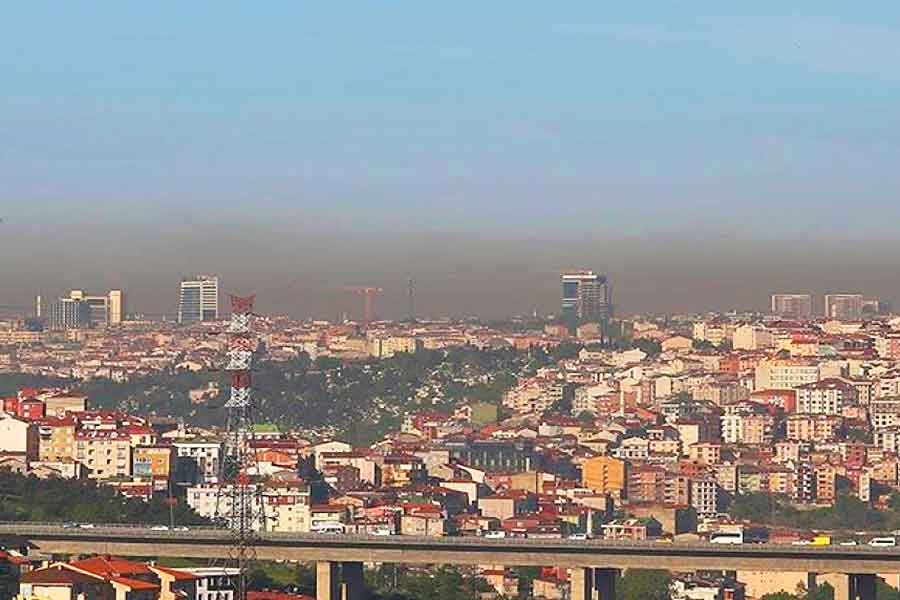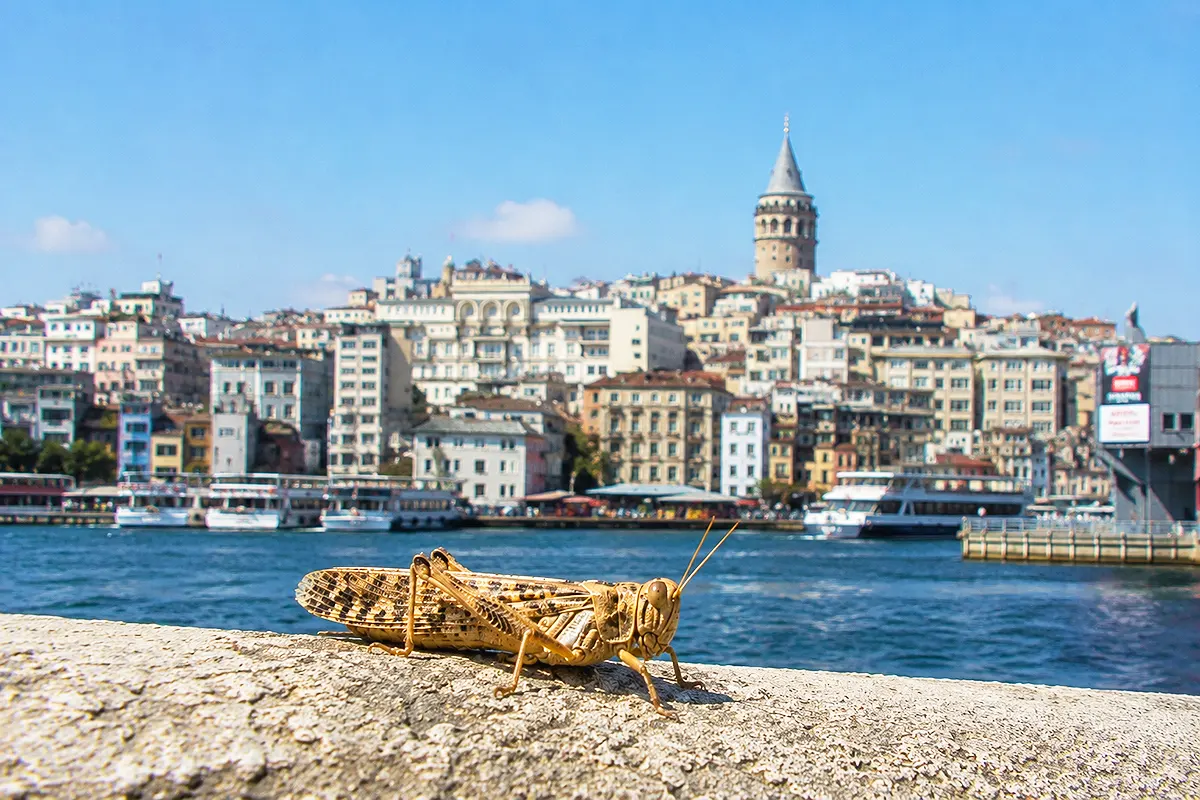
Turkish authorities have denied that there is a locust plague in Istanbul, following several reports warning of the presence of these insects in various districts of the city: a situation that has led many residents of the Turkish metropolis to keep their windows closed. Concerns have also been fuelled by posts on social media referring to an alleged “locust invasion” in Istanbul and neighbouring provinces.
The provincial director of Agriculture and Forestry for Istanbul, Suat Parıldar, addressed the media from the agency’s provincial headquarters to explain the current situation and deny the existence of a plague. “Istanbul has a population of over 16 million; however, it also has around 750,000 decares of agricultural land where crops are grown. Approximately 675,000 decares are used for extensive crops and fodder, more than 26,500 decares for vegetable production and around 24,000 decares for fruit production,” he explained in comments reported by the Turkish newspaper Hürriyet.
“At present, it is not possible to speak of any locust plague in Istanbul. In addition to Istanbul, we are carrying out inspections and monitoring on the ground 24 hours a day, particularly in and around Çanakkale, Tekirdağ, Edirne and Kırklareli,” he commented in relation to messages recently circulated on social media regarding an alleged locust invasion.
Parıldar also explained that no locusts from other regions have been recorded arriving, and warned against the mistake of regarding all these insects as harmful: “It is a serious mistake to label every locust we see as a ‘harmful insect, a harmful locust’. Some species of locusts are our friends. They feed on pests and other insects, and play a very important role in maintaining the balance of nature. If we label the locusts we see as ‘harmful locusts’ and immediately start thinking about ‘how to combat them, how to eliminate them, how to get rid of them’, we will in fact be disrupting the natural balance”.
“We are moving closer to their natural habitats”
Regarding the fact that these insects are being spotted more frequently in some districts of the city, the director pointed out that this is due to the proximity of urban areas to their natural habitats: “Actually, we are moving closer to their natural habitats. Due to rising temperatures and the effect of light, it is sometimes possible to see these creatures, which are beneficial to nature, in our homes and on our balconies,” he said.
However, the expert reiterated that there is no risk requiring preventive measures: “There is no locust plague problem in Istanbul. In the provinces I have mentioned, we have no problems arising from an increase in the locust population. It is not even possible to speak of a locust plague”.
Some of these insects measure up to 20 cm in length
According to reports published in recent days, locust activity in Istanbul has been concentrated in areas close to green spaces, such as Arnavutköy, Sultanbeyli, Beykoz and Maltepe. Residents have shared images of the insects, some of which measure up to 20 centimetres, appearing on balconies and vehicles. The swarms consist mainly of Saga ephippigera and the so-called Egyptian grasshopper, but neither of these species poses a threat to humans.
The Turkish authorities attribute the increase in the locust population to rising temperatures and the harvesting of crops, which drives these insects into other areas; furthermore, artificial lighting attracts the insects into homes, as many residents in Istanbul open their windows – especially at night – during the summer months.
However, despite the authorities’ denial of the risk of a locust plague in Istanbul, in other provinces of the country such as Adana – in southern Turkey – farmers are also reporting an increase in the populations of these insects.
VOTE

EDITORIAL TEAM
🧿 About us
.
Edited and reviewed by:

Pablo Gómez is a specialist in Turkey and has been editor-in-chief of Hispanatolia since 2011. He has been analysing current affairs and geopolitics in Turkey and the surrounding region since 2006.
…
📣 Your ADVERTISING on Hispanatolia
.
🤗 HELP US WITH A DONATION:
💗 Paypal