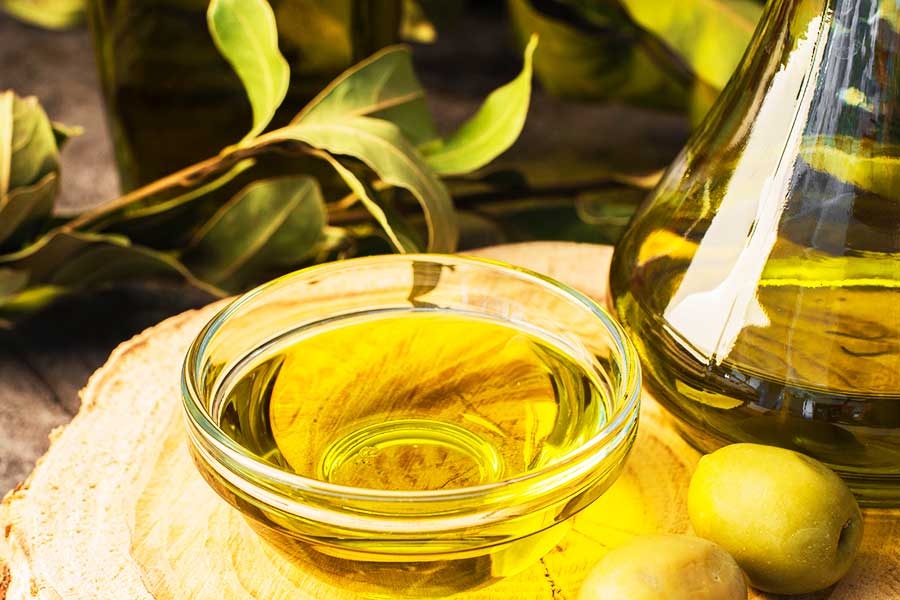
Turkey has become one of the major global players in the olive oil and table olive sector, overtaking Italy and ranking as the world’s second largest producer, second only to Spain, according to data from the International Olive Council (IOC), a body based in Madrid.
Speaking to the Anatolia news agency, IOC executive director Jaime Lillo said Türkiye has “consolidated its position” over the past five seasons and has become an “indispensable” country for the sector. “Looking at the data from the last five seasons (2020–2025), Türkiye seems to have consolidated its position as the world’s second-largest producer of olive oil and table olives” he said, underlining the “great contribution” that Turkey makes to the sector.
Lillo underlined that Türkiye is a key producer not only for its domestic market, but also for a growing international demand. “As we said, it is a major olive oil and table oil producer, not only for its population but also for the growing international market,” he explained. In this sense, he highlighted its contribution both to global health through the consumption of these products, as well as to the environment, thanks to the continuous expansion of olive groves in Turkey.
The head of the IOC indicated that Turkey has become the world’s largest producer of table olives, overtaking Egypt after an “extraordinary season in 2024-25”, and added that world olive oil exports grew by 25% in that season, with a significant contribution from Turkey, whose exports increased by 132%.
Olive oil sector tries to adapt to climate change
Lillo pointed out that the Turkish city of Izmir, on the west coast of the country, has an internationally recognised collection of olive trees, and added that the IOC is working to find solutions to the challenges facing the sector, such as climate change, for which both this collection and the olive tree gene bank in Izmir play a key role in this effort.
“Climate change is already a reality that we can see in the production statistics,” he warned. “For example, in the fact that we have never seen two consecutive short seasons since we have had statistical data – we had seen an increase in variability between harvests, but never had we seen two short harvests below average, and that is what led to the extraordinary price increase we had two years ago, or a year and a half ago.”
Lillo explained that the IOC has been working for some time with experts to adapt to climate change, which has clearly affected the olive sector, especially in the Mediterranean basin. In this context, he stressed that olive groves can act as natural carbon sinks in the fight against global warming.
He also recalled that the coronavirus pandemic was a turning point for the sector. “At that moment when the world stopped, we stayed at home, and somehow, it showed what was most important, which was health, taking care of ourselves, taking care of our families, cooking at home…” According to Lillo, during that time there was an unprecedented increase in olive oil consumption, not only in traditional markets, but also in new markets such as the United States, Canada, Brazil, China and Japan.
Turkish olive oil production exceeds half a million tonnes
According to IOC data released by the Anatolia agency, world olive oil production averaged around 3.1 million tonnes between the 2000-2001 and 2004-2005 marketing years. In that period, Turkey produced approximately 320,000 tonnes, representing 10% of the world total. Specifically, Turkish production peaked at 505,000 tonnes in the 2024-2025 season, 58% more than an average crop, although for the 2025-2026 season it is forecast to fall to 290,000 tonnes, a year-on-year decline of 43%.
Annual olive oil consumption in Turkey is around 170,000 tonnes, equivalent to 5.5% of world consumption, rising to 200,000 tonnes in the 2024-2025 season, with per capita consumption among Turks at around 2 kilos per person.
In terms of exports, Türkiye sells an average of 96,000 tonnes of olive oil abroad per year, rising to 160,000 tonnes in the 2024-2025 season. For the 2025-2026 season, Turkish exports are expected to be around 100,000 tonnes. Globally, exports grew by 25% in 2024-2025, with the largest increases coming from Turkey (132%), Tunisia (38%), Spain (25%) and Italy (18%).
VOTE

EDITORIAL TEAM
🧿 About us
.
Edited and reviewed by:

Pablo Gómez is a specialist in Turkey and has been editor-in-chief of Hispanatolia since 2011. He has been analysing current affairs and geopolitics in Turkey and the surrounding region since 2006.
…
📣 Your ADVERTISING on Hispanatolia
.
🤗 HELP US WITH A DONATION:
💗 Paypal