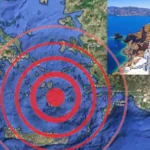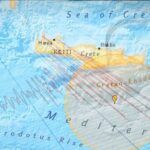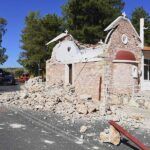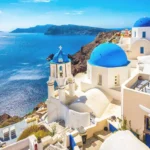
The population of Santorini is returning to the island as the earthquakes that have been shaking this tourist Greek island in the Aegean Sea since the end of January appear to be decreasing. Scientists have been monitoring a seismic swarm for weeks for fear that it could trigger a major earthquake or even a volcanic eruption.
Two out of every three inhabitants of Santorini left the island in the face of the earthquakes, which in some cases occurred just minutes apart and reached intensities of up to 5.3 on the Richter scale. The situation led the Greek government to declare a state of alert and close the schools on Santorini and other nearby islands such as Ios, Amorgos and Anafi, from which many of the inhabitants also fled.
Although schools remain closed for the time being and various restrictions are still in place, scientists are optimistic due to the decrease in the frequency of seismic swarms in the region. ‘Seismic activity continues to show a gradual decline, both in terms of the daily number of recorded earthquakes and maximum magnitudes,’ reported the Interdisciplinary Committee for Risk and Crisis Management of the University of Athens, quoted by news agencies, adding that ‘the activity remains concentrated in the same focal area … with no new micro-seismic surges observed since Feb. 15.’
According to the committee of experts, between 26 January and 22 February more than 20,000 tremors of magnitude greater than 1 were recorded, mainly attributed to the shock movement of the African and Aegean plates in the region and to several tectonic faults, as well as to possible movements of magma under the seabed; but no serious damage has been recorded so far.
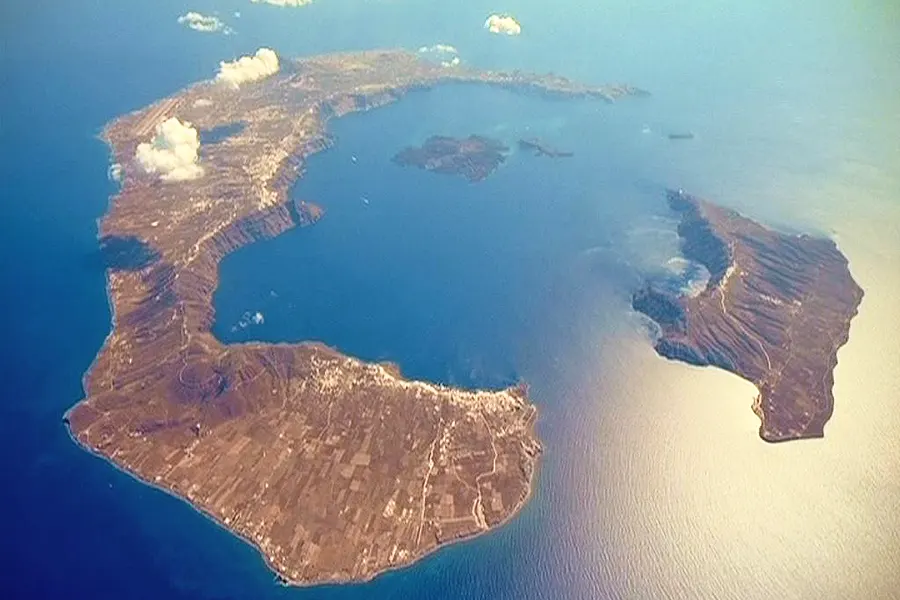
The mayor of Santorini, Nikos Zorzos, has confirmed that thousands of people have begun to return to the island since last week. The island has not experienced a series of earthquakes of this intensity since records began in 1964, although between 2011 and 2012 there was a seismic activity that lasted 14 months. Santorini is in fact the remains of the caldera of an enormous volcano that erupted 3,500 years ago and exploded, causing the destruction of the Minoan civilisation.
VOTE

EDITORIAL TEAM
🧿 About us
.
Edited and reviewed by:

Pablo Gómez is a specialist in Turkey and has been editor-in-chief of Hispanatolia since 2011. He has been analysing current affairs and geopolitics in Turkey and the surrounding region since 2006.
…
📣 Your ADVERTISING on Hispanatolia
.
🤗 HELP US WITH A DONATION:
💗 Paypal