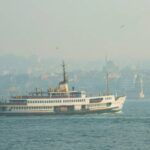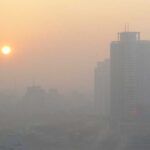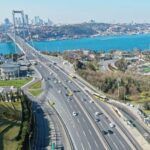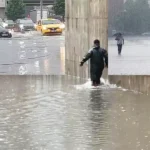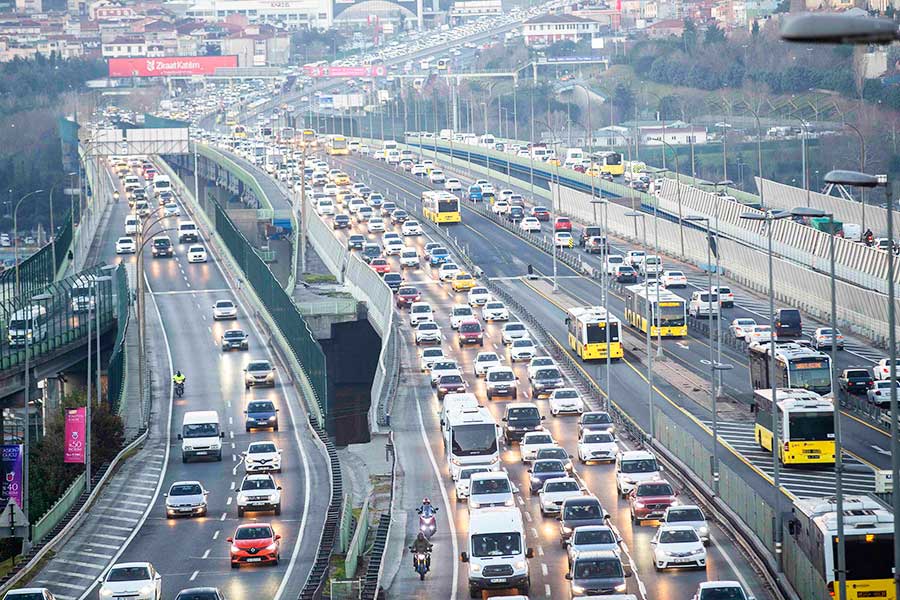
Istanbul, which has overtaken New York as the city with the worst traffic jams in the world, has a serious pollution problem as a result of its growing number of vehicles on the road that is not only polluting the air, but even altering the region’s climate, experts say.
Speaking to the Anatolia news agency, Professor Hüseyin Toros of Istanbul Technical University (İTÜ) explained that the number of vehicles on the road in Istanbul is now approaching 6 million according to official data, a ‘massive number’ in the words of the professor, who recalled that this has serious and profound implications. ‘We need to rethink how to reduce stop-and-go traffic and reduce emissions… But with the number of vehicles growing day by day, this is becoming increasingly difficult,’ he admitted.
‘In Istanbul, a journey that should take 30 minutes often takes 1-2 hours. A vehicle that would normally run for 30 minutes instead runs twice or three times as long. This significantly increases emissions,’ Toros said. ‘The more a vehicle stops and starts, the more pollutants it emits into the atmosphere. Exhaust gases and particulates from brakes, brake pads and tyres are the main contributors to this pollution,’ he said.
‘When we combine all these factors, the growing traffic in Istanbul is increasing the concentration of pollutants in the air, such as particulate matter and carbon monoxide,’ said the expert, adding that air pollution is a silent killer: ’Air is the most consuming substance in the human body. When air quality is reduced, we inhale more polluted air and that has a negative impact on our health,’ Toros stressed.
The impact of traffic on climate
One of the most striking effects of this increasing level of traffic in Istanbul is its impact on weather patterns: for example, on precipitation in the form of snow. The academic explained that urbanisation and traffic have transformed Istanbul’s landscape, creating what is called an ‘urban heat island’: ‘Every vehicle in Istanbul acts like a cooker, emitting heat and pollutants into the atmosphere. These pollutants mix with the air and alter its chemical composition. Urban surfaces, such as asphalt, also trap more heat, causing temperatures in the city to rise’.
This phenomenon, according to Toros, may mean that we will no longer see snow in Istanbul, even if the weather conditions are favourable. ‘For it to snow, temperatures must be 0 degrees Celsius or below. However, in the centre of Istanbul, the effect of the heat emitted by the city can raise temperatures by 2 degrees Celsius. If the number of vehicles were lower, temperatures would drop to 0 degrees, making it possible for snow to fall instead of rain,’ the professor said.
The health implications of traffic pollution in Istanbul are particularly serious, Toros warned, noting that pollution not only affects human health, but also contributes to climate change. ‘The polluted air we breathe affects our lungs, our heart and our brain. Reducing vehicle emissions is not only important to improve air quality; it is about protecting public health,’ he warned.
VOTE

EDITORIAL TEAM
🧿 About us
.
Edited and reviewed by:

Pablo Gómez is a specialist in Turkey and has been editor-in-chief of Hispanatolia since 2011. He has been analysing current affairs and geopolitics in Turkey and the surrounding region since 2006.
…
📣 Your ADVERTISING on Hispanatolia
.
🤗 HELP US WITH A DONATION:
💗 Paypal