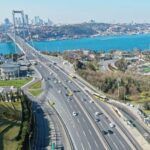
Local authorities in Istanbul have unveiled the first measures of a major transport and urban transformation plan that seeks to expand pedestrian zones and restrict vehicle access on Istanbul’s historic peninsula, a UNESCO World Heritage Site that is home to some of the city’s most iconic landmarks, such as Hagia Sophia, the Blue Mosque (Sultanahmet), Topkapı Palace, the Basilica Cistern and the Grand Bazaar.
According to reports in Turkish media, the Istanbul Metropolitan Municipality (İBB) has developed a specific transport strategy for the city’s historic peninsula in line with the Paris Agreement on climate change and the goal of making Istanbul a carbon neutral city by 2050. This plan, which also abides with the 2021 Climate Change Action Plan and the 2022 Sustainable Urban Transport Plan, prioritises sustainability in transport around central Istanbul while seeking to preserve the cultural and natural heritage of the area.
“We have a transport vision for the whole of Istanbul. We are already making the necessary investments and efforts to ensure mobility in the megacity. However, the most important of all these efforts is the transport vision for the historical peninsula. We do not see the problems of the historic peninsula as transport alone; in major tourist areas around the world, pedestrians are not an afterthought. Through the Historic Peninsula Transport Action Plan, we will achieve this,” said İBB Deputy Secretary General, Professor Pelin Alpkökin.
“In essence, this is about the vision of giving the Historic Peninsula back its true rights. We aim to reduce traffic jams and parking pollution, expand pedestrian zones and bring this region up to international standards by regulating tourism-related activities such as tour buses,” he said when talking about the Historic Peninsula Transport Action Plan.
Sultanahmet to be pedestrian-only zone
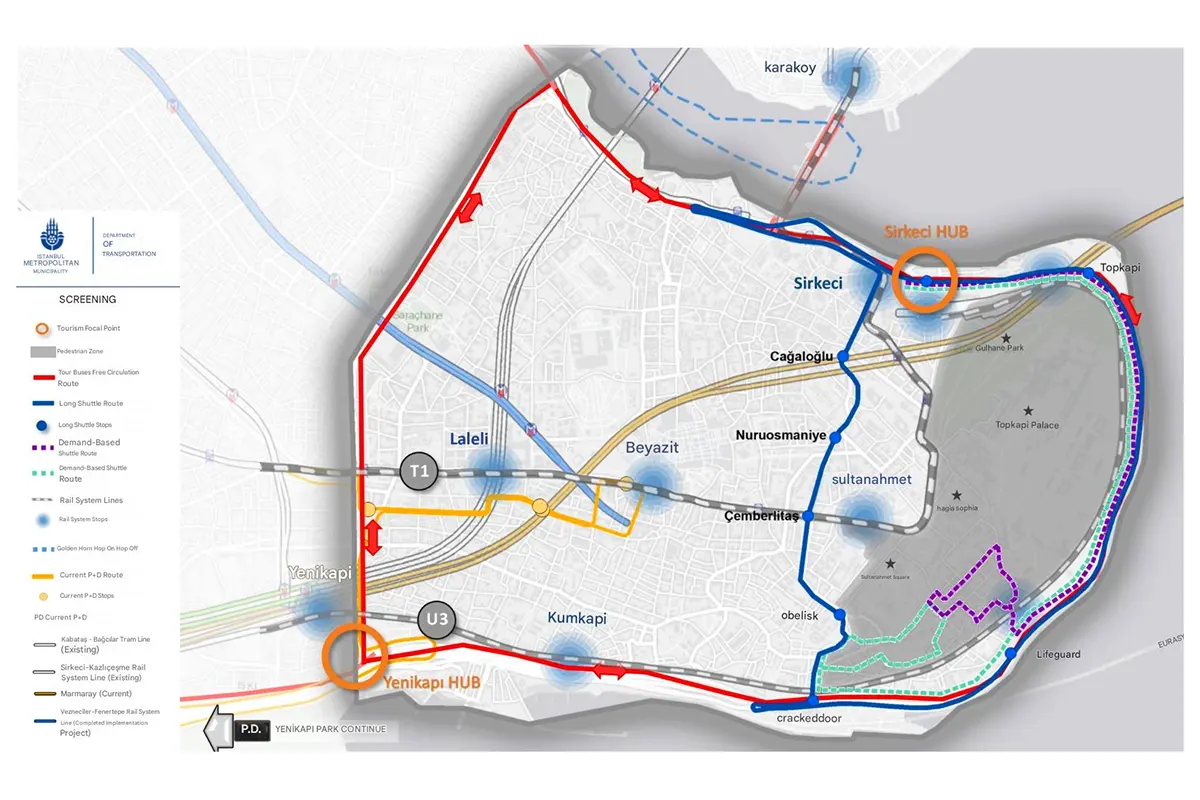
Under this new transport action plan, one of the first measures will be to move the Sirkeci-Harem ferry line to the Yenikapı area; at the same time, the Sultanahmet area and its surroundings will be designated as a pedestrian-only zone, preventing access to private vehicles. The bus priority lane, initially implemented as a pilot project on Vatan Avenue across Istanbul’s historic peninsula to reduce traffic congestion and increase the efficiency of public transport, will also be implemented on Vezneciler-Edirnekapı and Fevzipaşa Street, where works are already underway for this purpose.
The new Transport Plan also envisages increasing the number of park-and-ride parking lots (in Turkish P+D or Park Et Devam Et: literally ‘Park and Continue’) on Istanbul‘s historic peninsula, in order to control private car traffic and encourage public transport. In addition, private vehicles will be removed from the areas around the hotels in the Sarayburnu and Cankurtaran districts, improving pedestrian access.
Ultimately, the long-term goal of this plan for Istanbul is to remove car traffic from the centre of the historic peninsula – especially in tourist hotspots such as Sultanahmet – and create pedestrian streets, Alpkökin said: “Once the necessary laws and regulations have been introduced, we want to implement an urban toll system, as is already the case in Singapore and London. The rule is very simple: the polluter pays. However, there will be some areas where cars will not be allowed to circulate under any circumstances,” he concluded.
VOTE

EDITORIAL TEAM
🧿 About us
.
Edited and reviewed by:

Pablo Gómez is a specialist in Turkey and has been editor-in-chief of Hispanatolia since 2011. He has been analysing current affairs and geopolitics in Turkey and the surrounding region since 2006.
…
📣 Your ADVERTISING on Hispanatolia
.
🤗 HELP US WITH A DONATION:
💗 Paypal